The best vine climbing vegetables for most gardens are pole beans, cucumbers, peas, Malabar spinach, small-fruited squash, indeterminate tomatoes, melons, and yardlong or runner beans. Each one pulls its weight when you send it skyward, giving you more harvest from less ground and fruit that stays cleaner and easier to spot.
Growing up instead of out is the oldest small-space trick I know. A single 6-foot trellis can hold a row of beans that would otherwise sprawl across a bed, and cucumbers hung from a support tend to come out straighter and less prone to rot. Air moves freely through the leaves, which cuts down on mildew, and picking is a lot kinder on your back.
You don’t need fancy gear, either. Most of these climbers are happy with a simple A-frame, a cattle panel, or a few bamboo poles lashed together on a weekend afternoon. Choosing well comes down to a handful of things: how much sun you get, how long your season runs, how tall your support can be, and how heavy the fruit gets.
Below, you’ll find eight dependable picks, plus an easy comparison table and some beginner-friendly trellis and care tips to get you started.
How We Picked These Climbing Vegetables for Your Garden
I built this list by looking at what makes a climbing vegetable truly worth the vertical real estate in a home garden. This is a curated roundup based on how these plants naturally behave, not a set of hands-on trials. Here’s what I looked for:
- Ease of growing, so beginners can succeed without special skills
- A true vertical growth habit that rewards you for building upward
- Good productivity for the amount of ground each plant covers
- Real space savings for balconies, small beds, and tight yards
- Flexibility to thrive on simple supports like netting, poles, or a basic trellis
It also helps to know how these plants actually climb, because it changes the support you’ll need. Twining vines, like pole beans, wrap their whole stem around a pole or string as they grow. Tendril climbers, like peas and cucumbers, send out curly little “fingers” that grab onto thin supports such as netting. Sprawling vines, like many squash and melons, don’t really cling at all, so they need a sturdy trellis and a little help from you with gentle tying.
Don’t worry if that sounds like a lot. Each pick below tells you exactly what to use.
The 8 Best Vine Climbing Vegetables to Grow Vertically
1. Pole Beans, Reliable Harvests All Season Long
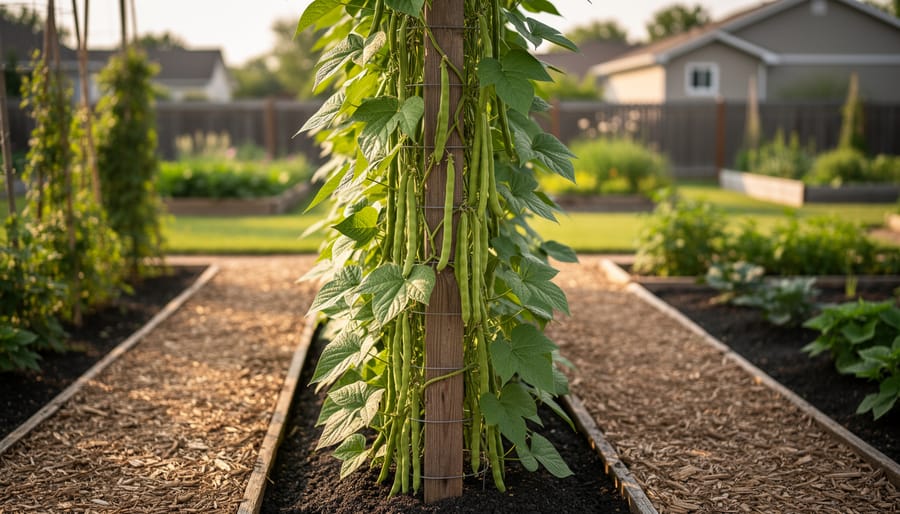
Pole beans are the climbers I recommend to nearly every new gardener. They twine up whatever you give them, and the more you pick, the more they make. Because pole beans bear until frost a single short row can feed you from midsummer into fall.
Give them something sturdy to hold. A bamboo teepee, a row of tall poles, or simple strings run from a top rail to the soil all work well. Just remember a full vine gets heavy, so push supports deep into the ground. Plant seeds after the last frost, once the soil has warmed up, and point the vines toward the support when they’re small.
For beginners, ‘Kentucky Wonder’ and ‘Blue Lake’ are dependable, tasty, and forgiving. ‘Scarlet Runner’ adds bright red blooms as a bonus.
Start looking for pods once they’re about as thick as a pencil, and enjoy them while they’re tender.
2. Cucumbers, Crisp and Straighter When Trellised
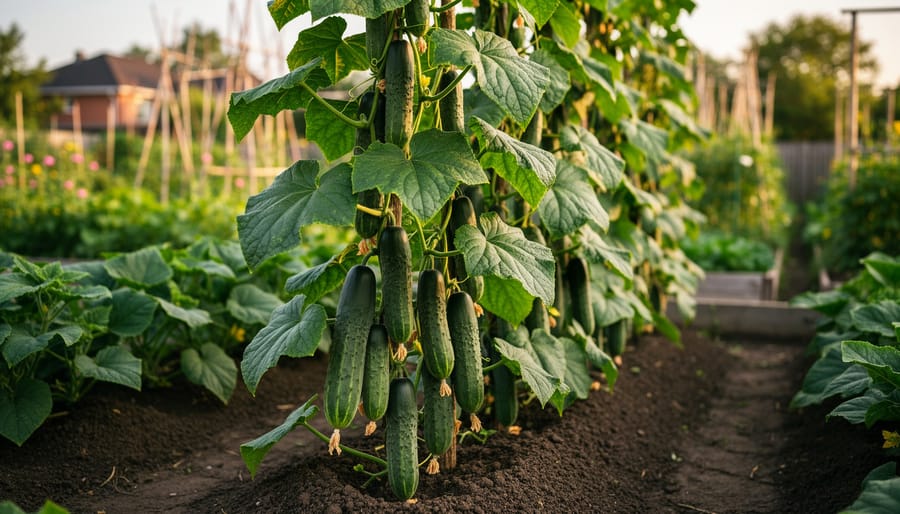
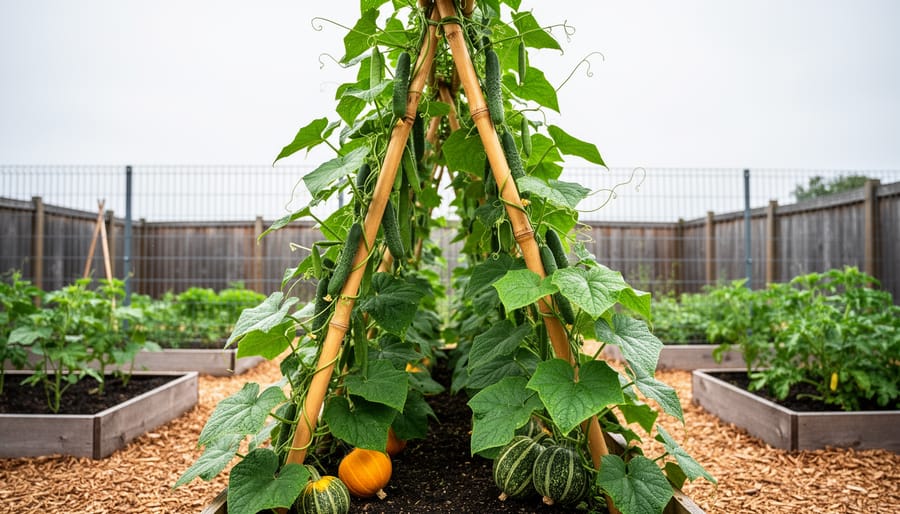
Cucumbers are tendril climbers, which means they send out thin, curly little “fingers” that grab onto whatever is nearby. Give them something to hold, and they’ll happily head for the sky. Growing them up instead of along the ground keeps fruit clean, dry, and easier to spot, and trellising gives straighter fruit that hangs freely instead of curling against the soil.
A trellis about five to six feet tall works well for most varieties. When your young vines reach a foot or so, gently guide the main stem toward the support and loosely tie it with soft twine. After that, the tendrils take over. Check every few days, because cucumbers grow fast and love to wander.
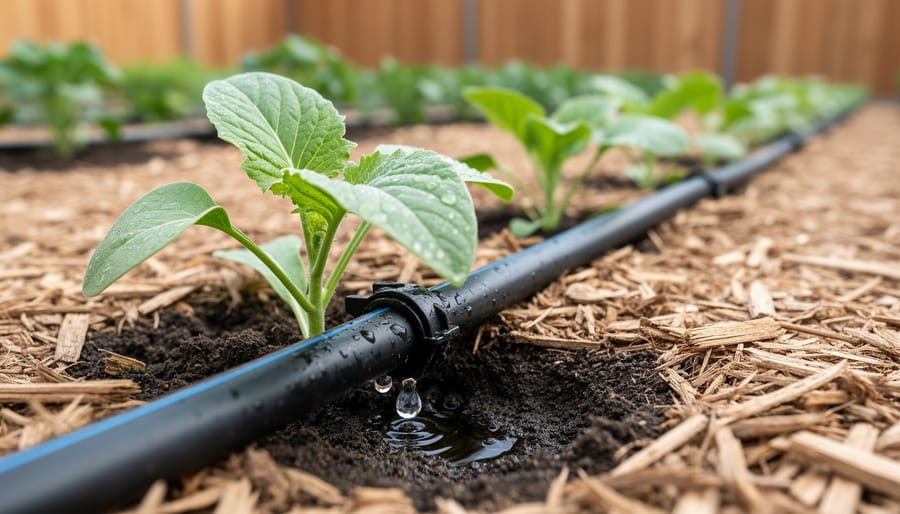
Watering matters more than most beginners expect. Uneven moisture is a common cause of bitter cucumbers, so aim for deep, steady watering, especially during hot spells. A layer of mulch at the base helps hold moisture. Pick fruit while it’s still firm and medium-sized, and the plant will keep producing.
3. Peas, Cool-Season Climbers for Spring and Fall
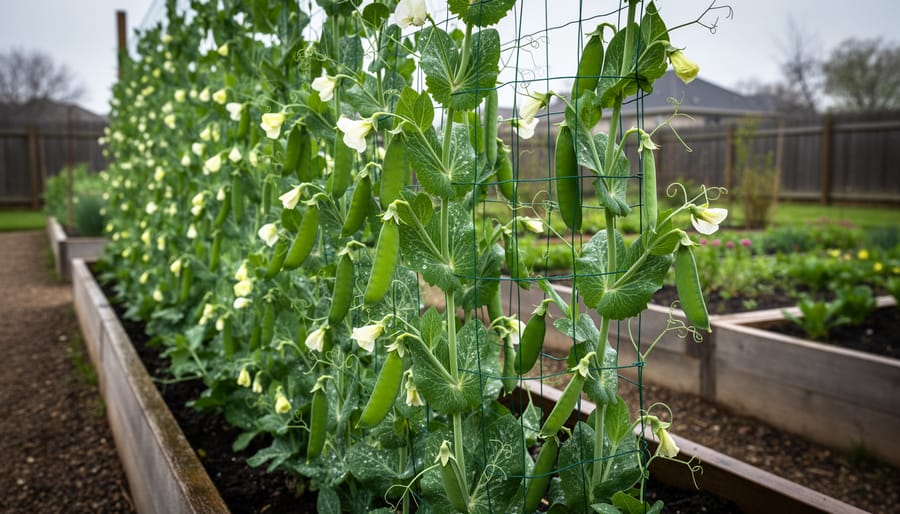
Peas are the cool-weather climbers of the vegetable garden. Snap and snow varieties send out curly tendrils that grab onto anything thin, so a simple piece of netting, some twine, or a few twiggy branches stuck in the soil is all the support they need. Most types reach about four to six feet, which means a light trellis does the job.
Plant them early, as soon as the soil can be worked in spring. Peas actually prefer chilly weather, and they sulk once summer heat arrives. Sow seeds about an inch deep and let the cool days do the rest.
Here’s the fun part: peas fit neatly into a seasonal plan. Grow a spring crop, pull the vines when the weather warms, then tuck in heat-lovers like cucumbers or beans on the same trellis. For fall, sow a second round about eight weeks before your first frost.
Pick snap peas when the pods are plump and crisp, and snow peas while they’re still flat and tender. Harvesting often keeps the vines producing longer.
4. Malabar Spinach, Heat-Loving Greens on a Vine
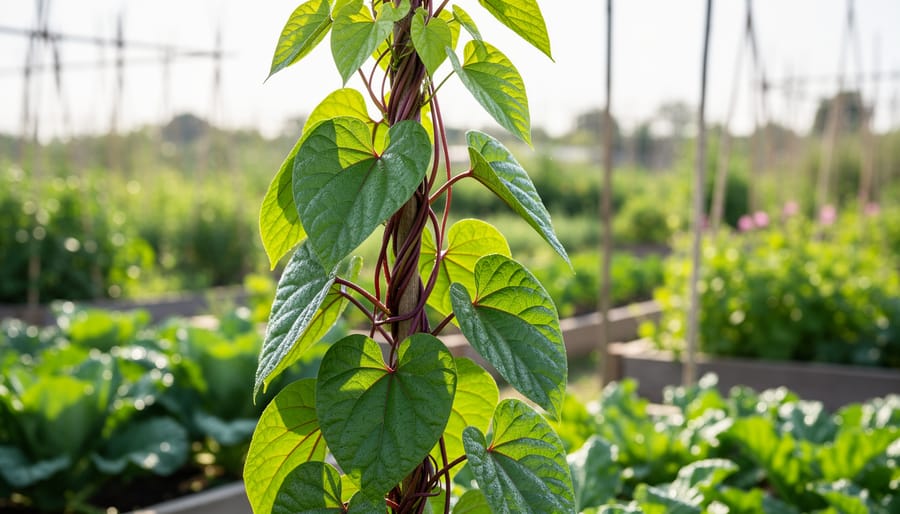
If you’ve ever watched regular spinach bolt the moment summer arrives, Malabar spinach is your comeback plant. It isn’t true spinach at all, but its thick, glossy leaves taste mild and slightly peppery, and they cook up beautifully in stir-fries and soups. Best of all, it loves the heat that sends other greens running.
This is a twining climber, so it wraps its stems around string, netting, or a simple bamboo teepee without much help from you. Give it a support about six feet tall and it will happily scramble upward.
Wait until the soil is warm and nights stay above 60°F before planting. Seeds sprout slowly in cool ground, so a soak overnight helps. Pick a sunny spot and keep the soil evenly moist.
Harvest by snipping young, tender leaves and stem tips regularly. The more you pick, the bushier and more productive the vine becomes. Think of it as a leafy salad bar growing right at eye level.
5. Small-Fruited Squash and Gourds, Big Yields in Small Spaces
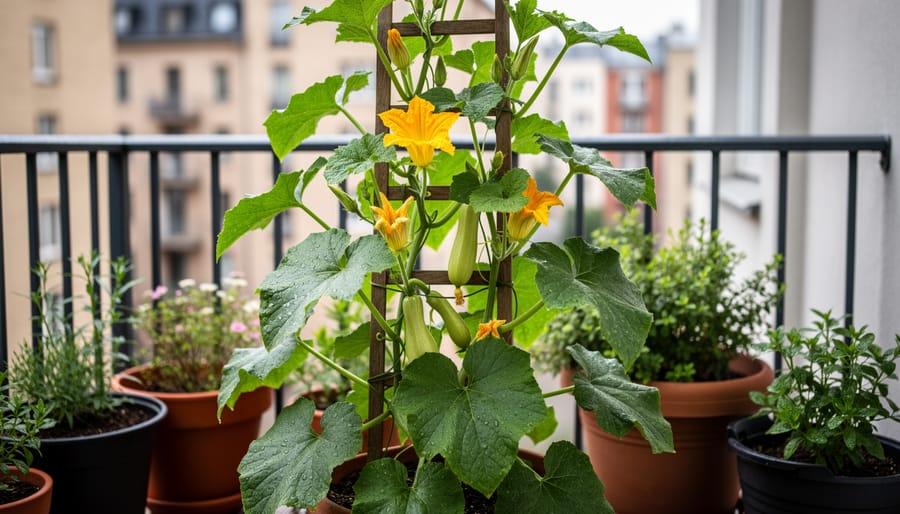
Squash has a reputation for taking over the garden, but small-fruited types are happy to climb instead. Look for compact vining varieties like Delicata, Honeynut, Sugar Pie pumpkins, or small ornamental gourds. Their fruits stay in the one-to-three-pound range, which makes them much easier for a trellis to handle than a giant pumpkin.
Squash climbs with tendrils, but they need a little help at first. Gently guide young vines toward a sturdy cattle panel, an arch, or a strong fence, and loosely tie any stray stems. Skip flimsy netting here, because even small squash get heavy as they ripen.
Here’s a simple DIY trick: make slings from old tights, stockings, or strips of soft fabric. Cradle each fruit once it’s about the size of a baseball, then knot the ends to the trellis. The fabric stretches as the squash grows, so the stem never snaps under the weight.
Harvest when the rind is hard and the stem turns dry and corky.
6. Tomatoes (Indeterminate), Training Vines Skyward
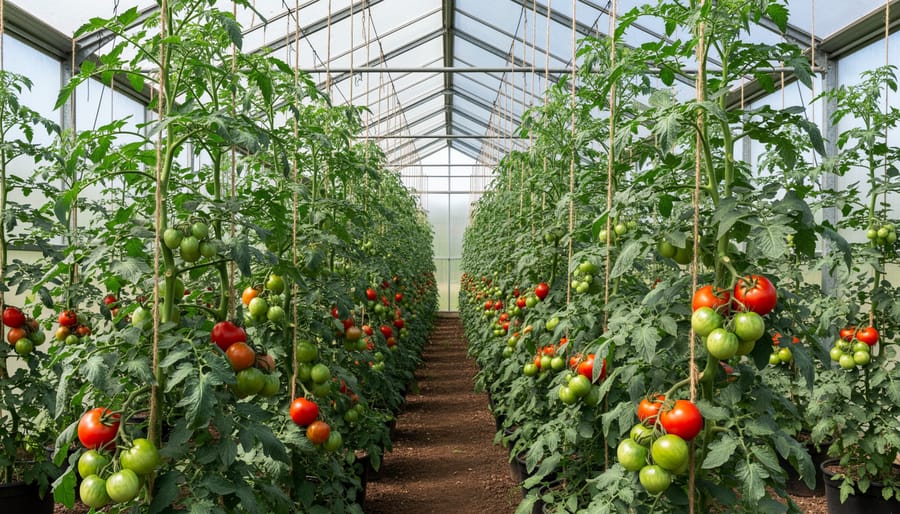
Indeterminate tomatoes are the ones that keep growing taller all season, often past six feet, so they’re a natural fit for vertical growing. Look for the words “indeterminate” or “vining” on the seed packet. Popular picks like Sungold, Brandywine, and Better Boy all fit the bill.
Tomatoes don’t climb on their own, so you’ll need to help them. A tall stake, a sturdy cage, or a string hung from an overhead beam all work well. If you go with string, loop it loosely under the bottom leaves and gently wind the plant around it as it grows. Tie stems to a stake with soft strips of old T-shirt or garden twine, leaving a little slack so the stem can thicken.
Pruning is simple. Pinch off the small shoots that sprout in the joint between the main stem and a branch, and trim off lower leaves that touch the soil.
Growing up keeps the plant open and airy, which helps leaves dry faster after rain and cuts down on disease. You’ll also find ripe fruit much easier to spot and pick.
7. Climbing Melons, Sweet Rewards Up a Sturdy Trellis
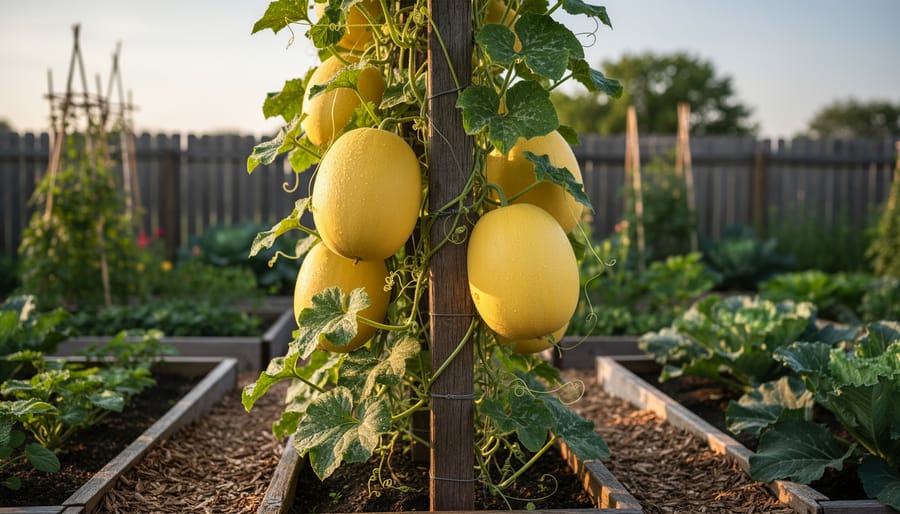
Melons might sound like a sprawling-garden crop, but the small-fruited kinds happily climb when you give them something sturdy. Look for compact varieties like Sugar Baby watermelons, Minnesota Midget cantaloupes, or little Charentais melons. They produce softball-sized fruit that a trellis can actually hold, which is the whole trick.
Use a strong support, like a cattle panel or a well-anchored frame. Melon vines are vigorous, and a wobbly bamboo teepee won’t survive a heavy, fruit-laden summer. Train the main vine upward by tucking it gently through the openings as it grows, and tie it loosely with soft cloth strips so you never pinch the stem.
Once fruits reach the size of a tennis ball, cradle each one in a sling. Old tights, a mesh bag, or a strip of t-shirt fabric tied to the trellis works perfectly. This keeps the weight off the vine so the fruit can ripen without snapping free.
The hardest part is patience. Melons need warm weather and often 70 to 90 days to ripen. Watch for the stem to slip easily from the fruit and a sweet fragrance near the blossom end. That’s your signal to harvest.
8. Yardlong and Runner Beans, Fast and Eye-Catching Climbers
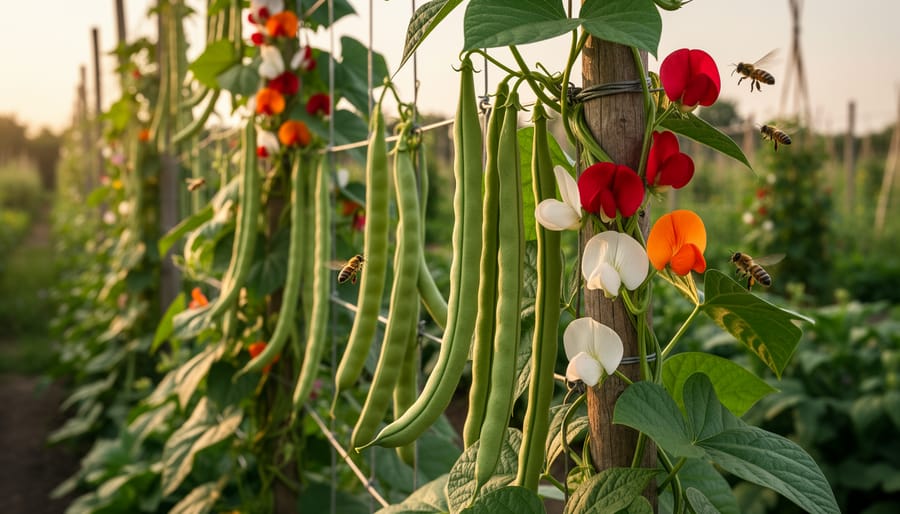
Yardlong and runner beans are the show-offs of the vegetable patch. Both are twining climbers that race skyward, and by midsummer they can cover a fence or trellis in a thick green curtain. That makes them a handy living privacy screen, especially if you want to hide a bare fence or an awkward corner without building anything fancy.
Give them real height to work with. Aim for supports at least six to eight feet tall, such as sturdy poles lashed into a teepee, a strong fence, or a tall trellis. These vines get heavy once they’re loaded with pods, so anchor the base well.
Runner beans put on a gorgeous display of red, pink, or white blooms, and bees and hummingbirds love them. Yardlong beans, sometimes called asparagus beans, produce long, slender pods that taste best when picked young and tender, usually around a foot long.
Plant both after the soil has warmed, and keep them watered during dry spells. The more you harvest, the more the vines keep producing, so check them often.
Quick Comparison: Which Climbing Vegetable Fits Your Space?
Not sure which climber suits your garden? Use this quick guide to match each plant to your space, sun, and comfort level. Most of these want full sun, which means six or more hours a day, though peas and Malabar spinach are a bit more flexible.
– Pole beans: Small to medium spaces, full sun, beginner-friendly. Easy to train up poles or string.
– Cucumbers: Small spaces, full sun, beginner-friendly. A simple trellis keeps fruit straight and clean.
– Peas: Small spaces, sun to light shade in cool weather, beginner-friendly. They only need light netting.
– Malabar spinach: Small to medium spaces, sun and heat, beginner-friendly. A great summer stand-in for spinach.
– Small-fruited squash and gourds: Medium spaces, full sun, confident beginner. Needs a sturdy trellis and fruit slings.
– Indeterminate tomatoes: Medium spaces, full sun, confident beginner. Regular tying and pruning pay off.
– Climbing melons: Medium to large spaces, full sun and warmth, intermediate. Needs strong support and patience.
– Yardlong and runner beans: Medium to large spaces, full sun, beginner-friendly. Tall supports are a must, and they make a pretty screen.
Tight on room? Start with peas, cucumbers, or pole beans.
Simple Trellis Setups and Care Tips for Healthy Vines
The easiest trellis to build is a bamboo teepee: push four to six tall poles into the soil in a circle, tie them together at the top, and wrap string around the middle. A cattle panel bent into an arch works just as well for heavier crops like squash and melons. For more inspiration, browse these DIY trellis ideas or read our guide to a full vertical garden setup.
When vines start reaching, gently guide them toward the support and loosely tie them with soft string. Twining beans mostly climb on their own, while tomatoes need ties as they grow.
Water deeply at the base a few times a week, and mulch to hold moisture. Feed with compost every few weeks, and check out these soil health tips to keep roots happy. Set your trellis before planting, so you never disturb young roots.
Climbing Vegetable Questions Gardeners Ask Most
Can I grow climbing vegetables in containers?
Yes. Pole beans, peas, and cucumbers do well in large pots with a trellis stuck in the soil. Choose a container at least 12 inches deep and water often.
How tall should a trellis be?
Six to eight feet suits most vines. Peas are happy with a shorter one, while runner beans and indeterminate tomatoes want the extra height.
How do I get vines to climb instead of sprawl?
Gently guide young stems toward the support and loosely tie them with soft string or strips of cloth. Once they get the idea, most take off on their own.
Time to Start Growing Up
Growing up is one of the easiest ways to get more from a small garden, so pick one or two climbers and give them a try this season. Start simple, set up your support early, and enjoy watching the vines take off. Your future self will be grateful at harvest time.