You can grow a thriving garden with plants that survive on rainfall alone or just one deep watering every week or two, even in scorching heat. These drought-tolerant champions store water in thick leaves, develop deep root systems, or simply evolved in arid climates where moisture is scarce. Perfect for gardeners facing water restrictions, living in dry regions, or anyone who wants a gorgeous outdoor space without constant watering chores.
I’ve been growing these resilient beauties in my own garden for years, and I’m always amazed at how they bounce back after weeks of neglect. While my vegetable beds demand daily attention during summer, my drought-tolerant corner stays lush with minimal effort. The secret isn’t just choosing the right plants, it’s understanding that “low water” doesn’t mean “no care.” Most of these plants need regular watering during their first season to establish strong roots, but once they’re settled in, they practically take care of themselves.
The ten plants you’ll find here represent a mix of succulents, perennials, groundcovers, and shrubs that deliver stunning color, interesting textures, and year-round appeal. Each one has proven itself in real gardens, not just greenhouses. Whether you’re dealing with sandy soil that drains too fast, a rocky slope that’s hard to irrigate, or simply a packed schedule that leaves little time for garden maintenance, these plants will reward you with beauty instead of guilt.
How We Chose These Water-Wise Plants
We didn’t just pick the first drought-tolerant plants we could find. Each one on this list earned its spot by meeting specific standards that matter in real gardens, not just on paper.
Here’s what we looked for:
- Proven drought tolerance, survives on rainfall alone or minimal watering once established
- Visual impact, beautiful blooms, attractive foliage, or striking architecture that earns garden space
- Wide adaptability, performs across multiple hardiness zones and different soil types
- Beginner-friendly, forgiving of mistakes and doesn’t demand specialized care
- Long-term reliability, comes back year after year or self-seeds without becoming invasive
We focused on plants we’ve actually grown or seen thriving in water-stressed conditions, not theoretical choices. Some are garden classics for good reason. Others deserve more attention than they get. All of them will reward you with beauty while asking almost nothing in return. The goal was a diverse mix that works in different climates and garden styles, so whether you’re in the desert Southwest or dealing with summer water restrictions elsewhere, you’ll find options that fit your space.
1. Lavender, Fragrant Mediterranean Beauty
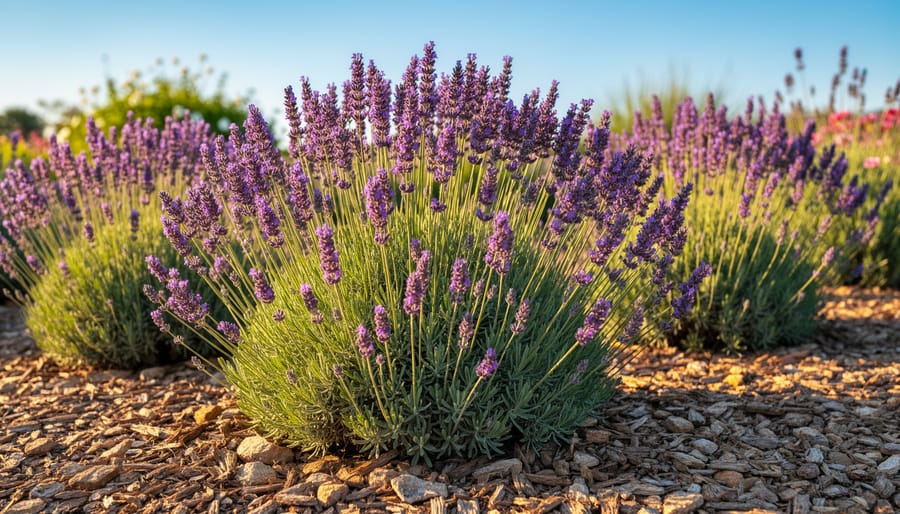
Lavender brings that classic Mediterranean charm to any garden while asking almost nothing in return. Once established, these silvery-green shrubs laugh at drought, thriving on scanty rainfall and blazing sun that would wilt less hardy plants. The iconic purple flower spikes appear from late spring through summer, filling the air with that unmistakable, calming fragrance that’s equally at home in sachets, culinary dishes, or simply enjoyed on a warm evening stroll through the garden.
What makes lavender one of the best plants that barely need water is its preference for being left alone. After the first growing season, you can water established lavender every two to three weeks during dry spells, or even less if you get occasional rain. Overwatering is actually the biggest threat to lavender, often causing root rot in heavy or waterlogged soil.
For success, plant lavender in full sun with at least six hours of direct light daily. The soil must drain quickly. If you have clay or heavy soil, amend it generously with gravel or sand, or grow lavender in raised beds. Slightly alkaline soil is ideal, though lavender adapts to neutral pH just fine.
Space plants 18 to 24 inches apart to allow good air circulation. Prune lightly after flowering to maintain a compact shape and encourage fresh growth. English lavender varieties like ‘Munstead’ and ‘Hidcote’ offer the best cold hardiness, while Spanish and French types provide more dramatic flower shapes for warmer climates.
2. Sedum (Stonecrop), The Ultimate Succulent Ground Cover
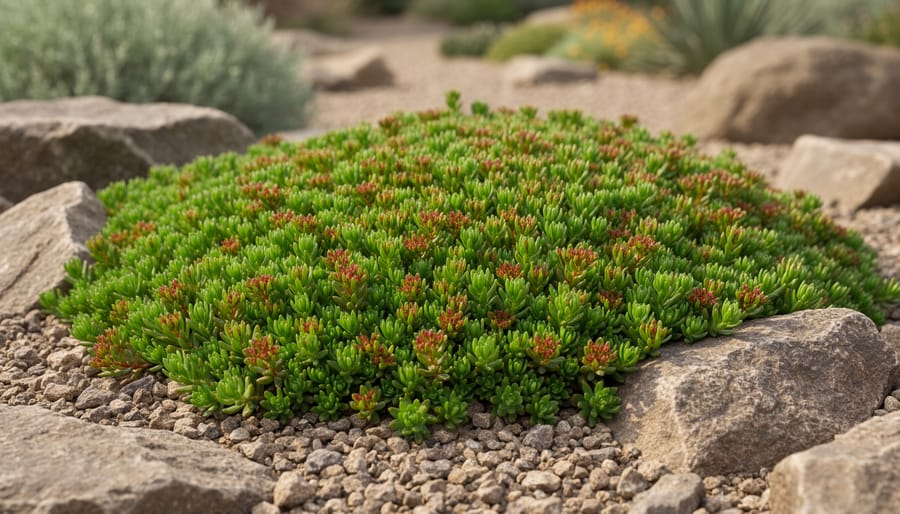
Sedum earns its nickname “stonecrop” for good reason: it grows happily on rock walls, gravel paths, and the kind of neglected soil that would send other plants into decline. These succulents store water in their fleshy leaves, which is why they barely need watering once settled in your garden. I learned this the hard way when I killed my first batch by being too attentive with the hose. Now mine get rainfall and nothing more.
The variety is stunning. Creeping sedums like Sedum acre form low mats of tiny leaves that explode with starry yellow flowers in summer, perfect for filling gaps between pavers. Upright types such as ‘Autumn Joy’ grow knee-high with pink flower clusters that deepen to bronze in fall, attracting butterflies for months. Foliage colors range from bright lime green to burgundy to silvery blue-gray, giving you design options that go far beyond typical ground covers.
Plant sedum in spring or early fall. They’ll take full sun to light shade, though flower production peaks with at least six hours of direct light. The soil doesn’t need to be rich, just well-drained. Heavy clay that stays soggy will rot the roots, so amend with coarse sand or gravel if your soil holds water. Space plants according to the variety’s mature spread, usually six to twelve inches apart for creepers.
Water lightly at planting, then back off. Sedums actually perform better when slightly stressed, developing more compact growth and richer leaf color. Fertilizer is unnecessary and often leads to weak, floppy stems. Divide clumps every three to four years if they outgrow their space or develop bare centers.
3. Yarrow, Tough Wildflower with Garden Appeal
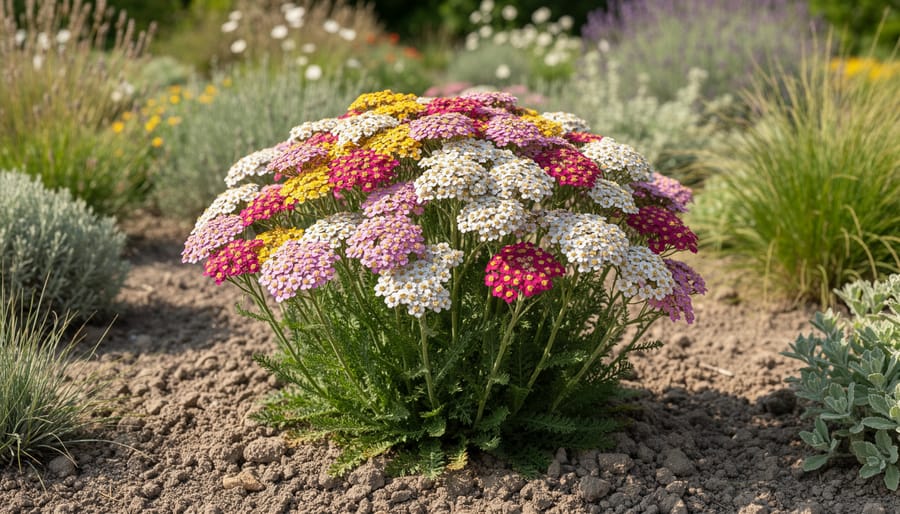
Yarrow deserves its reputation as a wildflower-turned-garden-star. Once established, it’ll sail through summer on rainfall alone, making it one of the best plants that barely need water for sunny borders and meadow gardens. I’ve seen yarrow thrive in neglected corners where other perennials gave up, blooming cheerfully while I forgot to water for weeks.
The flat-topped flower clusters come in shades from classic white to sunny yellow, soft pink, and deep crimson. They sit atop feathery, fern-like foliage on sturdy stems that rarely need staking. Butterflies and beneficial insects adore the landing-pad blooms, and goldfinches feast on the seeds in fall, adding movement and life to your garden well beyond the flowering season.
Plant yarrow in full sun and well-drained soil, even poor or rocky ground. It actually prefers lean conditions and can get floppy in rich, overly fertile beds. Water occasionally during the first season to help roots settle in, then step back and let nature take over. Once established, yarrow laughs at drought and asks for nothing.
Deadhead spent blooms to encourage more flowers, or leave them for wildlife and winter interest. Divide clumps every three to four years in spring if they spread too enthusiastically. Cut stems back by half in late spring if plants flop, but honestly, yarrow’s easiest role is in casual, naturalistic plantings where its relaxed habit looks intentional. This tough perennial proves that low-maintenance plants can deliver both beauty and ecological value without demanding your constant attention.
4. Russian Sage, Silvery Spires for Hot, Dry Spots
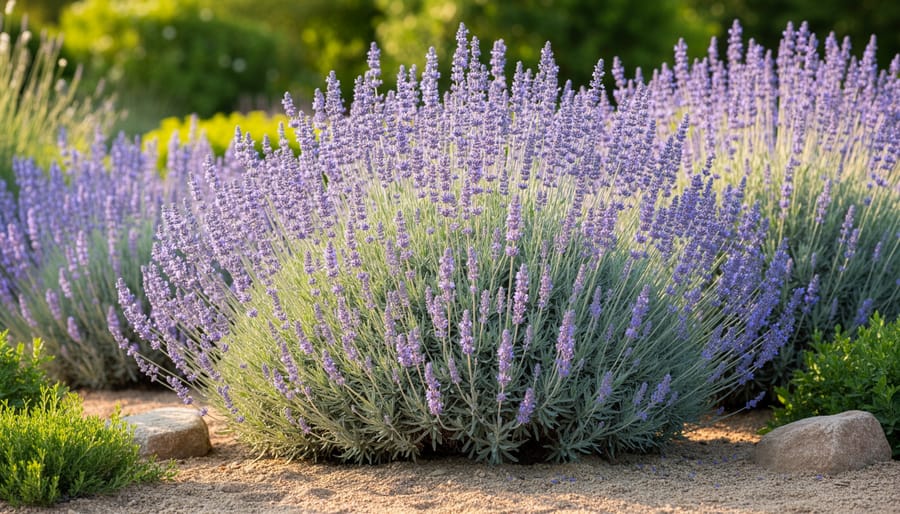
Russian sage (Perovskia atriplicifolia) earns its spot on any list of plants that barely need water with zero effort. Once established, it thrives on neglect, asking for little more than full sun and occasional rain. I planted three along my driveway five years ago, and they’ve survived scorching summers, forgotten watering schedules, and bone-dry soil without complaint.
The plant’s wispy purple-blue flower spikes rise 3-4 feet tall from mid-summer through fall, creating a hazy, cloud-like effect that softens garden edges beautifully. Its silvery-gray foliage stays attractive all season and releases a pleasant sage-like scent when brushed. Deer won’t touch it, and the woody stems hold their shape through winter, providing structure when most perennials have disappeared.
Plant Russian sage in the hottest, driest corner of your yard, the spot where everything else struggles. It prefers lean, well-drained soil and actually performs worse with rich amendments or frequent watering. Space plants 2-3 feet apart; they’ll fill in quickly.
Pruning keeps Russian sage compact and prevents floppiness. In late winter or early spring, cut the entire plant back to 6-12 inches. Don’t worry about being too aggressive, new growth emerges vigorously from the woody base. If plants sprawl mid-season, trim them back by one-third after the first flush of blooms to encourage bushier growth and a second flowering.
Pair Russian sage with black-eyed Susans or sedums for a low-water border that looks intentional, not forgotten.
5. Blanket Flower (Gaillardia), Cheerful Color All Summer
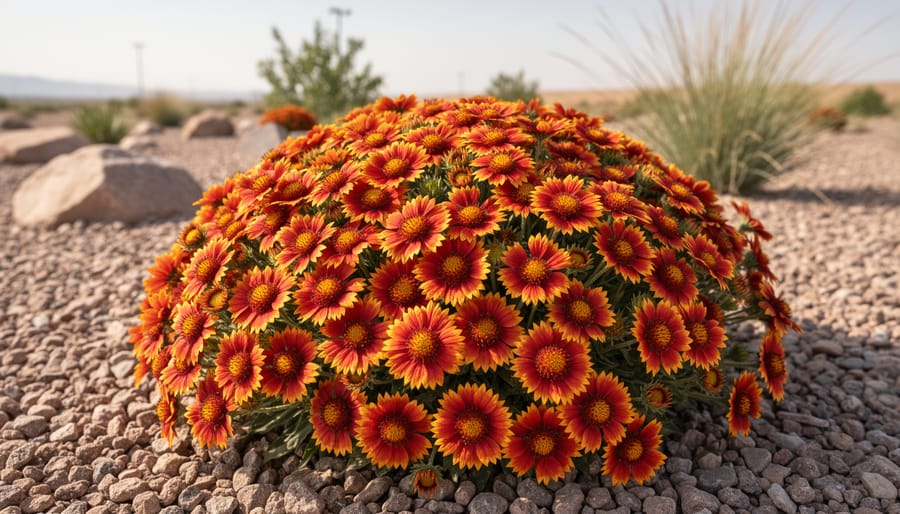
Blanket flower is a champion among plants that barely need water, delivering month after month of brilliant color with almost no fuss. The large, daisy-like blooms combine fiery red centers with golden-yellow petal tips, creating a warm, inviting display from late spring through fall. Some varieties bloom continuously for six months or more, making blanket flower one of the hardest-working perennials for dry gardens.
Once established, blanket flower thrives on neglect. I learned this the hard way when I pampered my first plants with regular watering, they grew leggy and flopped over. The following year, I planted a new batch in sandy soil and watered only during the first month. Those plants stayed compact, bloomed nonstop, and never needed staking.
Give blanket flower full sun and well-drained soil. After planting, water weekly for three to four weeks, then back off completely. These prairie natives actually prefer lean, dry conditions once their roots reach down. Deadheading spent blooms keeps plants looking tidy and encourages more flowers, but it’s not essential, blanket flower will bloom regardless.
To maintain compact growth, shear plants back by one-third in midsummer if they start to sprawl. A light trimming after the first heavy flowering flush promotes bushier regrowth and a second wave of blooms. In fall, leave the seed heads for goldfinches to enjoy, or cut plants back to a few inches above ground level. They’ll return reliably each spring without any supplemental watering.
6. Ice Plant, Jewel-Toned Succulent Blooms
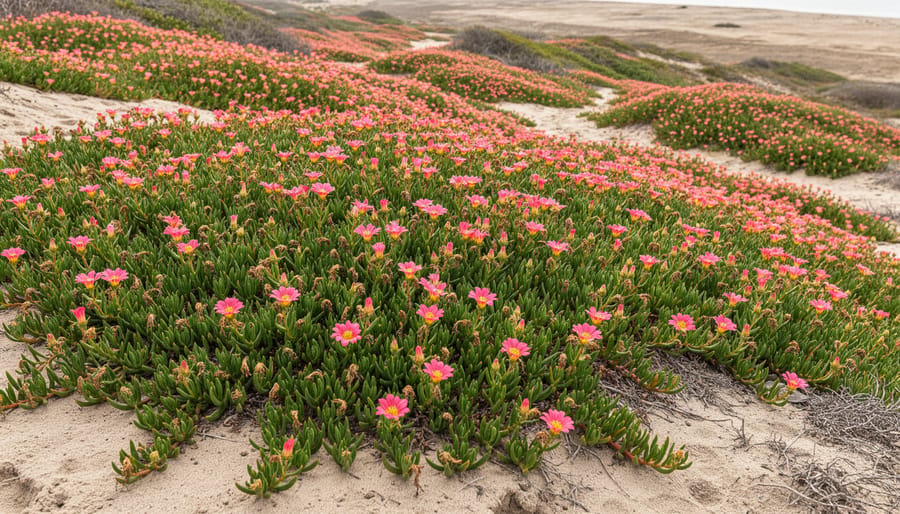
Ice plant (Delamea cooperi, formerly Delosperma) transforms dry, struggling spots into jewel-box displays with practically zero effort. The fleshy, succulent leaves store water like tiny tanks, so once established, this tough little ground cover can go weeks without irrigation. From late spring through fall, it erupts in dazzling daisy-like flowers in shades of hot pink, magenta, orange, yellow, and purple, colors so saturated they almost don’t look real in full sun.
Ice plant shines in sandy, well-drained soils where other plants wilt. It’s perfect for coastal gardens because it tolerates salt spray and poor soil, but it performs equally well inland if you give it gritty drainage. Plant it along pathways, in rock gardens, or cascading over retaining walls where its low, spreading habit (usually 3-6 inches tall) creates a colorful carpet.
Full sun is essential for the best bloom show. Space plants 12-15 inches apart; they’ll fill in quickly during the growing season. Water every couple of weeks the first summer to help roots establish, then back off completely. Overwatering causes root rot, so err on the dry side. In frost-prone areas, choose hardy varieties like Delosperma cooperi ‘Table Mountain’, which survives winters in Zone 5. Trim back any frost-damaged foliage in early spring, and the plant will bounce back vigorously. For gardeners chasing vibrant color without the watering chore, ice plant delivers, reliably, beautifully, and with minimal fuss.
7. California Poppy, Native Golden Sunshine
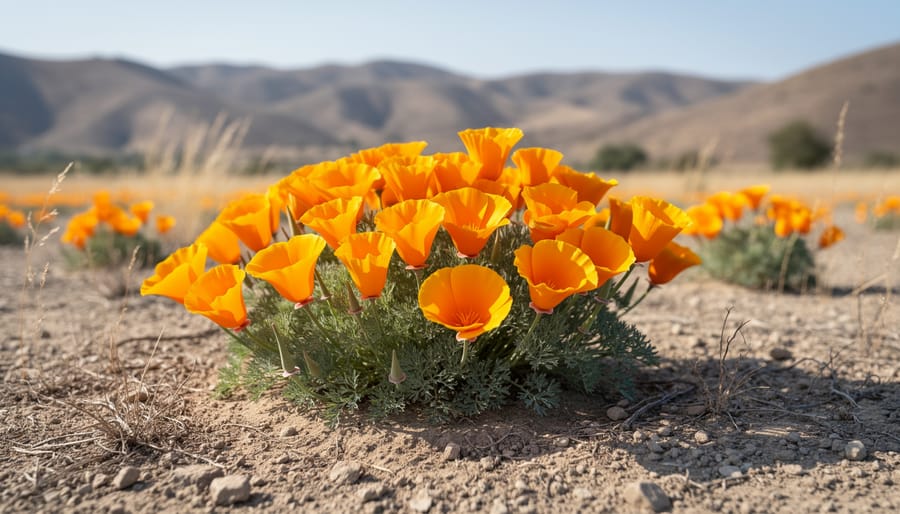
California poppies (Eschscholzia californica) are the state flower of California for good reason, these cheerful golden-orange blooms practically thrive on neglect. Their silky, four-petaled flowers open in full sun and close at dusk or on cloudy days, creating a living display that dances with the day’s rhythms. Once established, they’re among the most reliable minimal watering blooms you can grow, preferring hot, dry conditions that would stress out most garden flowers.
Native to the western United States, California poppies have evolved to handle drought, poor soil, and blazing heat. They self-seed enthusiastically, meaning a single planting can naturalize into drifts of golden sunshine year after year without any effort on your part. You’ll find them in shades ranging from classic orange to yellow, cream, and even soft pink in newer cultivars.
Starting from seed is incredibly easy. Scatter seeds directly where you want them to grow in fall or early spring, barely press them into the soil (they need light to germinate), and water lightly until seedlings appear. After that, natural rainfall is usually enough. They pair beautifully with other low-water plants like yarrow and salvia, creating a cottage-garden effect with almost no maintenance. Deadheading spent blooms extends the flowering season, but letting some go to seed ensures next year’s show arrives on schedule.
8. Salvia, Hummingbird Magnet in Every Color
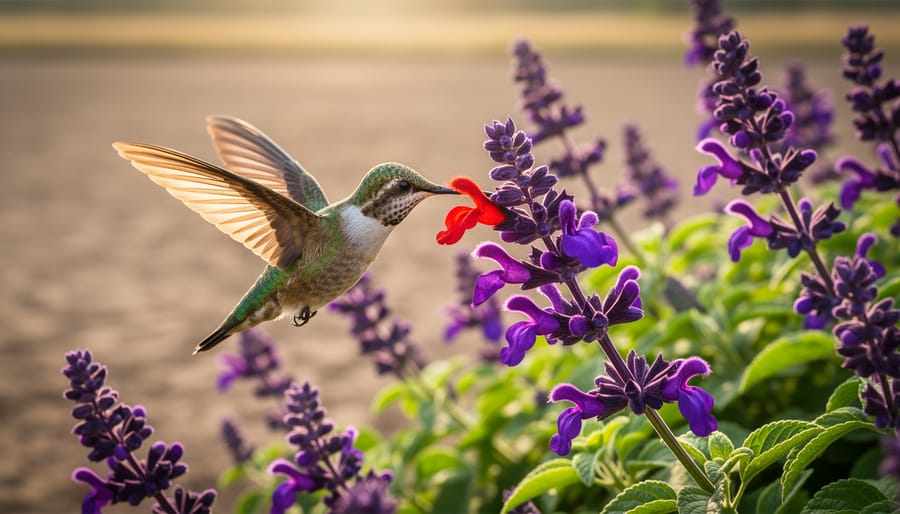
Salvia is a gardener’s best friend when you’re looking for color, pollinator action, and almost zero fussing with the hose. With hundreds of varieties in nearly every color, deep purple, fiery red, electric blue, soft pink, even white, there’s a salvia for every garden style and climate. Those tubular flowers are perfectly shaped for hummingbird beaks, and you’ll see butterflies and bees working them all day long. Once established, salvia asks for water only during the driest stretches, making it ideal if you’re exploring water-saving irrigation or simply want to cut back on watering chores.
For cottage gardens, try the classic perennial salvia (Salvia nemorosa) with its tall purple spikes that bloom from late spring into summer. If you’re after a bold statement in a modern or xeric design, Mexican bush sage (Salvia leucantha) delivers velvety purple-and-white flowers on sturdy, shrubby plants. In hot, dry regions, autumn sage (Salvia greggii) thrives with minimal care and comes in sunset shades that light up borders. Most salvias prefer full sun and well-drained soil, and they actually perform better with lean conditions than rich, constantly moist ground.
When planning your layout, consider how salvias’ upright or mounding forms work with other drought-tolerant plants according to basic landscaping principles they make excellent mid-border anchors or repeating accents. Deadhead spent blooms to encourage more flowers, or let the seed heads stand for winter interest and bird food. Salvia rewards neglect with beauty.
9. Black-Eyed Susan, Prairie Tough, Garden Beautiful
Black-eyed Susans (Rudbeckia) are the garden workhorses you can count on year after year, even when summer turns brutal. These cheerful natives put on a show with bright golden-yellow petals surrounding dark chocolate centers, blooming from midsummer through fall without demanding constant attention at the hose.
Once established, usually after the first season, black-eyed Susans laugh at heat waves and dry spells that wilt less resilient plants. Their deep taproots mine moisture from soil layers other flowers can’t reach, making them genuinely drought-tolerant. I’ve watched mine sail through three-week stretches without rain, still standing tall and blooming while thirstier perennials flagged.
They adapt to nearly any soil for water-wise plants from clay to sandy loam, though they bloom most prolifically in well-draining ground. Full sun brings the heaviest flower production, but they’ll tolerate partial shade. Hardy in zones 3-9, black-eyed Susans handle both northern winters and southern summers with equal grace.
Plant them in spring or early fall, water regularly the first season to establish those crucial deep roots, then step back. Deadheading spent flowers extends the bloom period, but even if you skip it, they’ll self-seed modestly for next year’s display. Divide clumps every 3-4 years in early spring if they outgrow their space, simply dig, split with a sharp spade, and replant divisions. They’ll reward your minimal effort with years of reliable, sunny color.
10. Agave, Architectural Drama with Zero Fuss
Agave is the showstopper of drought-tolerant plants, those dramatic rosettes of thick, sculptural leaves instantly transform a garden from ordinary to stunning. Each fleshy leaf stores water like a natural reservoir, allowing agave to survive months without a drop of rain. I’ve watched my own agave sit through entire summers with zero supplemental watering, looking more spectacular than plants I fuss over constantly.
These architectural beauties work brilliantly as focal points in xeriscaped beds, flanking entryways, or anchoring rock gardens. Smaller varieties like Agave parryi fit perfectly in containers, while giants like century plant command attention in expansive landscapes. The range of sizes, colors, from blue-gray to striped green, and forms means there’s an agave for nearly any design vision.
Once established, agave needs virtually no care. No deadheading, no pruning, no fertilizing, and certainly no watering schedule. Just let it do its thing. Many varieties produce tall flower spikes after years of growth, creating a memorable garden moment before the main rosette naturally dies back (though pups often replace it).
The only real consideration? Those spiny leaf tips are seriously sharp. Plant agave away from walkways, play areas, or anywhere people might brush against it. I learned this the hard way reaching past one in shorts. Place them where you can admire their bold form from a safe distance, and they’ll reward you with years of dramatic, zero-fuss beauty that thrives on neglect.
Quick Tips for Success with Low-Water Plants
The biggest mistake I made when I first planted drought-tolerant plants was treating them like my thirsty roses. I watered lavender and sedum on the same schedule as everything else, and within weeks, I had root rot instead of a thriving garden. Here’s what I learned: these plants need your attention at the beginning, then they want you to leave them alone.
Start with the soil. Mix in compost or sand if you have heavy clay, good drainage matters more than fertility for these plants. Plant in spring or fall when temperatures are moderate, giving roots time to settle before extreme heat or cold arrives.
Water deeply but infrequently during establishment, encouraging roots to grow down rather than staying shallow. Apply 2-3 inches of mulch around plants to conserve moisture and regulate soil temperature, keeping it an inch away from stems to prevent rot.
After two to three months, start stretching out watering intervals. Your plants will tell you when they’re ready: if they look perky between waterings, they’re established. That’s when the real magic happens, you get to step back and let them do their thing with almost no help from you.
Frequently Asked Questions
How often should I water plants that barely need water during their first season?
Water new plants once or twice a week for the first 6-8 weeks while their roots establish, then gradually reduce frequency. By the end of the first growing season, most drought-tolerant plants can handle weekly watering or less, and by the second year, they’ll thrive on rainfall alone in most climates.
Can these low-water plants grow successfully in containers?
Yes, most drought-tolerant plants adapt well to containers, especially smaller varieties like sedum, lavender, and ice plant. Use well-draining potting mix and containers with drainage holes, and expect to water more frequently than in-ground plants since pots dry out faster, typically once or twice weekly in summer rather than monthly.
When’s the best time to plant drought-tolerant varieties?
Plant in early spring or fall when temperatures are mild and rainfall is more consistent, giving roots time to establish before facing extreme heat or cold. Avoid planting during summer’s peak heat, which stresses new plants and requires more frequent watering to prevent failure.
How do I combine these plants to create an attractive, cohesive garden design?
Group plants with similar water needs together, then layer by height and bloom time, tall Russian sage or salvia in back, mid-height yarrow or blanket flower in the middle, and low sedum or ice plant as ground cover. Repeat key plants in odd-numbered groups of 3, 5, or 7 for visual rhythm, and mix bloom colors that complement each other like purple lavender with yellow black-eyed Susans.
Remember that “barely needs water” doesn’t mean “never water.” Even the toughest drought-tolerant plants appreciate occasional deep watering during extended dry spells, especially in containers or extremely hot climates. Once established, though, these plants truly give you freedom from constant watering routines. I learned this the hard way when I anxiously watered my new lavender every few days, it actually struggled until I backed off and let the soil dry out between waterings. Trust the process, give them time to settle in, and you’ll discover just how independent these resilient beauties can be.
You’ve just discovered that gorgeous, colorful gardens and responsible water use aren’t mutually exclusive. With these ten plants that barely need water, you can create outdoor spaces that thrive on benign neglect rather than constant attention. Once they’re established, these beauties reward you with months of blooms, interesting foliage, and zero guilt about your water bill.
The best part? You don’t need to transform your entire garden overnight. Start with two or three plants that excite you most, maybe that fragrant lavender near your front door, or a patch of cheerful blanket flowers where you currently struggle to keep thirsty annuals alive. As you watch them flourish with minimal effort, you’ll gain confidence to expand your water-wise palette.
Your garden should bring joy, not stress. These drought-tolerant plants give you both beauty and freedom, the freedom to travel without worrying about wilting flowers, the freedom to spend summer weekends relaxing instead of watering, and the freedom to garden sustainably. Pick up a few plants this weekend and enjoy watching them prove that less water truly can mean more garden success.