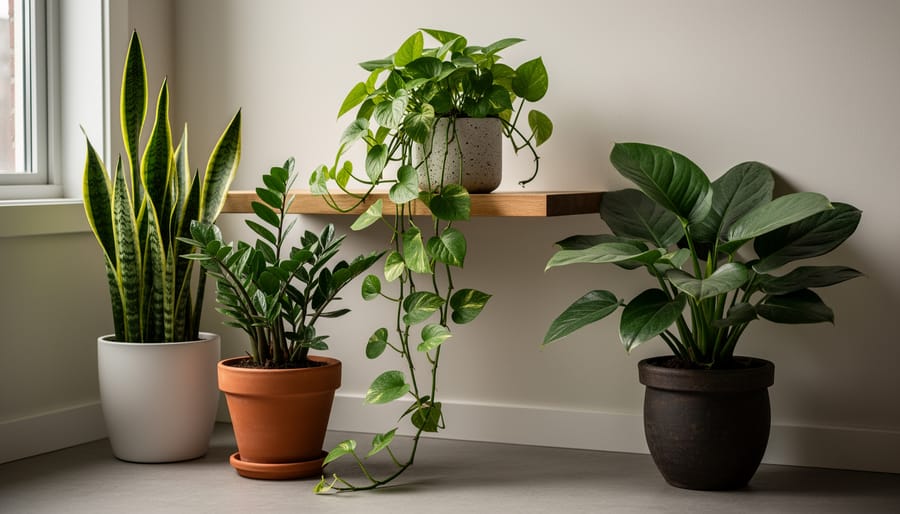
Transform that forgotten corner or busy lifestyle into a thriving indoor garden with plants that practically care for themselves. If you’ve struggled with dying houseplants or worry you lack a green thumb, you’re not alone—but the solution is simpler than you think. Choose species that naturally evolved in forest understories and arid climates, where they learned to survive on minimal light and infrequent rainfall. These resilient low-water plants store moisture in their leaves or roots, thriving on neglect rather than constant attention.
The best low-light, low-water houseplants include pothos, snake plants, ZZ plants, and cast iron plants—each proven to survive in north-facing rooms, bathrooms, or offices with only fluorescent lighting. These champions tolerate watering every two to three weeks, making them perfect for frequent travelers or anyone juggling a packed schedule. I’ve watched my own snake plant flourish in a dim hallway for years with watering so infrequent I sometimes forget it’s there. The secret lies in matching plant biology with your actual living conditions rather than fighting against them, creating a green space that brings joy without demanding hours of maintenance.
Why Low Light and Low Water Plants Are Perfect Together
Understanding why low light and low water needs naturally pair together is like unlocking a secret that makes plant care so much easier. It all comes down to photosynthesis, the process plants use to convert light into energy. When I first learned this connection, it completely changed how I approached caring for my indoor jungle!
Here’s the simple truth: plants growing in low light conditions photosynthesize at a much slower rate than their sun-loving cousins. Think of photosynthesis as a plant’s metabolism. Just like you might feel less hungry on a lazy day indoors versus after a long hike, plants need less “fuel” when they’re not actively producing energy through photosynthesis. That fuel, in large part, is water.
This biological relationship happens because water serves multiple purposes in photosynthesis. Plants pull water up through their roots, transport nutrients, and release moisture through tiny pores in their leaves called stomata. When there’s less light available, the entire system slows down. The plant opens its stomata less frequently, loses less moisture to evaporation, and simply doesn’t need to drink as often.
This natural pairing is fantastic news for busy gardeners or anyone who’s killed a plant by overwatering. These low light, low water plants are essentially designed to forgive you for forgetting to water them. They’ve adapted to survive with less of everything, making them incredibly resilient houseplants.
The Best Low Light, Low Water Houseplants for Your Home
Snake Plant (Sansevieria)
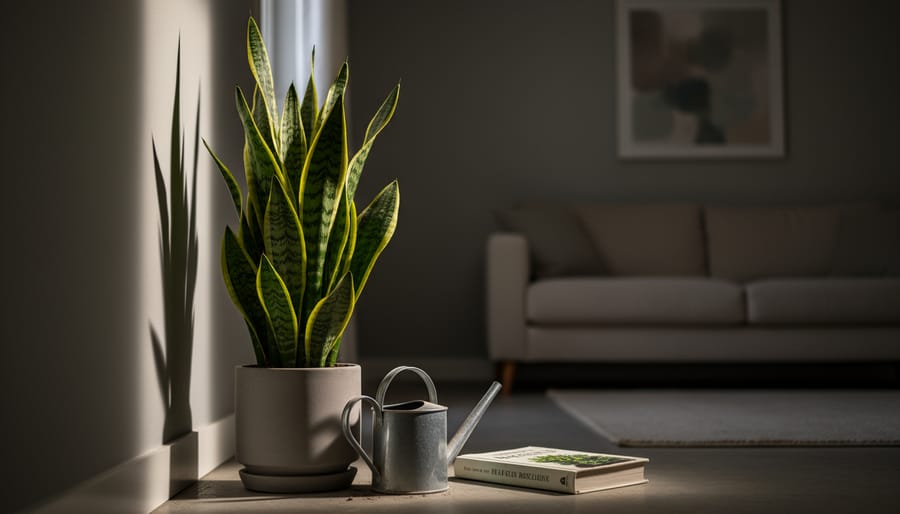
If you’re looking for the ultimate beginner-friendly houseplant, let me introduce you to the snake plant—your new indestructible companion! I remember gifting one to my friend who swore she had a “black thumb,” and two years later, it’s still thriving with minimal effort.
Snake plants, also called mother-in-law’s tongue, come in several striking varieties. The classic Sansevieria trifasciata features tall, sword-like leaves with yellow edges, while the cylindrical snake plant offers unique tubular foliage. My personal favorite is the dwarf variety, ‘Hahnii,’ which stays compact and perfect for smaller spaces.
These champions tolerate everything from bright indirect light to the dimmest corners of your home. I’ve successfully grown them in windowless bathrooms and dark hallways where other plants struggled. Their thick, succulent-like leaves store water efficiently, meaning you’ll only need to water once every 2-3 weeks during growing season—even less in winter.
Here’s the beauty: snake plants actually prefer neglect. Overwatering is their only real weakness, so when in doubt, wait another week. They’re also natural air purifiers, removing toxins while you sleep. For busy gardeners or frequent travelers, snake plants offer peace of mind and greenery without the guilt of forgotten watering schedules.
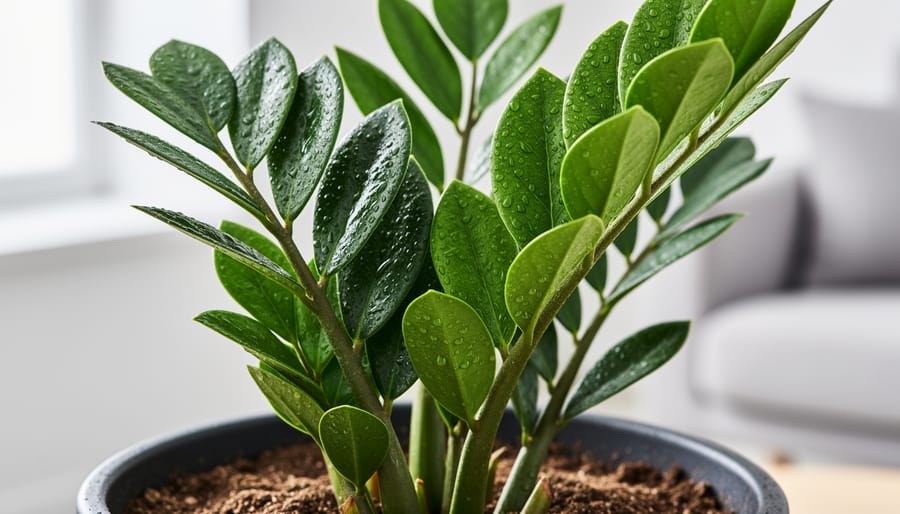
ZZ Plant (Zamioculcas zamiifolia)
If you’re looking for a houseplant that practically thrives on neglect, the ZZ plant might just become your new best friend. I’ll never forget placing one in my dimly lit bathroom corner five years ago and forgetting about it for weeks at a time—it still looks as vibrant as the day I brought it home!
The ZZ plant’s glossy, waxy leaves aren’t just beautiful; they’re actually designed to store water, making this plant incredibly drought-tolerant. You can water it once every two to three weeks, or even stretch it to once a month during winter. Those shiny leaves also help the plant maximize whatever light it receives, whether that’s a north-facing window or a spot far from any natural light source.
What makes the ZZ plant especially beginner-friendly is its slow growth pattern. While some gardeners might find this frustrating, it actually means less work for you—no constant repotting or pruning needed. The plant typically grows just a few inches per year, staying compact and manageable. Plus, its thick rhizomes underground act like built-in water reservoirs, so even if you occasionally forget watering day, your ZZ plant will forgive you. Just remember to let the soil dry completely between waterings to keep those roots healthy.
Pothos (Epipremnum aureum)
If you’re looking for a forgiving houseplant that practically thrives on neglect, pothos is your new best friend! I’ve had a golden pothos living happily in my bathroom for three years now, where it sees minimal natural light, and I honestly forget to water it for weeks at a time. These trailing beauties come in gorgeous varieties like golden, marble queen, and neon, each with their own unique leaf patterns.
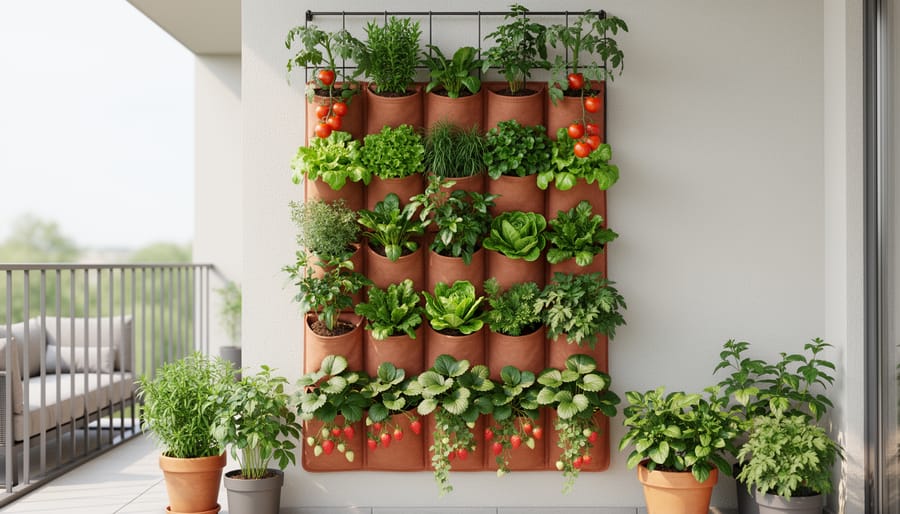
What makes pothos perfect for dark corners is their ability to adapt to low-light conditions without losing their vigor. They’re naturally understory plants in tropical forests, so they’re built to handle shade. Place them on shelves, in hanging baskets, or train them along walls using vertical gardening solutions for a living curtain effect.
Water your pothos only when the soil feels dry an inch down, usually every 10-14 days. Yellow leaves mean you’re overwatering, while brown edges suggest it’s too dry. Here’s the fun part: propagation is incredibly easy! Simply snip a stem below a leaf node, pop it in water, and watch roots develop within weeks. It’s the perfect plant for sharing with friends and spreading the greenery love.
Cast Iron Plant (Aspidistra elatior)
If you’ve ever wondered how a plant earned a nickname that sounds like cookware, the Cast Iron Plant is about to become your new best friend. This Victorian-era favorite got its tough-as-nails reputation from surviving in the darkest corners of homes heated by coal and gas—conditions that would make most plants wave the white flag.
What makes this plant truly special is its ability to bounce back from just about anything you throw at it—or forget to give it. I once left mine in a basement corner for three months (not my proudest gardening moment!), and it emerged looking as dignified as ever. It tolerates deep shade, irregular watering, temperature fluctuations, and even poor soil without batting an eye.
Despite its rugged nature, the Cast Iron Plant brings unexpected elegance to your space. Its long, arching dark green leaves grow directly from the soil in graceful clumps, reaching about two feet tall. The foliage has a glossy, architectural quality that adds sophistication to any room—think statement plant that requires zero drama.
Water only when the top few inches of soil feel completely dry, which might mean once every two to three weeks. During winter, you can stretch it even longer. This is the ultimate plant for forgetful waterers or anyone who travels frequently.
Chinese Evergreen (Aglaonema)
If you’re looking for a houseplant that’s practically foolproof while adding a splash of color to dim corners, Chinese Evergreen is your new best friend. I discovered this gorgeous plant when I was just starting out with indoor gardening, and it survived my erratic watering schedule like a champ.
What makes Chinese Evergreens so special is their stunning variety. From silvery-green ‘Silver Bay’ to the pink-splashed ‘Siam Aurora’ and deep green ‘Emerald Beauty’, there’s a color palette to match any décor. These beauties actually prefer indirect light and can thrive in surprisingly shady spots where other plants would sulk.
The watering routine couldn’t be simpler: once every one to two weeks is plenty. Let the top inch or two of soil dry out between waterings, and you’re golden. Overwatering is actually more dangerous than under-watering for these resilient plants.
As a bonus, Chinese Evergreens earned recognition in the NASA Clean Air Study for their ability to filter indoor air pollutants like formaldehyde and benzene. They’re quietly working to improve your home’s air quality while looking fabulous in that forgotten corner.
Dracaena Varieties
Dracaenas are among my favorite forgiving houseplants, perfect for those spaces where other plants have given up on you! These architectural beauties can tolerate shadier corners and won’t complain if you forget a watering session or two.
The Dragon Tree (Dracaena marginata) steals the show with its spiky, red-edged leaves atop slender stems, creating a sculptural look that works in modern or traditional homes. I’ve seen these thrive in north-facing offices for years with minimal attention. The Corn Plant (Dracaena fragrans) offers broader, arching leaves striped with yellow or lime green, resembling tropical foliage without the fuss. It’s especially suited for floor placement in dim hallways or bedroom corners.
Another standout is the Janet Craig variety, featuring glossy, dark green leaves that practically purify the air while asking for very little in return. These plants prefer their soil to dry out between waterings—in fact, overwatering causes more problems than underwatering. They’ll slowly grow toward whatever light is available, so rotate them occasionally for even growth. With their slow-growing nature and easygoing requirements, dracaenas make excellent starter plants for anyone building confidence with houseplant care.
Quick Comparison: Which Plant Is Right for Your Space?
Choosing the perfect low light, low water houseplant is like finding the right roommate—you want one that fits your lifestyle and space! I remember when I first started with houseplants, I was overwhelmed by all the options. Let me help you navigate this decision more easily than I did.
The beauty of these resilient plants is that they’re forgiving, but each has its own personality. Think about your space honestly. Do you have a bathroom with one small window, or a north-facing living room? How often are you away from home? These practical considerations matter more than you might think.
Here’s a handy comparison to match plants with your specific situation:
| Plant Name | Light Tolerance | Watering Frequency | Mature Size | Best Placement |
|---|---|---|---|---|
| Snake Plant | Very low to bright indirect | Every 2-3 weeks | 1-4 feet tall | Bedrooms, offices |
| ZZ Plant | Low to moderate | Every 2-4 weeks | 2-3 feet tall | Living rooms, entryways |
| Pothos | Low to bright indirect | Weekly when dry | Trailing up to 10 feet | Hanging baskets, shelves |
| Cast Iron Plant | Very low light | Every 2-3 weeks | 2 feet tall | Dark corners, hallways |
If you travel frequently or honestly forget to water plants, the snake plant or ZZ plant are your best friends—they actually prefer neglect. For renters or those who move often, pothos are lightweight and adapt quickly to new environments. If you’re decorating that corner where nothing seems to grow, the cast iron plant earns its tough-as-nails name.
Consider your aesthetic too. Want architectural drama? Go tall with a snake plant. Prefer softer, cascading greenery? Pothos will trail beautifully down a bookshelf.
Essential Care Tips for Low Light, Low Water Success
How to Tell When Your Plant Actually Needs Water
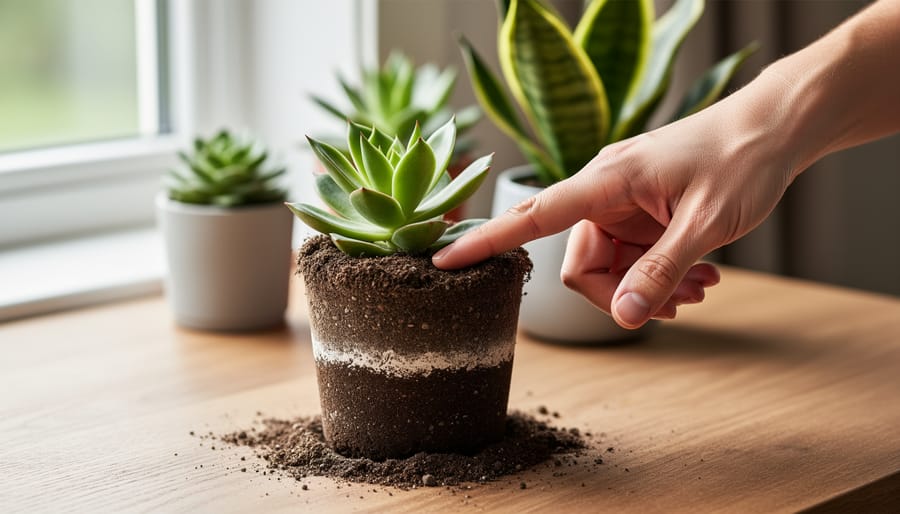
The best way to know if your plant needs water is the trusty finger test—simply stick your finger about two inches into the soil. If it feels dry at that depth, it’s time to water. If there’s any moisture, wait a few more days and check again. I learned this trick from my grandmother, and it’s never steered me wrong!
Watch for signs your plant is genuinely thirsty: leaves that feel thin or papery, slight drooping, or soil that’s pulling away from the pot’s edges. These hardy plants evolved to handle drought, so they’ll bounce back quickly once watered. On the flip side, overwatering shows up as yellowing leaves, mushy stems, or a sour smell from the soil—all red flags to cut back immediately.
With these resilient beauties, less truly is more. They’d rather you forget about them occasionally than hover with a watering can. Most low-light, low-water plants only need watering every two to three weeks, sometimes even less during winter when growth naturally slows down.
Soil and Pot Selection That Prevents Root Rot
The right soil and pot combination is your secret weapon against root rot—trust me, I learned this the hard way with my first pothos! For low-water houseplants, choosing the proper setup makes all the difference between thriving plants and soggy disappointments.
Start with a well-draining soil mix that prevents water from sitting around roots. Look for potting mixes labeled for cacti and succulents, or create your own by combining regular potting soil with perlite or coarse sand in a 2:1 ratio. Good soil quality allows excess moisture to drain quickly while still retaining enough for your plant’s needs.
Drainage holes are non-negotiable—every pot needs at least one! If you’ve fallen in love with a decorative pot without holes, use it as an outer cachepot and keep your plant in a plastic nursery pot inside.
Size matters too. Choose pots only 1-2 inches larger than your plant’s root ball. Oversized containers hold excess soil that stays wet longer, creating the perfect environment for root rot. When your plant outgrows its home, gradually size up rather than making dramatic jumps.
Light Level Assessment and Placement
Low light doesn’t mean no light—it typically refers to spots that receive indirect sunlight or are several feet away from windows. Think about north-facing rooms, corners away from windows, or spaces where you can comfortably read during the day without turning on a lamp. I’ve found that bathrooms, hallways, and home offices often fall into this category.
To test if a location is truly low light, spend time in the space during daylight hours. If shadows are soft and barely visible, you’re in the right zone. Rooms with bright, south-facing windows actually provide medium to high light, especially within a few feet of the glass.
Watch your plants for signs they need more brightness—pale, leggy growth stretching toward windows, leaves losing their vibrant color, or stunted new growth all signal insufficient light. Many indoor gardening tips suggest rotating your plants occasionally to ensure even growth, but low-light varieties are generally forgiving about their placement.
Common Mistakes (And How to Avoid Them)
I learned this lesson the hard way when I first brought home a snake plant, thinking “low water” meant I should practically ignore it. Within months, I’d somehow managed to both overwater it during guilt-ridden watering sessions and then leave it bone-dry for weeks. Sound familiar? You’re not alone! Many new plant parents make similar mistakes with these resilient beauties, but the good news is they’re easy to fix.
The biggest pitfall is overcompensating with water. When we see our low-light plants sitting quietly in a dim corner, we often think they need extra water to make up for the lack of sunshine. Actually, the opposite is true. Plants in low light photosynthesize more slowly, meaning they use less water. I now check the soil with my finger before watering—if the top two inches feel dry, it’s time. If not, I wait another few days.
Here are the most common mistakes to watch out for:
- Overwatering from anxiety or a fixed schedule—water only when soil is dry, not by the calendar
- Over-fertilizing to “help” struggling plants—low-light plants need minimal feeding, just once or twice during growing season
- Placing plants in total darkness—low light doesn’t mean no light; they still need ambient room light
- Ignoring houseplant temperature requirements—cold drafts or heat vents stress plants more than light levels
- Repotting too frequently—these slow growers prefer being slightly rootbound
Remember, these plants thrive on benign neglect. Trust their resilience, establish a simple check-in routine, and resist the urge to fuss. Your low-maintenance green friends will thank you for it.
If you’ve been hesitant about starting your indoor garden journey, these low light, low water houseplants are your perfect green companions. They’re honestly some of the most forgiving plants you’ll ever care for, making them ideal whether you’re juggling a busy schedule, living in a space with limited natural light, or simply new to the wonderful world of houseplants.
I always recommend starting small—choose just one or two plants from this list that speak to you. Maybe it’s the striking snake plant for your bedroom corner or a cheerful pothos to brighten up that dim bathroom. As you watch them thrive with minimal effort, you’ll naturally build the confidence to expand your collection.
The beauty of these resilient plants is that they work with your lifestyle, not against it. They won’t guilt-trip you for missing a watering or two, and they’ll happily grow in those tricky spots where other plants might struggle. Before you know it, you’ll have transformed your home into a lush, inviting space filled with vibrant greenery—no green thumb required.