Picture this: You’ve got a 4×4 raised bed and a packet of carrot seeds in hand, but you’re staring at the soil wondering how many plants will actually fit. That’s exactly where a square foot gardening chart transforms confusion into confidence.
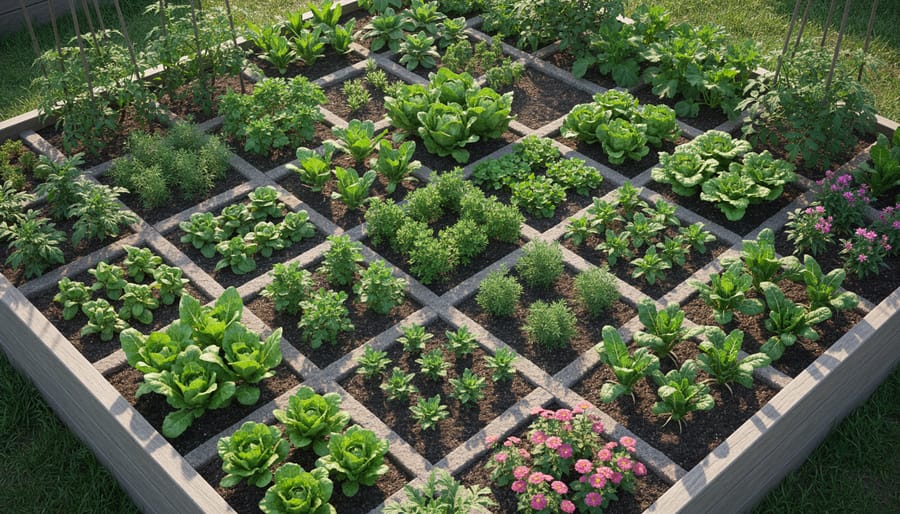
Square foot gardening divides your growing space into one-foot squares, with each square holding a specific number of plants based on their mature size. The beauty lies in its simplicity. Instead of wrestling with traditional row spacing that wastes precious garden real estate, you’re working with a proven system that maximizes every inch. A single square might hold sixteen radishes, nine bush beans, four lettuce heads, or one tomato plant.
The method gained renewed attention with the 2026 Fourth Edition updates, but its core principle remains unchanged: grow more food in less space by understanding plant spacing requirements. Whether you’re gardening on an apartment balcony or managing a backyard plot, this approach removes the guesswork from planting density.
Your chart becomes your roadmap, showing at a glance that basil plants need four per square while broccoli demands one full square all to itself. This isn’t about rigid rules though. Once you grasp the underlying logic of plant size categories, you’ll adapt spacing to your specific varieties, climate, and growing conditions.
The real magic happens when you realize you’re not just saving space. You’re reducing water waste, cutting down on weeding time, and creating the kind of intensive garden that produces harvests far beyond what traditional methods achieve in the same footprint. Ready to decode your perfect planting density?
What Is a Square Foot Gardening Chart?
A square foot gardening chart is your blueprint for knowing exactly how many plants fit into each one-foot square of your garden bed. Instead of planting in traditional rows with lots of wasted space between them, these charts show you the precise spacing for vegetables, herbs, and flowers based on Bartholomew’s square-foot method which divides raised beds into manageable grid sections.
The charts typically show numbers like 1, 4, 9, or 16 next to each plant variety. That number tells you how many individual plants you can grow in a single square foot. For example, a tomato needs one full square to itself, while you can tuck 16 radish plants into that same space. This efficiency is what makes square foot gardening so productive, especially in small yards or urban settings.
Mel Bartholomew developed this approach in the 1980s after growing frustrated with conventional row gardening’s inefficiency. He realized most home gardeners didn’t need long rows designed for tractors and wholesale harvests. By thinking in squares instead of rows, you can grow more food in less space while reducing weeding, watering, and physical strain.
The charts aren’t arbitrary guesses. They’re based on each plant’s mature canopy size and root system needs. When you follow them, your plants get enough room to thrive without competing for nutrients, light, or water. They also prevent the rookie mistake of planting too densely and ending up with stunted, unhealthy crops.
With the 2026 release of the 4th Edition of the Square Foot Gardening book, these spacing recommendations have been refined based on decades of real-world results from gardeners worldwide. The Foundation’s updated resources continue to make this method accessible, with over 3 million copies sold and even a Spanish edition available.
How to Read Your Square Foot Gardening Spacing Chart
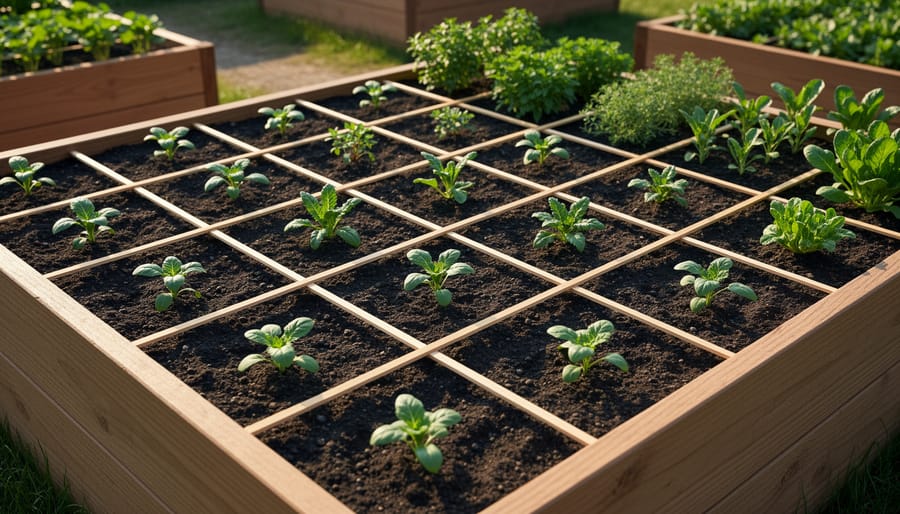
The numbers on a square foot gardening chart tell you exactly how many plants fit comfortably in one 12×12-inch square. Once you understand the basic pattern, planning your entire garden becomes straightforward.
Most charts use four standard spacings. One plant per square works for large vegetables like tomatoes, peppers, eggplant, broccoli, and cabbage. These need room to spread, so they get the whole square to themselves. Four plants per square suits medium-sized crops such as lettuce, chard, parsley, and marigolds. You’ll arrange these in a simple 2×2 grid within the square. Nine plants per square accommodates smaller vegetables and herbs like beets, spinach, bush beans, and onions, planted in a 3×3 pattern. Sixteen plants per square is reserved for tiny crops such as carrots and radishes, arranged in a 4×4 grid.
This spacing system, known as the 1, 4, 9, or 16 rule accounts for each plant’s mature size and root system. A bell pepper needs roughly 12 inches of space in all directions, while a single carrot only requires about 3 inches.
Here’s how it looks in practice. If your chart shows “basil: 4 per square,” you’d plant four basil seedlings in a square pattern, spacing them evenly so each gets about 6 inches from its neighbors. When you harvest, you can dry basil for year-round use. For “radishes: 16 per square,” you’d make four evenly-spaced rows of four seeds each.
The beauty of this system is its simplicity. You don’t need to remember specific inch measurements for dozens of plants. Just check the chart for the number, visualize the grid pattern (1×1, 2×2, 3×3, or 4×4), and space your plants accordingly within that single square foot.
Some charts also indicate vertical crops with a “V” notation. Pole beans, cucumbers, and peas grow upward on trellises, so they follow the standard spacing but require support structures behind their squares.
Complete Plant Spacing Chart for Square Foot Gardens
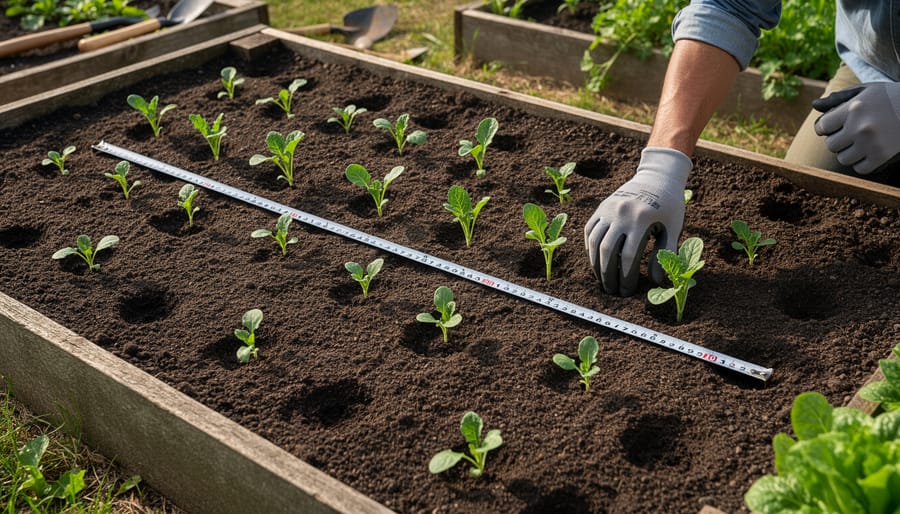
Here’s your comprehensive reference chart for square foot garden spacing. Use this as your go-to guide when planning any bed, but remember that these are starting recommendations, not absolute rules.
**Vegetables**
| Plant | Per Square | Quick Notes |
|---|---|---|
| Tomatoes | 1 | Needs support; determinate varieties work best |
| Lettuce | 4 | Harvest outer leaves for continuous production |
| Carrots | 16 | Thin to strongest seedlings after germination |
| Radishes | 16 | Fast growers, ready in 3-4 weeks |
| Peppers | 1 | Both sweet and hot varieties |
| Bush Beans | 9 | Plant in blocks for better pollination |
Larger plants like broccoli, cabbage, and cauliflower each need their own square. Cucumbers and squash also require one square each, though you can train vertical crops up a trellis to save horizontal space. Spinach and arugula fit four plants per square, while onions, beets, and turnips work at nine per square.
**Herbs**
| Herb | Per Square | Quick Notes |
|---|---|---|
| Basil | 4 | Pinch flowering tops to encourage bushiness |
| Parsley | 4 | Slow to germinate, patient growers rewarded |
| Cilantro | 9 | Plant every 2 weeks for continuous harvest |
| Chives | 16 | Perennial, comes back year after year |
Oregano, thyme, and rosemary need only one plant per square since they spread considerably. Dill fits four per square but grows tall, so place it where it won’t shade shorter plants.
**Flowers**
| Flower | Per Square | Quick Notes |
|---|---|---|
| Marigolds | 4 | Natural pest deterrent for vegetables |
| Nasturtiums | 4 | Edible flowers, attracts beneficial insects |
| Alyssum | 16 | Low-growing ground cover, sweet fragrance |
Zinnias and cosmos work at four per square and make excellent cut flowers while attracting pollinators. Sunflowers need one full square and should go on the north side of your bed to avoid shading other plants.
Keep this chart handy when you’re sketching garden layouts. Many gardeners laminate a printed copy or save a photo on their phone for quick reference while planting.
Using Your Chart to Plan the Perfect Garden Layout
Adjusting Spacing for Your Growing Conditions
Your square foot garden doesn’t exist in a vacuum. What works brilliantly for a gardener in Seattle might leave someone in Phoenix scratching their head at wilted seedlings. The standard spacing charts are excellent starting points, but smart gardeners adjust them based on real-world conditions.
Climate matters more than most beginners realize. If you’re gardening in intense heat, giving heat-sensitive crops like lettuce an extra inch or two can improve airflow and reduce stress. Conversely, gardeners in cool climates often tighten spacing slightly for warmth-loving plants like peppers, creating a microclimate effect. Your season length plays a role too. Short-season gardeners benefit from closer spacing to maximize quick-maturing varieties, while those with long growing seasons can afford to give plants more room to reach full size.
Variety differences change everything. A compact determinate tomato fits the standard one-plant-per-square recommendation perfectly, but an indeterminate heirloom might need two squares if you’re not trellising aggressively. Dwarf bean varieties can handle tighter spacing than pole beans. Check seed packets for mature plant dimensions and adjust accordingly.
Your soil quality and maintenance habits also influence spacing decisions. Rich, frequently amended soil supports the denser plantings that charts recommend. If your soil is still developing or you’re following a more hands-off approach, giving plants extra breathing room compensates. The same goes for watering consistency, irregular waterers should space slightly wider to reduce competition for moisture. For soil health strategies, our mulch guide covers options that help retain moisture and moderate temperature swings.
Start with chart recommendations, then observe. Plants crowding each other? Widen next season. Lots of empty space? Tighten up. Your garden will tell you what it needs.
Where to Find Reliable Square Foot Gardening Charts
The best place to start your search is the Square Foot Gardening Foundation’s website, which offers official Square Foot Gardening charts based on Mel Bartholomew’s original research. The Foundation recently released the All New Square Foot Gardening 4th Edition, which has become incredibly popular with over 3 million copies sold. This updated edition includes comprehensive spacing charts alongside updated garden plans, step-by-step DIY instructions for building boxes and trellises, and expert advice on plant care and pest control. If you prefer Spanish-language resources, the Foundation also offers a Spanish edition.
For gardeners who want multiple trusted sources, consider these options:
- Your local university extension office, which provides regionally-adapted spacing recommendations
- The official Square Foot Gardening Foundation website for downloadable reference charts
- Public library copies of any edition of the Square Foot Gardening book series
- Reputable gardening blogs that credit their chart sources and include practical growing tips
When evaluating any chart you find online, check that it cites Bartholomew’s original method or the Foundation’s current recommendations. Reliable charts will show consistent spacing numbers across common vegetables (like 1 tomato per square, 4 lettuce plants, or 16 radishes). They should also include practical guidance on topics like irrigation tips and aphid prevention to help you succeed beyond just spacing.
The 4th Edition stands out because it includes a Quick Start Guide, making it perfect for beginners who want immediate, actionable information. You’ll find it addresses modern gardening challenges while staying true to the simplicity that made the original method so accessible.
Common Chart Mistakes (And How to Avoid Them)
Even experienced gardeners slip up when they first start using spacing charts. The good news? These mistakes are easy to fix once you know what to watch for.
The most common error is misreading the numbers as inches instead of plants per square. If your chart says “4,” that means four plants in one square foot, not four inches apart. This confusion often leads to severe overcrowding, where plants compete for nutrients and sunlight. A single square foot should contain one large plant like broccoli, four medium plants like lettuce, nine small plants like beets, or sixteen tiny plants like radishes.
Another frequent problem is ignoring vertical options entirely. Many gardeners plant sprawling cucumbers or pole beans horizontally because that’s how the chart shows them, but these climbers should grow up a trellis to save space. The chart numbers assume you’ll provide support for vining crops.
Beginners also forget that spacing recommendations reflect mature plant size, not seedling size. Those four lettuce plants look sparse at first, but they’ll fill the square completely in a few weeks. Impatient gardeners often squeeze in extra plants, only to face a crowded mess later that requires thinning.
Some charts don’t account for varietal differences. A compact bush tomato might work at one per square, while a large heirloom variety needs more room. Always check your seed packet for mature spread and adjust if your specific variety is notably larger than average.
Finally, many people treat chart recommendations as rigid rules rather than guidelines. If your spinach consistently bolts before filling its allocated space, try planting five instead of nine. Your chart is a starting point, not gospel. Keep notes on what works in your climate and soil, and you’ll develop spacing instincts that serve you better than any printed chart.

Creating Your Own Custom Garden Chart
Creating a custom garden chart might sound technical, but it’s really just organized observation. If you’ve gardened through a few seasons, you’ve already noticed what works in your specific conditions. A personalized chart simply captures that knowledge so you don’t have to rely on memory.
Start by testing one or two modifications per season. Maybe you’ve wondered if you could fit five lettuce plants per square instead of four, or if your cherry tomatoes could handle slightly tighter spacing. Run small experiments in a couple of squares rather than redesigning your whole bed at once.
Here’s a straightforward process for building your custom reference:
- Choose one plant to test and note the standard spacing recommendation alongside your experimental variation.
- Label the test squares with stakes or tape so you remember which spacing you’re trying.
- Track growth weekly in a simple notebook, noting height, spread, and any crowding issues.
- At harvest, record the total yield from each spacing variation and your observations about plant health.
- After the season, compare results and update your personal chart with what actually worked best in your garden.
Keep your chart simple. A spreadsheet or even a handwritten table works perfectly. Include columns for the plant name, your tested spacing, notes about variety or season, and whether you’d use that spacing again.
Pay special attention to microclimates in your yard. That sunny south-facing bed might support tighter spacing than the partially shaded area near the fence. Your chart can reflect these differences.
Over time, you’ll build a reference that accounts for your soil quality, climate quirks, favorite varieties, and even your harvesting preferences. Some gardeners prefer baby greens harvested early and can pack squares tighter. Others want full-sized heads and need standard spacing. Your chart should match how you actually garden, not how someone else does.
Your square foot gardening chart isn’t a rigid rulebook, it’s a living guide that grows smarter with every season you plant. Think of it as your garden’s GPS: it gets you started on the right path, but your real-world experience teaches you the shortcuts, detours, and perfect timing that no chart can capture.
Start with the standard spacing recommendations you’ve learned here. They’re based on decades of collective gardening wisdom and work beautifully for most situations. But pay attention as your plants develop. Notice which varieties thrive when you sneak in an extra seedling, and which ones desperately need their full square foot of breathing room. Jot down what works in your climate, your soil, your microclimate. That personalized knowledge transforms a basic chart into your own custom roadmap.
The real magic of square foot gardening isn’t just fitting more plants into less space. It’s watching a compact, organized garden deliver an abundance that seems almost impossible. There’s genuine satisfaction in harvesting armloads of fresh vegetables from a tidy 4×4 bed that you planned, planted, and tended with intention.
So grab your chart, sketch out your first layout, and get your hands dirty. You’ll make adjustments along the way, and that’s exactly how you become the expert gardener you’re aiming to be. Your most productive garden is just one growing season away.