Winter doesn’t mean your gardening passion has to go dormant. You can grow fresh herbs, leafy greens, microgreens, sprouts, and even fruiting vegetables indoors throughout the cold months using windowsills, grow lights, and creative containers. These projects range from beginner-friendly sprout jars you can start in three days to more ambitious setups like hydroponic systems and vertical gardens that transform unused wall space into productive growing areas.
The beauty of indoor winter gardening is that you control everything: temperature, moisture, light, and timing. No frost dates to worry about, no unexpected hailstorms, and no pests hiding in the mulch. You’ll harvest fresh basil in January, snip microgreens for your breakfast bowl in February, and pull crisp lettuce leaves while snow blankets your outdoor beds.
I started my first indoor garden five winters ago with a single potted rosemary plant on my kitchen counter. That lonely herb has since multiplied into a full windowsill collection, a three-tier grow light shelf in my office, and a rotating roster of microgreen trays that keep my salads interesting all season long. The learning curve is gentle, the setup costs can be as modest or elaborate as you choose, and the satisfaction of eating something you grew yourself in the middle of winter never gets old.
Whether you’re working with a sunny south-facing window or a dim apartment corner, there’s an indoor gardening project that fits your space and skill level.
Why Winter Is the Perfect Time for Indoor Gardening
Winter turns your home into the ideal gardening laboratory. While outdoor gardens sleep under snow and frost, indoor spaces offer complete control over light, temperature, and moisture, conditions you can’t replicate even during summer’s unpredictable weather. You’re no longer at the mercy of late frosts, sudden heatwaves, or drought.
The mental health benefits shouldn’t be underestimated. Shorter days and limited outdoor time can leave you feeling disconnected from nature. Tending plants indoors combats seasonal blues by giving you purpose, routine, and living greenery to nurture. The act of watering, pruning, and watching seedlings emerge provides the same therapeutic satisfaction you get from outdoor gardening, just on a smaller scale.
Your indoor plants also work for you while they grow. Many varieties actively filter toxins from heated, recirculated air, boosting oxygen levels and humidity in spaces that winter heating tends to dry out. You’re creating a healthier environment while growing fresh food.
Perhaps most importantly, winter indoor gardening keeps your knowledge and instincts sharp. When spring arrives, you’ll remember how plants respond to different conditions, recognize pest problems early, and understand growth patterns intimately. You’re not starting from scratch after months away, you’re hitting the ground running with confidence and experience.
How We Chose These Winter Indoor Gardening Ideas
We selected these twelve ideas based on criteria that matter to real indoor gardeners facing winter’s unique challenges. Each project earned its spot by meeting specific standards that ensure you’ll actually succeed, not just read about possibilities.
Our selection focused on:
- Beginner-friendliness, projects accessible to newcomers without specialized knowledge
- Space versatility, options for everyone from studio apartments to homes with dedicated plant rooms
- Winter reliability, plants and methods proven to thrive during short days and dry indoor air
- Variety of outcomes, herbs, vegetables, flowers, and decorative projects to match different goals
- Practical setup requirements, honest assessment of time, equipment, and ongoing maintenance needed
- Realistic success rates, techniques with high probability of positive results, even for first attempts
We prioritized diversity across skill levels and living situations. You’ll find quick-win projects like sprouts that deliver results in days, alongside longer-term commitments like forcing bulbs or growing dwarf vegetables. Some ideas need nothing but a jar and water, while others require modest investments in lights or containers. This range ensures you can match projects to your current experience, available space, and budget without feeling overwhelmed or limited by your starting point.
1. Start a Kitchen Windowsill Herb Garden
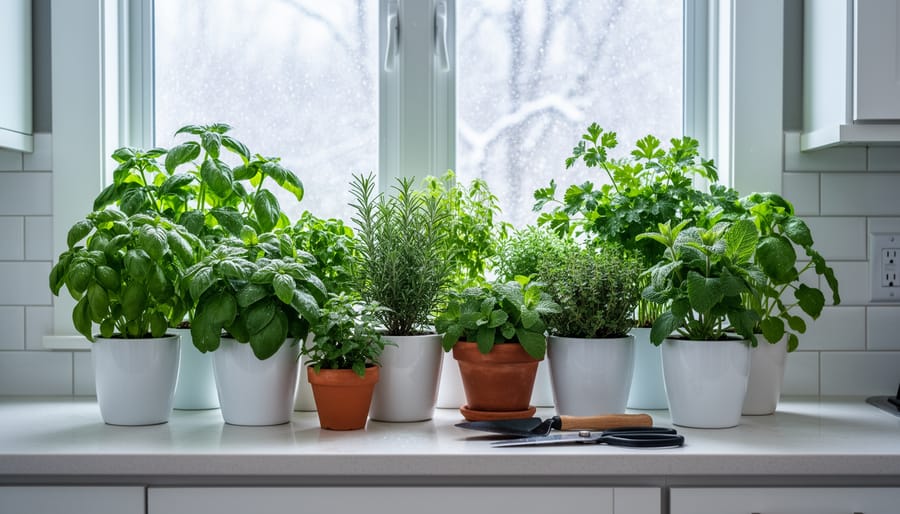
A sunny windowsill transforms into a mini herb farm with just a few pots and the right varieties. Basil, parsley, cilantro, and chives adapt beautifully to indoor conditions, giving you fresh snips all winter without a trip to the grocery store.
Choose containers at least 6 inches deep with drainage holes. Terracotta breathes well but dries faster than plastic or ceramic, so match your pot to how often you can water. A quality potting mix beats garden soil every time since it drains properly and won’t compact in containers.
South-facing windows work best, providing 4-6 hours of direct light. If your sill gets less, supplement with a small grow light for 10-12 hours daily. Water when the top inch of soil feels dry, not on a fixed schedule. Overwatering kills more indoor herbs than neglect, so err on the side of slightly dry.
Harvest regularly by pinching stems just above a leaf node, which encourages bushier growth rather than tall, leggy plants. Companion planting works indoors too: pair basil with chives since both like similar moisture levels, while prevent lettuce bolting concerns don’t apply to these hardy herbs that tolerate indoor heat better than greens.
2. Grow Microgreens for Quick, Nutritious Harvests
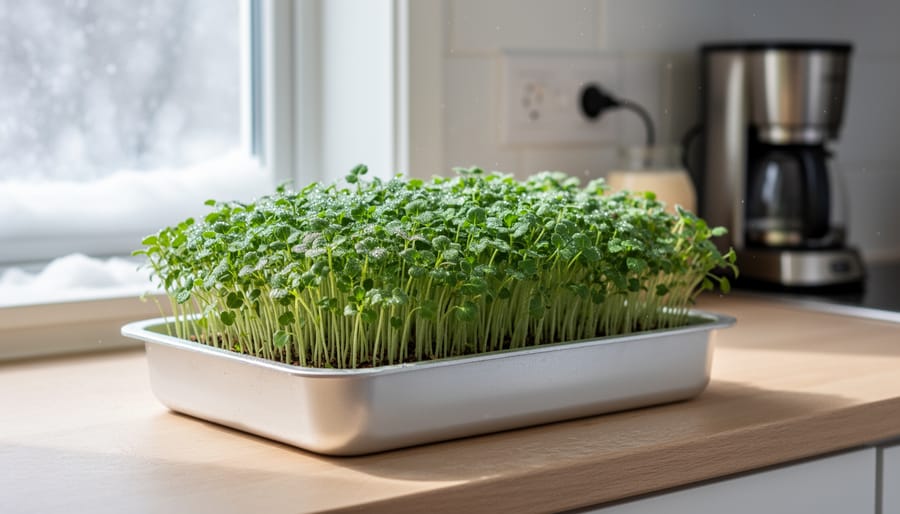
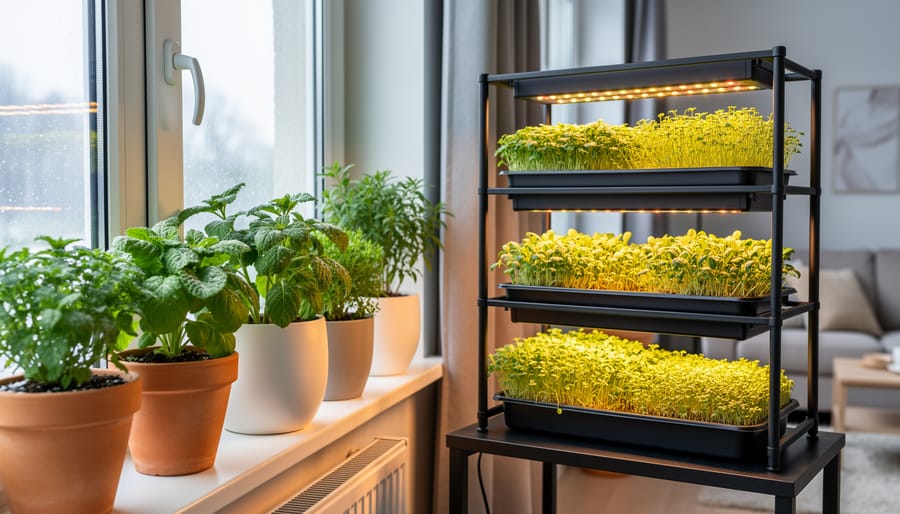
Microgreens deliver one of the fastest payoffs in indoor gardening, transforming from seed to harvest in just 7-14 days. These tender young plants, arugula, radish, sunflower, and pea shoots are popular choices, pack concentrated vitamins, minerals, and antioxidants that make them nutritional powerhouses perfect for boosting your winter diet when fresh produce feels scarce.
You’ll need minimal equipment to get started. A shallow tray or container (even a plastic takeout container works), organic potting mix or a soilless growing medium, and seeds are the basics. Spread a thin layer of soil, scatter seeds densely across the surface, press them down gently, and mist with water. Cover the tray for the first few days to encourage germination, then move it to a bright windowsill once sprouts emerge.
Light requirements are straightforward. A south-facing window provides enough natural light in most cases, though a simple LED grow light ensures consistent growth even on cloudy winter days. Keep the soil moist but not waterlogged by misting daily.
Harvest when the first true leaves appear, typically when plants are 1-3 inches tall. Snip just above the soil line with scissors, rinse, and add your microgreens to salads, sandwiches, or smoothies. The entire process from planting to plate takes less than two weeks, making this the ideal project for impatient gardeners or tight spaces.
3. Create a Hydroponic Lettuce System
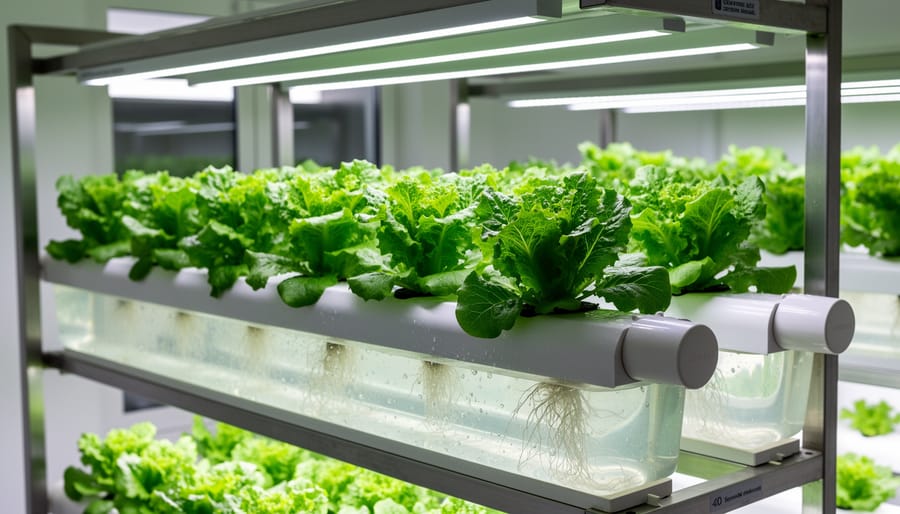
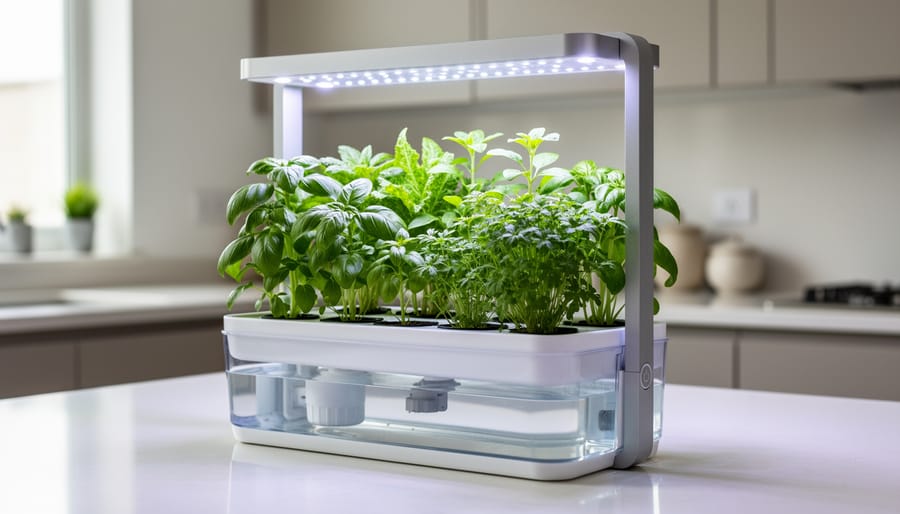
Growing lettuce hydroponically indoors eliminates soil mess while delivering crisp, fresh greens faster than traditional methods. The Kratky method stands out as the most beginner-friendly approach because it requires no pumps, timers, or electricity, just a container, net pots, and nutrient solution. You fill an opaque container (preventing algae growth) with hydroponic nutrients mixed to the manufacturer’s instructions, suspend seedlings in net pots so roots dangle into the solution, then let the plants do their thing. As lettuce grows and drinks, the water level drops naturally, creating an air gap that provides oxygen to roots.
For those wanting slightly more control, a basic Deep Water Culture (DWC) system adds an aquarium air pump and airstone to constantly oxygenate the nutrient solution. This setup costs roughly fifteen to thirty dollars beyond your containers and nutrients, and it can accelerate growth even further since roots receive continuous oxygen. Buttercrunch, oak leaf, and romaine varieties all thrive in these systems.
Space requirements are modest, a two-gallon container can support three to four lettuce heads, making hydroponics perfect for apartment dwellers. You’ll need a grow light positioned 6-12 inches above plants for 12-16 hours daily, but the payoff comes in 30-45 days when you harvest heads that would have taken 60-80 days in soil. Change the nutrient solution every two weeks, and you’ll have a continuous salad bar all winter long.
4. Cultivate Mushrooms in a Low-Light Corner
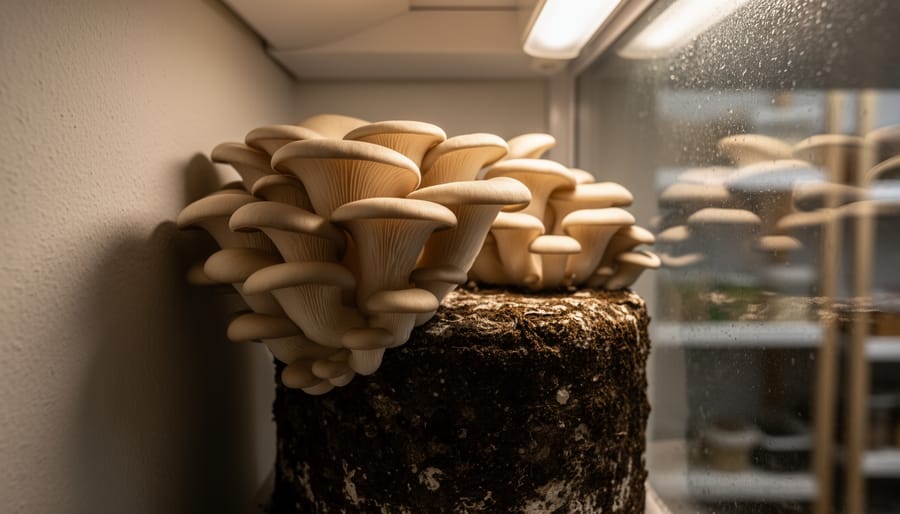
Growing gourmet mushrooms at home might sound intimidating, but it’s actually one of the easiest winter indoor gardening projects, especially if you have a basement, closet, or shaded corner where other plants would struggle. Mushrooms thrive in low-light conditions that would frustrate sun-loving herbs or vegetables, making them perfect for those dark winter months.
Ready-made mushroom kits are your best starting point. These kits come with pre-inoculated substrate in a bag or box, requiring minimal setup. Simply mist the kit daily, maintain humidity around 80-90%, and wait for mushrooms to appear, often within 7-10 days. Oyster mushrooms are particularly forgiving for beginners, tolerating temperature ranges from 55-75°F, while shiitake prefer slightly cooler conditions between 50-65°F.
The key to success is consistent moisture without waterlogging. A quick daily misting keeps the growing surface damp, and placing your kit on a humidity tray or near a small humidifier helps during dry winter heating. You’ll see tiny pins form first, then watch them double in size daily until they’re ready to harvest.
The satisfaction of slicing fresh oyster or shiitake mushrooms you grew yourself into a winter stir-fry or soup is genuinely rewarding. Plus, many kits produce multiple flushes over several weeks, giving you ongoing harvests from that forgotten corner.
5. Force Spring Bulbs for Mid-Winter Blooms
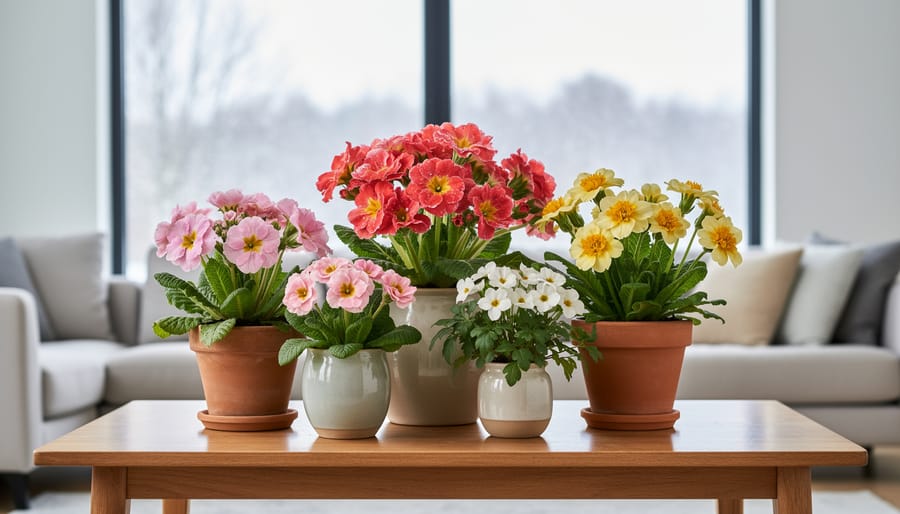
Forcing spring bulbs indoors transforms January and February from bleak waiting periods into bursts of color and fragrance. This centuries-old technique tricks bulbs into blooming months ahead of schedule by mimicking natural winter conditions, then bringing them into warmth.
Paperwhites are the easiest starting point. They need no chilling period, just nestle bulbs shoulder-to-shoulder in a shallow bowl with pebbles and water, and blooms appear in three to four weeks. Amaryllis offer dramatic trumpet flowers in red, white, or striped varieties, planted individually in pots just slightly larger than the bulb itself, with the top third exposed above soil.
Hyacinths and tulips require pre-chilling to break dormancy. Purchase pre-chilled bulbs, or refrigerate them yourself for 12 to 16 weeks in paper bags away from fruit. Once chilled, plant them in containers with drainage holes, water thoroughly, and place in bright, cool light. Hyacinths will perfume entire rooms as they open.
Choose containers that complement your space, vintage teacups for single hyacinths, wide bowls for paperwhite clusters, or decorative cachepots for amaryllis. The contrast between winter’s gray skies outside and vibrant blooms inside creates a psychological lift that makes forced bulbs worth every bit of planning.
6. Set Up a Small Indoor Greenhouse Cabinet
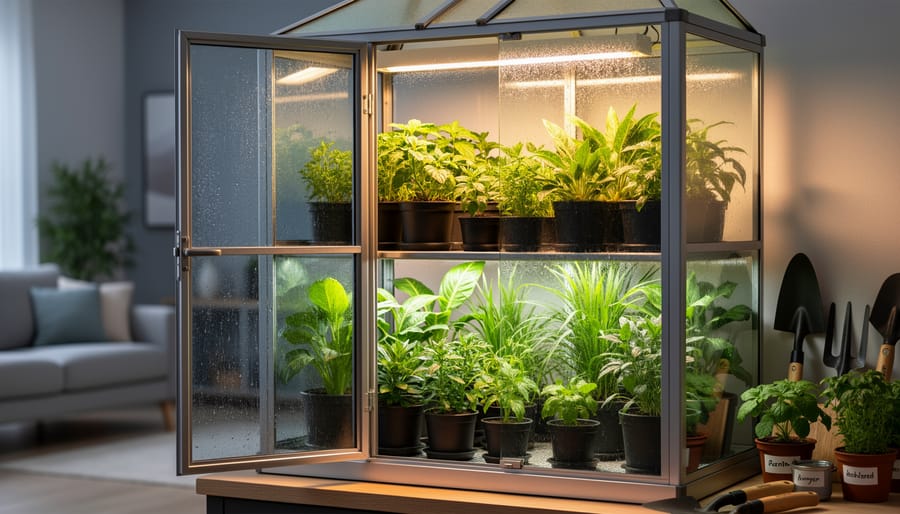
A small indoor greenhouse cabinet transforms any corner of your home into a dedicated growing space where you can control temperature, humidity, and light, ideal conditions for winter gardening projects that might struggle in dry, heated rooms.
Start with a basic wire shelving unit (24″ x 18″ works well for most spaces) and add full-spectrum LED grow lights mounted 6-12 inches above each shelf. Wrap the unit in clear plastic sheeting or purchase a fitted greenhouse cover to trap humidity and warmth. This simple setup creates microclimates perfect for seed starting, rooting cuttings, or nurturing humidity-loving tropicals like African violets and orchids.
The key advantage is versatility. Place water-filled trays on shelves to boost humidity naturally, or add a small heating mat underneath seedling trays when germinating warm-season vegetables. Your cabinet can house dozens of seedling pots on one shelf while propagating cuttings on another and maintaining a collection of rare houseplants below.
Temperature control happens through placement, avoid direct heat vents and cold windows. Most setups maintain 65-75°F naturally, though you can add a small thermostat-controlled heater for tropical species. Install an inexpensive timer to automate your grow lights for 12-16 hours daily, and add a small fan for air circulation to prevent damping-off disease in seedlings.
This modular approach grows with your needs. Start with one shelf and expand as your indoor gardening ambitions increase throughout the winter months.
7. Grow Dwarf Tomatoes and Peppers Indoors
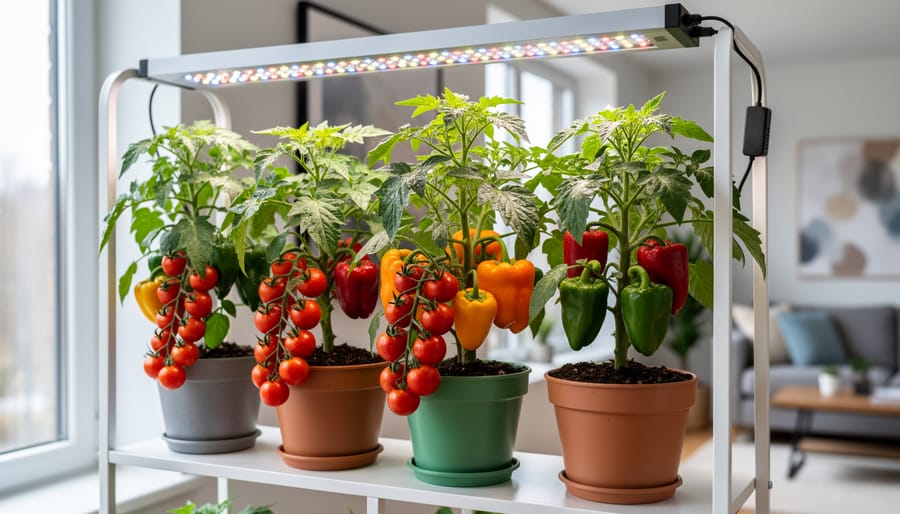
Growing fresh tomatoes and peppers indoors during winter is absolutely possible with the right compact varieties, though it requires more commitment than herbs or greens. Dwarf and micro-dwarf cultivars stay under 12-18 inches tall, making them perfect for containers on a sunny windowsill or under grow lights.
The lighting requirement is non-negotiable: these fruiting plants need 12-14 hours of bright light daily. A south-facing window might work in some climates, but full-spectrum LED grow lights positioned 6-12 inches above the plants deliver far more consistent results. Without adequate light, you’ll get leggy plants with few flowers and minimal fruit.
Top varieties for indoor winter growing include:
- Tiny Tim tomatoes: 12-inch plants producing cherry-sized fruits in 45-60 days
- Window Box Roma: compact determinate variety with meaty fruits ideal for small spaces
- Red Robin tomatoes: ultra-dwarf plants perfect for 6-inch pots, producing clusters of sweet cherry tomatoes
- Redskin peppers: compact plants yielding full-sized bell peppers in containers
- Thai Hot ornamental peppers: decorative and productive, thriving indoors with minimal care
Use containers at least 8-10 inches deep with drainage holes, and choose a quality potting mix formulated for vegetables. Since indoor environments lack pollinating insects, you’ll need to hand-pollinate flowers by gently tapping stems or using a small brush to transfer pollen between blooms.
Set realistic expectations: indoor yields won’t match outdoor gardens, but harvesting even a handful of fresh tomatoes or peppers you grew yourself during January feels incredibly rewarding. Many gardeners save seeds from their most productive indoor plants to grow again next winter.
8. Propagate Houseplants and Share with Friends
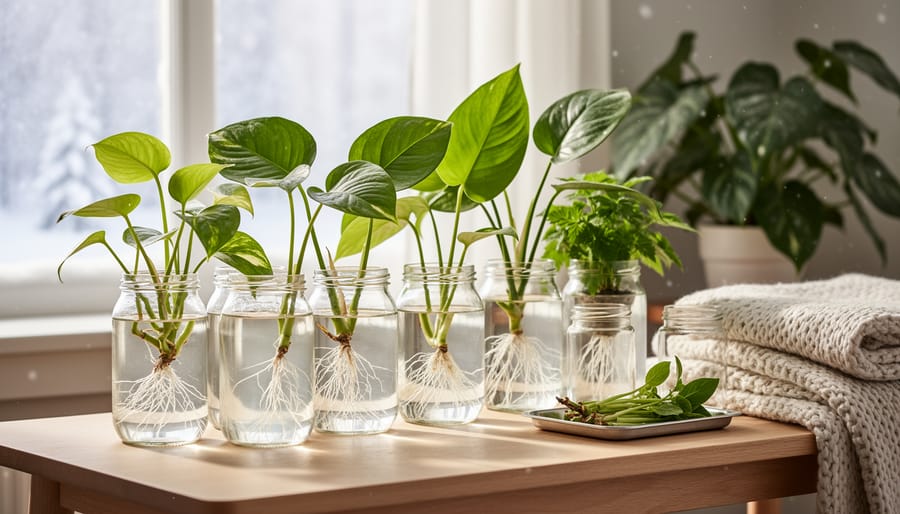
Winter’s slower growing season gives you the perfect opportunity to multiply your favorite houseplants without the pressure of outdoor garden tasks demanding your attention. Propagation not only expands your collection for free but creates thoughtful gifts that keep giving long after the holidays.
Pothos, philodendron, and spider plants root easily in water. Simply cut a stem just below a node (the bump where leaves emerge), remove lower leaves, and place the cutting in a clean glass of water. Set it in bright indirect light and watch roots develop within two to three weeks. Change the water every few days to prevent bacterial growth. Once roots reach about two inches long, transfer to soil.
Succulents prefer a different approach. Let leaf or stem cuttings dry for two to three days until the cut end calluses over, then nestle them into cactus mix. Skip watering initially, moisture appears once tiny roots form, usually within a week or two.
Rooting hormone accelerates the process and boosts success rates, though most easy houseplants root fine without it. Dip the cut end in powder before placing in water or soil for faster, stronger root development.
By spring, you’ll have vigorous young plants ready to share with friends or fill empty corners throughout your home.
9. Build a Terrarium or Enclosed Plant Ecosystem
Terrariums transform simple glass containers into living art that practically cares for itself during winter months. Choose a clear glass vessel with or without a lid, closed terrariums create humid, rainforest-like conditions perfect for ferns and moss, while open designs suit succulents and cacti that prefer drier air.
Start with a drainage layer of pebbles or activated charcoal, add a thin sheet of mesh or sphagnum moss to prevent soil mixing, then top with two to three inches of potting mix suited to your plants. Select low-light houseplants like nerve plants, peperomia, small ferns, or baby tears that stay compact and thrive in terrarium conditions.
Closed terrariums develop their own water cycle, moisture evaporates, condenses on the glass, and rains back down on the plants. You might water them only once every few months. Open terrariums need weekly watering but still require far less attention than traditional potted plants. Position your terrarium in bright, indirect light away from radiators, and wipe condensation from the glass if it becomes excessive. These miniature ecosystems bring a slice of lush greenery to winter windowsills with minimal effort.
10. Start Seedlings for Your Spring Garden
Winter is the ideal time to get your spring garden off to a strong start by growing seedlings indoors. Seeds that benefit most from indoor starting include tomatoes, peppers, eggplants, broccoli, cabbage, and most flowers, basically anything that needs 6-8 weeks of growth before the last frost date in your area. Count backward from your expected last frost (typically mid-April to mid-May depending on your zone), and you’ll know when to plant.
A sunny south-facing window can work for some seedlings, but most need stronger, more consistent light to prevent weak, stretched-out growth. Inexpensive LED shop lights positioned 2-3 inches above seedlings for 14-16 hours daily produce sturdy, compact plants. Use seed-starting mix rather than garden soil, it’s sterile, lightweight, and drains well, giving tiny roots the best start.
The hardening-off process is essential but often skipped. About 10 days before transplanting, gradually expose seedlings to outdoor conditions, start with an hour in shade, then increase time and sun exposure daily. This toughens stems and leaves so plants don’t shock when moved to the garden permanently.
Save yourself effort by direct-sowing fast growers like beans, peas, carrots, radishes, and lettuce right in the garden. These crops hate root disturbance and germinate quickly enough that indoor starting offers no advantage. For more guidance on maximizing your indoor growing setup, check out these indoor garden tips and if you’re short on space, consider a vertical garden setup for starting larger quantities of seedlings.
There’s genuine satisfaction in transplanting seedlings you’ve nurtured from seed, it connects you to the full growing cycle and gives you control over varieties often unavailable as nursery starts.
11. Grow Sprouts for Fresh, Living Nutrition
Sprouting seeds in a jar is arguably the simplest form of indoor gardening you can try this winter. You don’t need soil, grow lights, or even a windowsill. Just a clean mason jar, some seeds, water, and three to five days of patience.
Start with beginner-friendly varieties like alfalfa, mung beans, or broccoli seeds. Measure about two tablespoons of seeds into your jar, fill it with water, and let them soak overnight. The next morning, drain completely using a mesh lid or cheesecloth secured with a rubber band, then rinse and drain again. Repeat this rinsing process twice daily, keeping the jar tilted at an angle in a bowl to ensure proper drainage.
Within a few days, you’ll see tiny sprouts emerging. Most varieties are ready to eat when the sprouts reach one to two inches long, usually between three and seven days depending on the seed type. Broccoli sprouts pack concentrated sulforaphane, while mung bean sprouts add satisfying crunch to stir-fries and salads.
The beauty of sprouting is its speed and simplicity. While other indoor gardens require weeks of attention, sprouts deliver fresh, living nutrition faster than any grocery delivery. They’re ideal for small apartments, tight budgets, and anyone who wants to see immediate results from their winter gardening efforts.
12. Create an Indoor Vertical Garden Wall
Vertical gardens transform unused wall space into productive growing areas, perfect for apartment dwellers or anyone short on floor space during winter months. You can create a simple system with pocket shoe organizers hung on a wall, install modular wall-mounted planters, or build tiered shelving that leans against your interior walls.
The key is choosing plants with shallow root systems that thrive indoors. Herbs like thyme, oregano, and mint work beautifully, as do small-leafed trailing plants like pothos or philodendron that add visual appeal cascading downward. Lettuce, spinach, and compact strawberry varieties also adapt well to vertical growing. Stick with plants that have similar light and water requirements on the same wall to simplify care.
Watering vertical gardens requires attention since water flows downward. Position thirstier plants at the bottom to catch runoff, or install individual drip trays for each planter. Some gardeners incorporate a simple drip irrigation system with tubing connected to a small pump and reservoir, automating the process entirely.
Beyond fresh herbs and greens, vertical gardens serve as living art that improves air quality and adds humidity to dry winter homes. Start with a small three-by-three section before expanding. The satisfaction of harvesting ingredients grown on your own wall never gets old.
Essential Tips for Winter Indoor Gardening Success
Success with winter indoor gardening comes down to mastering a few fundamental practices that work across all your projects. Once you’ve got these basics dialed in, you’ll be amazed how much easier everything becomes.
- Place a humidity tray (pebbles in a shallow dish of water) beneath plants to counter dry winter air from heating systems
- Position grow lights 6-12 inches above plants and run them 12-16 hours daily for vegetables and herbs, 8-10 hours for lower-light plants
- Water only when the top inch of soil feels dry to the touch, overwatering kills more indoor plants than any other mistake
- Crack a window or run a small fan on low speed for 15-20 minutes daily to prevent fungal issues and strengthen plant stems
- Check leaf undersides weekly for aphids, spider mites, or fungus gnats, and address problems immediately with insecticidal soap
- Rotate containers a quarter turn every few days so all sides receive equal light exposure
- Start with just one or two projects rather than launching everything at once, success builds confidence and momentum
Temperature consistency matters more than you might think. Most indoor edibles and houseplants thrive between 65-75°F during the day, with a slight nighttime drop being perfectly fine. Keep plants away from cold drafts near doors and windows, but also avoid placing them directly above heating vents where blasts of hot air can stress them. If your home runs cool at night, that’s actually ideal for many winter crops like lettuce and greens, which appreciate those temperature swings. The real reward of nailing these basics is watching your indoor garden flourish while snow piles up outside.
Common Questions About Winter Indoor Gardening
Do I need expensive equipment to start indoor gardening?
Not at all. Many successful indoor gardens start with containers you already own, natural windowsill light, and basic potting soil. Projects like sprouts, microgreens, and windowsill herbs require minimal investment, often under $20 to get started. You can always upgrade to grow lights or hydroponic systems later as your interest grows, but they’re not necessary for your first steps.
How much light do indoor plants really need?
It depends on what you’re growing. Leafy greens and herbs typically need 6-8 hours of bright light daily, which a south-facing window can provide in many homes. Fruiting plants like tomatoes and peppers need 12-14 hours and usually require supplemental grow lights. Mushrooms and certain houseplants thrive in low light, making them perfect for dimmer corners. If your windows aren’t bright enough, even an inexpensive LED grow bulb in a desk lamp can make a huge difference.
Can I really grow actual vegetables indoors during winter?
Yes, though setting realistic expectations helps. Leafy greens, herbs, microgreens, and sprouts grow beautifully indoors with excellent results. Compact varieties of tomatoes, peppers, and dwarf beans can produce fruit indoors, but they need strong lighting and won’t yield as heavily as outdoor plants. Focus on greens and herbs for the most reliable harvests, and treat fruiting vegetables as rewarding experiments rather than your main food source.
How do I deal with dry winter air in heated homes?
Group plants together to create a more humid microclimate, place trays of water with pebbles beneath containers, or run a small humidifier nearby. Misting helps temporarily but isn’t a long-term solution.
What’s the easiest project to start with?
Sprouts or microgreens are nearly foolproof and ready to harvest in days. A windowsill herb garden comes in a close second, requiring only containers, soil, seeds, and a sunny spot.
Will indoor plants attract pests during winter?
Indoor plants can occasionally attract fungus gnats or aphids, but proper watering practices (letting soil dry between waterings) and good air circulation prevent most problems. Catching issues early makes them easy to manage.
Do I need to fertilize indoor plants differently in winter?
Most indoor plants grow more slowly in winter and need less fertilizer than during spring and summer. Cut back to half-strength solutions and fertilize less frequently, or wait until you see active new growth.
The beauty of winter indoor gardening is that you can start small, learn as you go, and expand your setup based on what works in your specific space. There’s no single right way to do it, and even a handful of fresh herbs on your kitchen counter counts as success.
Winter doesn’t have to be the end of your gardening journey, it’s simply an invitation to bring it indoors. Whether you’re drawn to the simplicity of sprouting seeds in a jar, the satisfaction of harvesting fresh herbs from your windowsill, or the beauty of forcing spring bulbs to bloom in January, there’s an indoor gardening project perfectly suited to your space and experience level.
Start small. Choose one or two ideas that excite you most, rather than overwhelming yourself with everything at once. A beginner might find joy in microgreens or sprouts, while someone with more experience could tackle a hydroponic setup or vertical garden wall. The beauty of indoor gardening is that you can expand gradually as your confidence grows.
Beyond the fresh produce and greenery, winter indoor gardening offers something deeper, a sense of purpose during dark months, the calming ritual of caring for living things, and proof that growth continues even when nature seems dormant outside. Your indoor garden becomes a reminder that nurturing and patience always bear fruit.
What will you grow this winter? We’d love to hear about your indoor gardening adventures and what projects have worked best in your home.