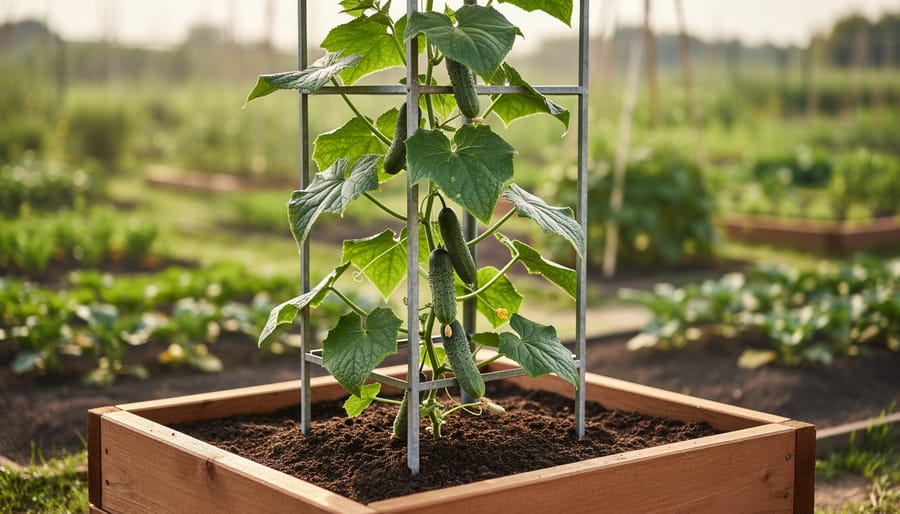
Yes, you can absolutely grow cucumbers in a square foot garden, and they thrive when planted vertically. Plant one cucumber per square with proper trellis support, spacing them five inches from neighboring plants, and you’ll harvest fresh cukes all season from just a single square foot of garden space. This efficient approach works beautifully for gardeners with limited space who want maximum productivity without sprawling vines taking over their beds.
Square foot gardening transforms how we think about cucumbers. Instead of letting them ramble across yards of ground, you’ll train them upward on a sturdy trellis or vertical support structure. This vertical method saves space, improves air circulation around the leaves (which helps prevent disease), and makes harvesting a breeze since the cucumbers hang at eye level rather than hiding under a tangle of foliage on the ground.
I learned this approach the hard way after my first cucumber attempt sprawled into the tomato section and created a jungle I could barely navigate. Training cucumbers vertically changed everything. Now I plant them along the north side of my raised beds so they don’t shade shorter crops, and the results have been fantastic.
The timing matters too. Cucumbers are warm-season lovers that need soil temperatures above 60°F to germinate successfully. Most gardeners plant them after the last spring frost when the weather has truly warmed, then succession plant every few weeks through early summer for continuous harvests into fall.
Why Cucumbers Are Perfect for Square Foot Gardening
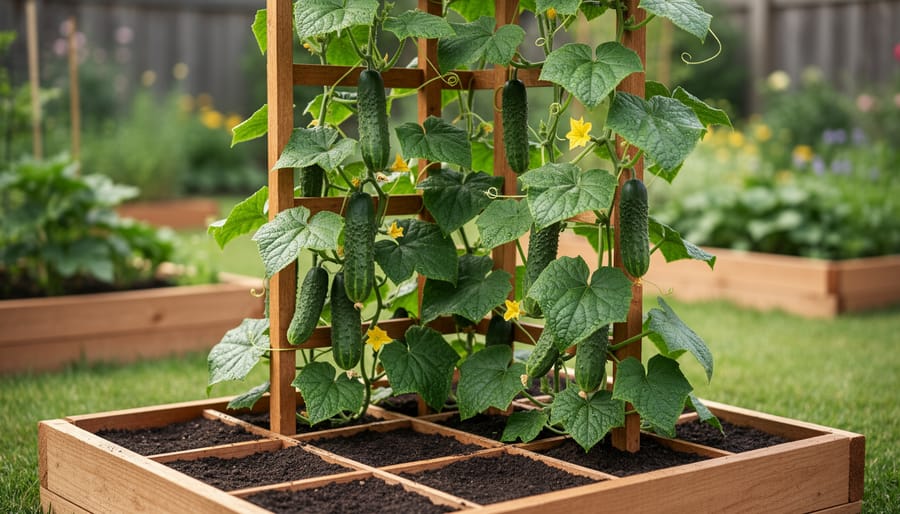
Cucumbers are one of the most rewarding vegetables to grow in a square foot garden, and they’re practically made for this method. Unlike sprawling crops that devour garden real estate, cucumbers naturally want to climb. This means you can grow them up instead of out, transforming a single square foot into a productive vertical column that frees up the rest of your bed for other crops. One square can become a summer cucumber that produces consistently throughout the season without monopolizing your entire garden space.
The vertical approach isn’t just about saving space, it fundamentally improves how cucumbers grow. When you train cucumber vines onto a trellis or support structure, trellising improves airflow around the plant, which dramatically reduces the risk of powdery mildew and other common fungal diseases that plague ground-level vines. The leaves dry faster after rain or morning dew, and every part of the plant gets better light exposure. You’ll also find harvesting infinitely easier when cucumbers hang at eye level or chest height instead of hiding under a tangled mat of foliage on the ground.
This efficient use of vertical space aligns perfectly with the growing trend of small-space and urban gardening. Whether you’re working with a balcony, patio, or a compact backyard bed, the square foot cucumber approach lets you enjoy fresh, homegrown cucumbers without needing a traditional row garden. Once you see how productive one well-supported square can be, you’ll wonder why you ever grew cucumbers any other way.
What You’ll Need to Get Started
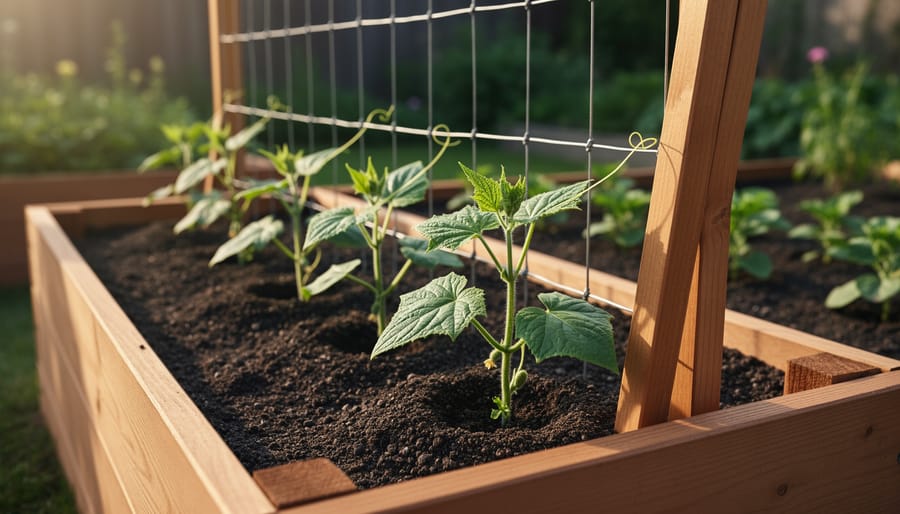
Getting your cucumber square foot garden off the ground requires a focused collection of materials rather than an overwhelming shopping list. Because cucumbers grow vertically and fit into a single square, the setup is simpler than you might expect.
Here’s what you’ll gather before planting:
- Square foot garden bed or raised bed grid: A 4×4 or similar bed divided into one-foot squares, with at least one square reserved for your cucumber plant
- Trellis or vertical support structure: Essential for training vines upward, options include bamboo poles, cattle panel sections, or purchased garden trellises that fit within or behind your square
- Cucumber seeds or seedlings: Choose one healthy transplant per square, or start seeds directly with 5-inch spacing if planting multiple varieties
- Quality soil mix: A blend of compost, peat moss or coconut coir, and vermiculite works well for the loose, nutrient-rich environment cucumbers need
- Compost: Additional finished compost to enrich the planting square and feed the cucumber throughout the season
- Watering can or drip system: Consistent moisture matters, and understanding drip irrigation benefits can help you decide whether automated watering suits your setup
- Mulch: Straw, shredded leaves, or wood chips to retain moisture and suppress weeds around the base
- Optional companion plants: Spinach seedlings to tuck under the cucumber trellis, taking advantage of the shade cast by the vines overhead
Most gardeners already have a watering can and basic hand tools on hand. The trellis is your most important investment since cucumbers climb eagerly and perform best when grown vertically. With these items assembled, you’re ready to set up your productive cucumber square.
Planning Your Cucumber Square: Spacing and Support
Choosing the Right Trellis
The right trellis can transform your cucumber square from a tangled mess into a productive vertical garden. For square foot setups, you want a structure that’s sturdy enough to support heavy vines but compact enough to fit within or just behind your one-square footprint.
Simple stakes and string offer the most budget-friendly option. Drive two sturdy stakes into opposite corners of your square and run horizontal strings every six inches up the frame. Cucumbers grab onto the string as they climb, and you can adjust tension as needed. If you prefer something more polished, look for beautiful trellises designed specifically for raised beds, many come in one-foot or two-foot widths that slip perfectly into a square foot grid.
Cattle panel arches bring a cottage-garden charm and exceptional strength. Bend a four-foot section into an arch over your square, secure both ends, and watch cucumbers cascade down both sides. Bamboo teepees work similarly: lash three or four poles together at the top, splay the bases around your square, and tie horizontal supports if you want extra climbing points. Check out these vertical vegetable tips for more creative support ideas.
Install your chosen trellis before or at planting time. Trying to wrestle a structure into place after cucumber roots have spread risks damaging the plant and setting back growth by weeks.
Companion Planting Below the Trellis
Once your cucumber vines start climbing, the shaded ground beneath your trellis becomes prime real estate for a second crop. Spinach is an ideal companion here because it actually prefers cooler conditions and tolerates partial shade, making it perfect for the filtered light under cucumber leaves. You’re essentially stacking two harvests in the same square foot of garden space.
Here’s how it works in practice: plant your cucumber in the center of the square with the trellis behind it. As the cucumber grows upward, tuck two or three spinach plants into the front portion of the same square, where they’ll benefit from the shade during hot afternoons. You’ll harvest fresh spinach leaves in early summer while your cucumbers mature overhead, then continue picking cucumbers long after the spinach season ends. This layered approach maximizes both vertical and horizontal space without crowding either plant.
Step-by-Step: Planting Cucumbers in Your Square Foot Garden
Getting your cucumber square ready is easier than you might think. The key is working in the right order, trellis first, then soil prep, then seeds or seedlings, so you don’t disturb anything once your plants are growing.
Start by choosing which square in your grid will become your cucumber home for the season. Pick a spot that gets plenty of sunshine and won’t shade other sun-loving plants as the vines climb. Before you touch the soil, install your trellis or support structure. Pushing stakes or anchoring a trellis after planting risks damaging tender roots, so get it secured now. Position it at the back or north side of the square so it won’t cast shade on neighboring crops.
Once your support is in place, prepare the growing medium. Remove any old plant debris or weeds from the square. Mix in a generous layer of compost, about two inches, with your existing soil to give cucumbers the nutrients they crave. Work it in gently with a hand trowel until everything’s blended. The soil should feel loose and crumbly, not compacted.
- Clear the square and install your trellis at the back edge, securing it firmly so it can support heavy vines later.
- Mix two inches of compost into the top six inches of soil, creating a rich, loose growing medium.
- Make a small planting hole in the center of the square. If you’re starting from seed, plant two or three seeds to ensure at least one germinates, then thin to the strongest seedling later.
- For transplants, gently remove the seedling from its pot, keeping the root ball intact, and place it at the same depth it was growing before.
- Backfill around the seedling or cover seeds lightly with soil, then firm gently with your hands.
- Water the square thoroughly right after planting, making sure the soil is evenly moist but not waterlogged.
- Apply a thin layer of mulch around the base of the plant, keeping it an inch away from the stem to prevent rot.
During that first week, check the soil daily by poking your finger an inch down. If it feels dry, water gently at the base. You’re establishing the plant’s root system, so consistent moisture matters more now than at any other time. As soon as you see the first true leaves developing and the stem begins reaching upward, you can start guiding it toward the trellis with gentle encouragement. That one square is about to become a vertical cucumber powerhouse.
Important Precautions and Common Mistakes
The single biggest mistake beginners make is cramming two or three cucumber seedlings into one square, hoping for triple the harvest. This backfires spectacularly. Cucumbers need serious root space and air circulation, and overcrowding invites powdery mildew, stunted growth, and disappointing yields. Stick to one plant per square, every time.
Skipping the trellis is another common error that costs you dearly. Without vertical support, cucumber vines sprawl across your entire bed, claiming five or six squares instead of one and blocking light from neighboring plants. The fruit sits on damp soil, inviting rot and slug damage. Install your trellis at planting time, not three weeks later when roots are established and stems are already flopping sideways.
Watering inconsistency trips up many square foot cucumber growers. These plants hate both soggy soil and prolonged drought. Watch for wilting leaves in the afternoon heat (a sign you’re underwatering) or yellowing lower leaves and soft stems (overwatering). Check soil moisture regularly by poking your finger two inches down, and adjust accordingly rather than following a rigid schedule.
Timing matters, too. Cucumbers can still be started for the 2026 growing season in most zones, but they’re frost-sensitive and won’t tolerate cold soil. Check your local last frost date before planting seeds or transplanting seedlings. Rushing the calendar leads to blackened stems and wasted squares. Wait until nighttime temperatures reliably stay above 55°F and soil has warmed to at least 60°F for best germination and growth.
Caring for Your Vertical Cucumbers
Once your cucumbers are climbing, they need consistent attention to stay productive. Start by gently guiding the young vines toward the trellis within the first week or two, cucumbers will naturally grab onto supports with their tendrils, but an initial nudge in the right direction prevents them from sprawling along the ground. Check every few days and loosely tie any wayward shoots to the structure using soft garden twine or cloth strips. Never force stems into position or you’ll risk snapping them.
Watering is the make-or-break factor for vertical cucumbers. They need steady moisture, especially once flowering starts, but the soil shouldn’t stay soggy. Stick your finger an inch into the soil near the base, if it feels dry, it’s time to water. Water at the base rather than overhead to keep foliage dry and reduce disease pressure. In hot weather you’ll likely water more often, but the frequency depends on your climate, soil type, and rainfall. Let the plant tell you what it needs rather than following a rigid calendar.
Mulching around the base of your cucumber square makes a huge difference. A two-to-three-inch layer of organic mulch keeps roots cool, locks in moisture, and suppresses weeds that compete for nutrients in your single-square space. If you’re deciding between options, check out the best mulch for veggies to see what works for your setup.
Weekly tasks keep problems from snowballing:
- Inspect leaves for yellowing, spots, or curling that signal pests or disease
- Guide new vine growth onto the trellis and secure loose stems
- Check soil moisture and adjust watering if needed
- Look for aphids, cucumber beetles, or spider mites on undersides of leaves
- Remove any dead or diseased foliage immediately to stop spread
Pests love cucumbers, so early detection is everything. Aphids cluster on tender new growth and can stunt vines fast, learn how to prevent aphids before they colonize your trellis. Cucumber beetles chew holes in leaves and spread bacterial wilt, so hand-pick them in the morning when they’re sluggish. Powdery mildew shows up as white patches on older leaves; improve airflow by thinning any overcrowded growth and avoid wetting foliage during watering.
How to Tell Your Cucumbers Are Thriving
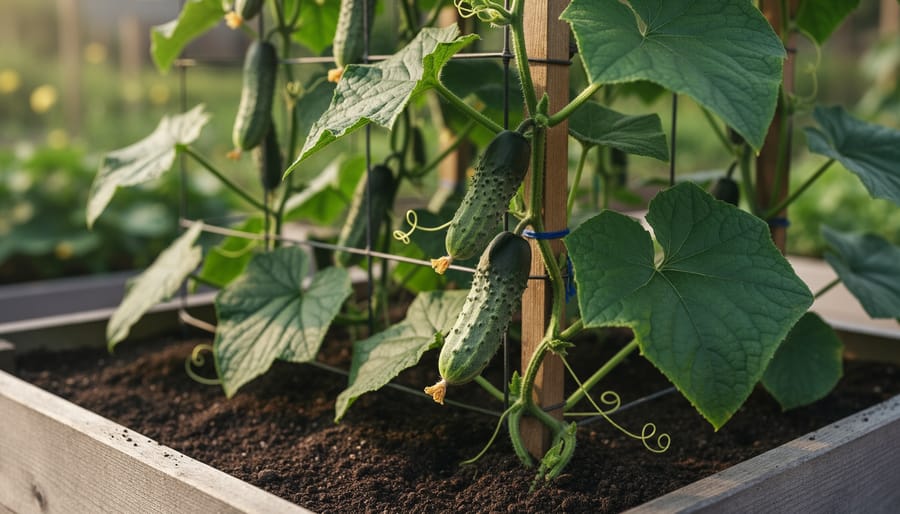
Look for vigorous vines actively climbing your trellis as the first sign your cucumber is thriving. Healthy plants will send out multiple runners that wrap around supports within days of reaching the structure. The leaves should be a deep, vibrant green without yellowing edges or brown spots, and new growth should appear regularly at the vine tips.
Flower development is your signal that harvest is approaching. Cucumbers typically begin flowering four to six weeks after planting, with small yellow blossoms appearing along the vines. Female flowers (the ones that produce fruit) have a tiny cucumber-shaped swelling at the base, while male flowers sit on thin stems. Both are normal and necessary for pollination.
Once cucumbers start forming, check your plant every other day. They grow quickly and taste best when picked young and tender rather than left to become oversized and seedy. Regular harvesting actually encourages the plant to produce more fruit, extending your harvest window.
Consider succession planting in an adjacent square every two to three weeks if you have space. This staggers your harvest so you’re not overwhelmed with cucumbers all at once, and it keeps fresh fruit coming until the season ends. A well-supported square foot cucumber can produce for several months under the right conditions.
Common Questions About Square Foot Garden Cucumbers
Can you grow multiple cucumber varieties in adjacent squares?
Yes, you can plant different cucumber varieties in neighboring squares, but keep each variety to its own square with its own trellis. This prevents cross-pollination concerns and makes it easier to track which variety you’re harvesting.
How many cucumbers will one plant produce?
A single, well-cared-for cucumber plant grown vertically in one square can produce 10 to 20 cucumbers throughout the growing season, depending on the variety and growing conditions. Slicing cucumbers typically yield fewer but larger fruits, while pickling varieties produce more smaller cucumbers.
Can you grow cucumbers vertically in containers?
Absolutely. Use a container at least 12 inches deep and wide, add a sturdy trellis or support structure, and apply the same one-plant-per-square spacing principle. Container cucumbers need more frequent watering than in-ground plants, so check soil moisture daily during hot weather.
What happens if you skip the trellis?
Without vertical support, cucumber vines will sprawl across multiple squares, defeating the space-saving purpose of square foot gardening. You’ll also see reduced airflow around the leaves, which invites fungal diseases, and harvesting becomes a frustrating hunt through tangled foliage.
Beyond these common questions, many gardeners wonder about companion planting logistics. The spinach-under-cucumber-trellis strategy works best if you plant the spinach first or at the same time as your cucumber seedlings. As the cucumber vines climb and create shade, the spinach benefits from cooler soil temperatures during the heat of summer, extending your spinach harvest well beyond its usual spring window.
Timing matters, too. Cucumbers are listed among crops that can still be started for the 2026 growing season in most zones, but they’re frost-sensitive. Wait until soil temperatures reach at least 60 degrees and all danger of frost has passed in your area. If you’re planting late in the season, choose fast-maturing varieties that will have time to produce before fall temperatures drop.
Growing cucumbers in a square foot garden isn’t complicated, and the payoff is worth every bit of effort. One well-supported square can keep your kitchen stocked with fresh cucumbers all summer long, proving that you don’t need sprawling garden rows to grow your own food. The key is simple: give your cucumber plant a sturdy trellis, and it’ll climb happily while you reclaim ground space for companions like spinach. If you’ve been hesitant to try square foot gardening with vining crops, cucumbers are the perfect place to start. Set up that trellis, plant your seedling, and watch it transform a single square into a productive vertical garden. You’ll be harvesting crisp cucumbers before you know it.