Creating a stunning outdoor garden means bringing together healthy, thriving plants and thoughtful decorative touches that make your space feel complete. The secret lies in choosing the right plants for your climate and light conditions, then layering in decorative elements that enhance rather than compete with your living landscape. Gardens function best as outdoor laboratories where natural ecosystems guide your design choices, from selecting native plants that support local pollinators to positioning focal points like fountains or sculptures that draw the eye through your space.
Think of your outdoor space as a collaboration between nature and your creative vision. The most beautiful gardens happen when you match plant selections to what your soil and sunlight can actually support, then weave in decorative pieces that celebrate those choices. A rose garden thriving with minimal chemical inputs becomes even more inviting when framed by a simple arbor. Native plants chosen for their ecological value and natural form create a lush backdrop for garden art or seating areas that invite you to linger.
The approach works for any space, whether you’re cultivating three square feet or three acres. You’ll discover that when plants receive what they need to flourish, the decorative elements you add feel organic rather than forced. Color coordination becomes easier when you’re working with blooms and foliage that naturally complement each other through the seasons. Your garden transforms into more than a collection of pretty things; it becomes a space that provides wildlife habitat, grows fresh food, and genuinely improves your daily life.
How We Chose These Gardening Tips
We selected these eight tips by drawing from proven practices in established public gardens, where horticulture professionals routinely integrate living plants with decorative features to create cohesive outdoor spaces. Each tip meets three essential criteria: it directly impacts how your garden decorations work alongside plants, it balances ecological benefits with visual appeal, and it’s practical for typical home gardens regardless of your experience level.
Our focus centered on techniques you can implement in stages, whether you’re placing your first birdbath or redesigning an entire bed. We prioritized approaches that treat gardens as outdoor laboratories where plants provide habitat and ecosystem services while enhancing decorative elements. The tips emphasize selecting plants for both their form and their ability to thrive with minimal intervention, creating sustainable beauty that makes your garden ornaments truly shine. We’ve avoided overly complex techniques or assumptions about specialized knowledge, ensuring these practices work for beginners and experienced gardeners alike.
1. Choose Plants That Complement Your Decorative Features
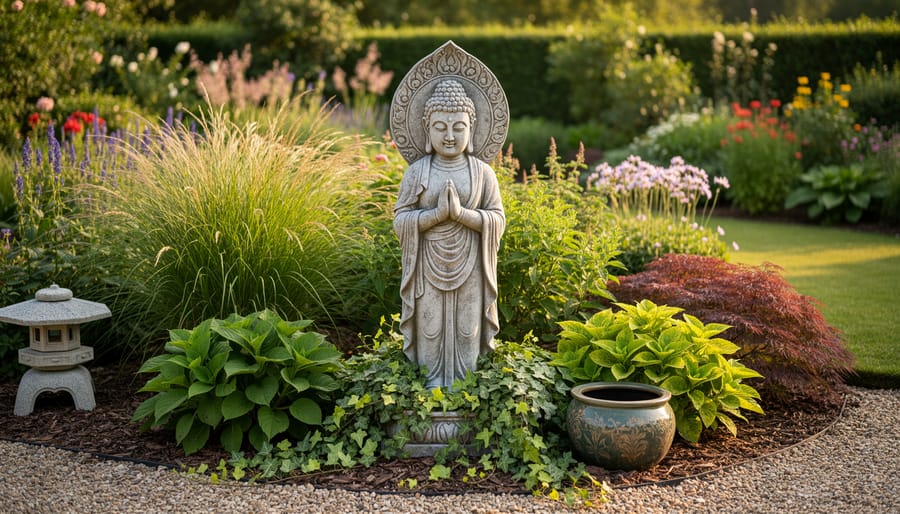
Your garden decorations set the stage, but the plants you choose around them determine whether the entire scene truly comes together. A bronze statue can look lost among overgrown shrubs, while the same piece surrounded by carefully selected grasses becomes a focal point. Think of your decorative elements as anchors that need the right plant companions to shine.
Start by examining your decoration’s physical characteristics. Metal garden art pairs beautifully with ornamental grasses whose fine textures contrast with hard edges. Stone statues gain presence when surrounded by plants with bold, architectural foliage like hostas or ferns. If you’ve invested in colorful ceramic pieces, select plants with blooms or foliage that either complement or thoughtfully contrast those hues, a blue glazed pot looks stunning backed by golden-leafed perennials or purple coneflowers.
Native Mid-Atlantic plants make particularly smart choices because they thrive with less fussing, letting you focus on the overall design rather than constant plant care. The Regional Garden concept, selecting plants for both their form and ecological value, works perfectly when integrating decorations. A black-eyed Susan’s bright yellow blooms might echo a sun motif in your garden art, while providing crucial habitat for pollinators. Switchgrass offers vertical interest behind a birdbath without blocking sightlines.
Consider growth habits as carefully as aesthetics:
- Pair tall, vertical plants like ornamental grasses or Joe Pye weed with statues and trellises to frame them without obscuring views
- Use low-growing groundcovers such as creeping phlox or native sedges to highlight decorative borders and edging without competing for attention
- Plant flowering varieties like native asters or bee balm near colored ornaments to create cohesive seasonal color stories
Water features demand special consideration. Plants near fountains or decorative tile patterns need tolerance for splashing and humidity. Coral bells and foam flowers thrive in these conditions while their delicate foliage complements rather than overwhelms ornate waterwork details. The key is choosing plants that enhance your decorations’ best qualities instead of fighting them for dominance.
2. Create Layers with Plant Heights and Garden Ornaments
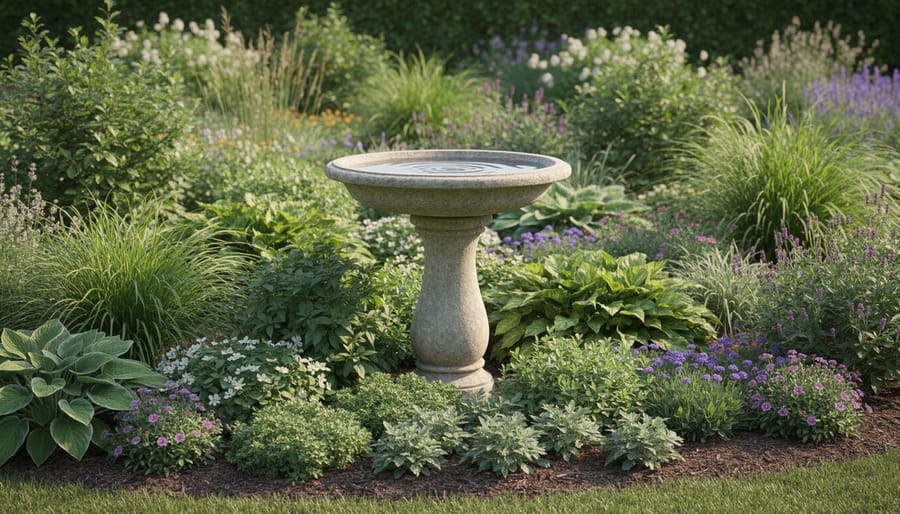
Layering plants at different heights around your garden ornaments creates the visual depth that makes outdoor spaces feel professionally designed. Think of your tallest plants as the backdrop, mid-height perennials as the supporting cast, and low growers as the frame that ties everything together. A birdbath placed at the junction of these three layers becomes a natural focal point rather than an isolated object sitting in mulch.
Start by positioning your tallest decorative elements, a trellis, statue, or obelisk, where they’ll anchor the garden’s vertical interest. Place tall grasses, flowering shrubs, or climbing roses behind or beside them, stepping down to mid-height plants like coneflowers or salvia in the middle layer. Low-growing groundcovers or compact annuals complete the front tier. This graduated arrangement ensures each plant and ornament remains visible while creating a cohesive scene.
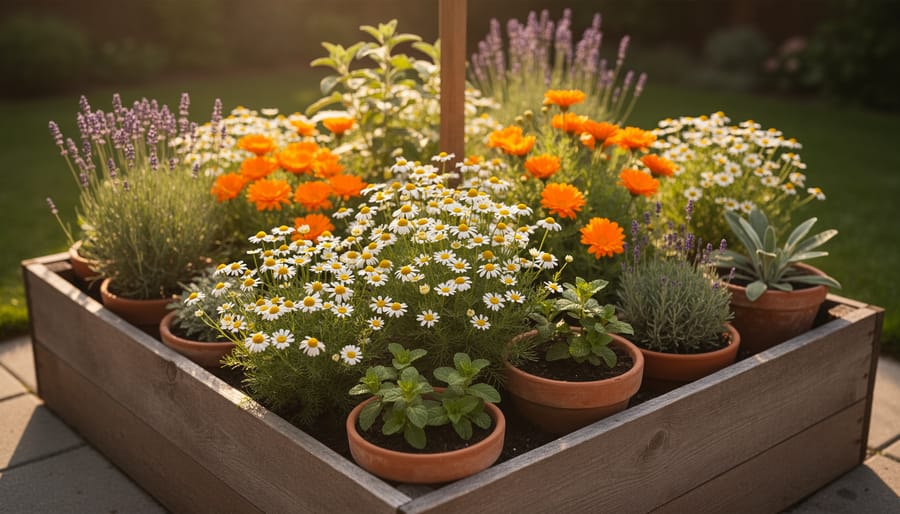
Spacing matters as much as height. Leave 18 to 24 inches between your decorative piece and the nearest plant to prevent crowding as plants mature. A decorative stake marking an herb garden works best when surrounded by plants that won’t exceed two-thirds of the stake’s height. If you’re integrating functional elements like structures for urban beekeeping position them where mid-height flowering plants create a welcoming corridor without blocking access.
Consider sightlines from multiple angles. Walk around your garden to check that ornaments remain visible from your most-used viewing spots, the patio, kitchen window, or garden entrance. A sundial loses its purpose if buried behind overgrown hostas, but surrounded by a ring of lower plantings, it becomes a destination that draws you into the garden.
3. Design Pollinator-Friendly Spaces Around Decorative Elements
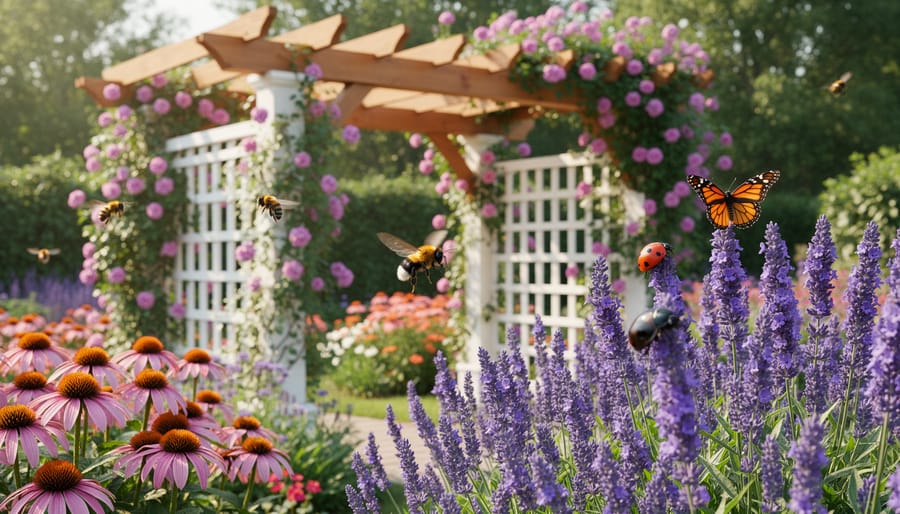
When you combine flowering plants that attract butterflies, bees, and hummingbirds with your favorite garden statues or trellises, you create a space where nature’s activity becomes part of the display. The key is choosing plants that don’t just look pretty, they need to thrive without heavy pesticide use since chemicals harm the very pollinators you’re trying to attract. Native plants work especially well here because they’ve evolved alongside local wildlife and typically need less fussing to stay healthy.
Start by positioning your decorative elements where they’ll serve as anchors within pollinator-friendly beds. A birdbath or garden statue becomes more charming when surrounded by clusters of bee balm, coneflowers, or black-eyed Susans that draw constant visitors. The pollinators themselves add movement and color, butterflies landing on blooms near your decorative stake or bees buzzing around flowers that frame your garden bench. You’re essentially creating a living scene rather than a static display.
Choose flowering plants based on bloom time so something’s always attracting wildlife near your decorations throughout the growing season. Early spring bulbs give way to summer perennials, then fall asters keep the show going. If you want to include roses near decorative structures, select varietals suited to your local climate that perform well with minimal chemical inputs, these tougher roses won’t need treatments that would drive pollinators away.
Space plants close enough to create abundant nectar sources but leave room to appreciate your decorative pieces. A sundial or decorative obelisk shouldn’t disappear into overgrown foliage, position shorter pollinator plants at the base and let taller ones stand behind or to the sides. This layering lets you enjoy both the crafted beauty of your garden art and the natural beauty of wildlife going about their work, all in one well-planned space.
4. Use Water Features as Focal Points for Plant Arrangements
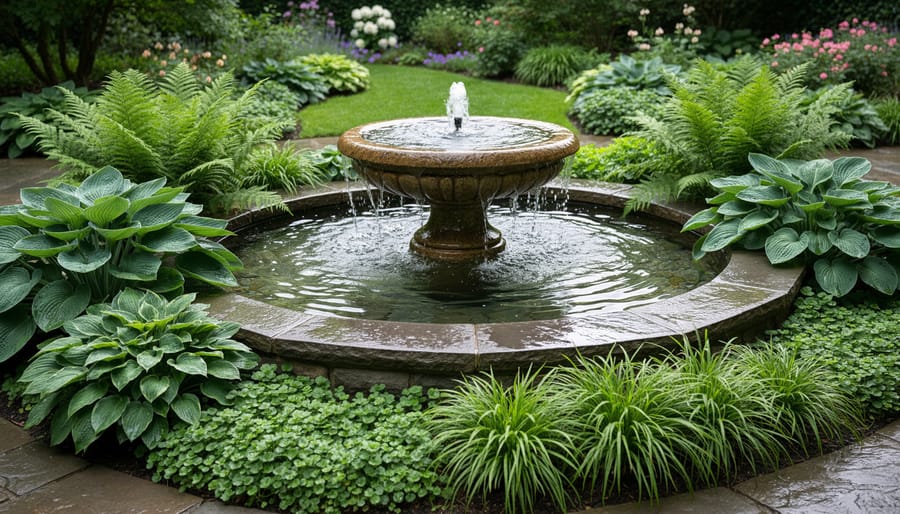
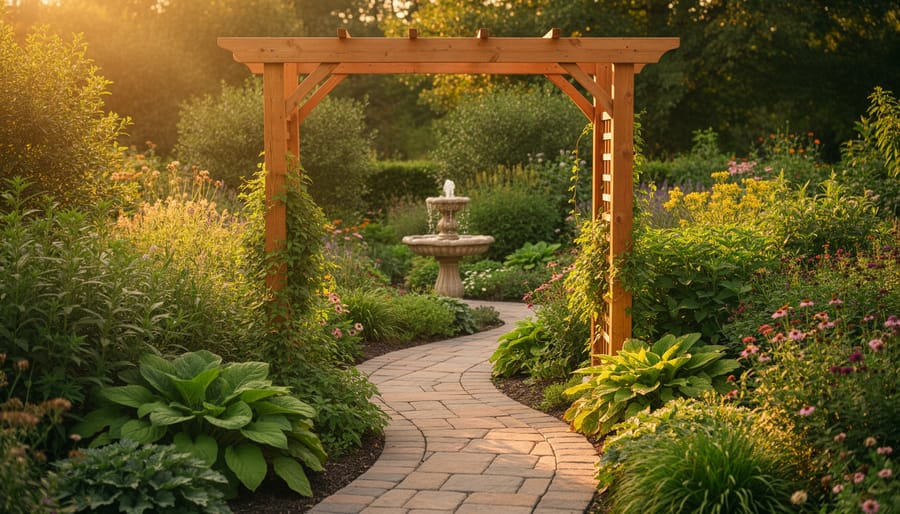
Water features draw the eye and create natural gathering spots in any garden, so the plants you position around them should enhance their appeal rather than compete with it. A fountain or birdbath becomes even more striking when surrounded by moisture-loving plants that look like they belong there.
Start by placing plants in concentric zones based on their water needs. Immediately around a fountain or pond edge, you can use plants that tolerate occasional splashing, hostas, ferns, and astilbes thrive in these damp conditions and provide lush foliage that softens hard edges. Move outward to plants that enjoy consistent moisture but not constant wetness, like cardinal flower or Joe Pye weed. Farther from the water source, transition to low-water plants so you’re not fighting nature with constant irrigation.
Consider the view from multiple angles. If your water feature includes decorative tile work or carved details, keep the immediate planting low enough that those elements remain visible. Taller plants work better as a backdrop, framing the feature without hiding it. This layered approach creates depth while letting your fountain or birdbath stay the star.
Maintenance matters more around water features because splashing can encourage algae growth on nearby foliage and hard surfaces. Choose plants with good air circulation to prevent mildew, and leave enough space for cleaning access. You’ll need to reach that decorative tile pattern or fountain basin periodically, so resist the urge to pack plants too tightly. A well-planned arrangement looks intentional and stays manageable season after season, letting both your water feature and the surrounding plantings shine together.
5. Match Plant Colors to Your Seasonal Decoration Themes
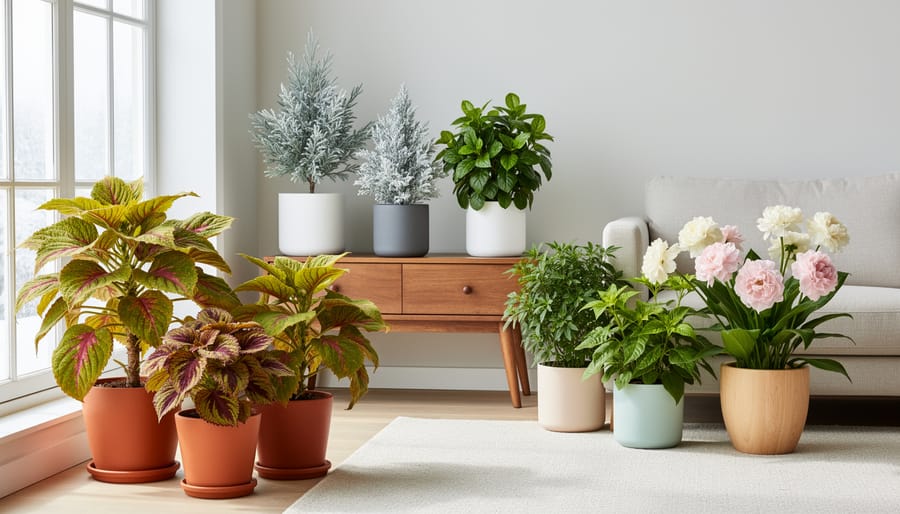
Planning seasonal color requires thinking backwards from your decorative displays. Start in winter by mapping which garden spots will hold Easter baskets, summer lanterns, or autumn pumpkins, then select plants that bloom or hold foliage interest during those windows.
Spring gardens pair perfectly with pastel decorations through early bulbs and cool-season annuals. Daffodils, tulips, and hyacinths provide vibrant yellows, purples, and pinks that echo decorative eggs or bunny figurines. Follow with pansies and violas that tolerate light frost while matching spring ornament palettes. These fade naturally as summer decorations replace them.
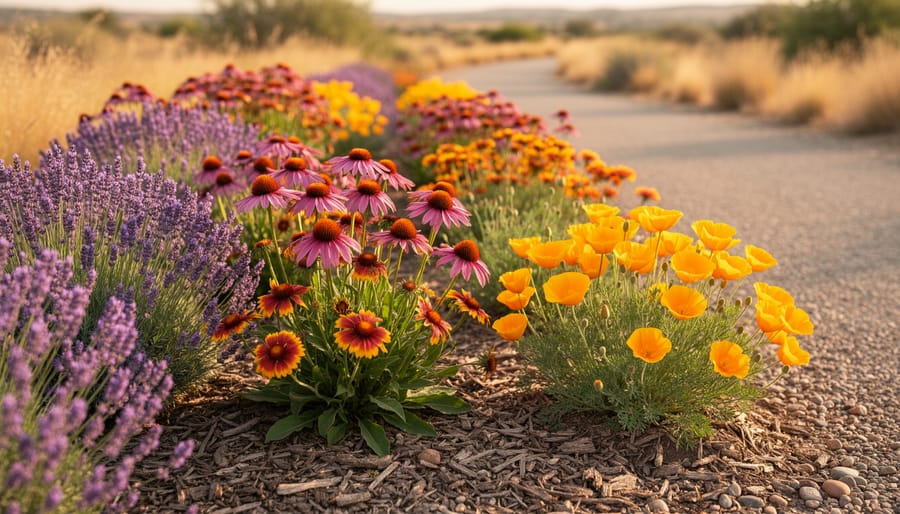
Summer demands heat-tolerant bloomers that complement brighter, bolder garden art. Coneflowers, black-eyed Susans, and salvia provide steady color through hot months, coordinating with patriotic decorations or vibrant garden stakes. Annuals like zinnias and marigolds fill gaps quickly, letting you adjust color schemes if your decorative plans shift mid-season.
Fall staging works best with perennials that change leaf color or hold late blooms. Asters and sedum flower into October, matching harvest decorations, while ornamental grasses provide texture that complements scarecrows or decorative gourds. Select varieties that maintain structure as they dry, serving double duty into winter.
Perennials form your permanent color backbone, reducing replanting work each year. Annuals let you experiment with trendy decoration themes or adjust palettes season-to-season without long-term commitment. Strong soil health basics and understanding the 5 soil principles ensure both plant types thrive, while a reliable irrigation system maintains consistent bloom performance that keeps pace with your rotating decorations.
6. Incorporate Hardscape and Decorations for Year-Round Structure
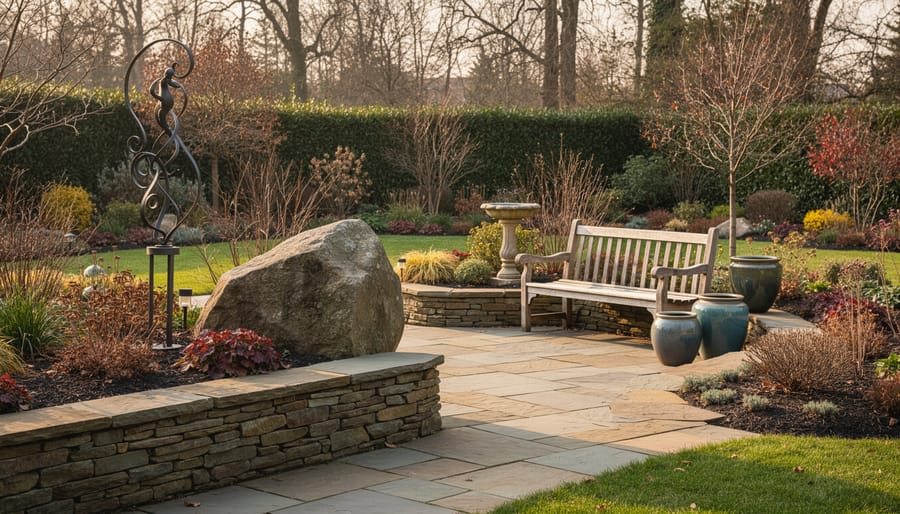
Winter transforms your garden from a lush tapestry into a skeleton of branches and sleeping soil, but that doesn’t mean it has to look bare. Strategic placement of hardscape and decorative elements gives your outdoor space structure that endures through every season, creating focal points that hold interest even when perennials retreat underground.
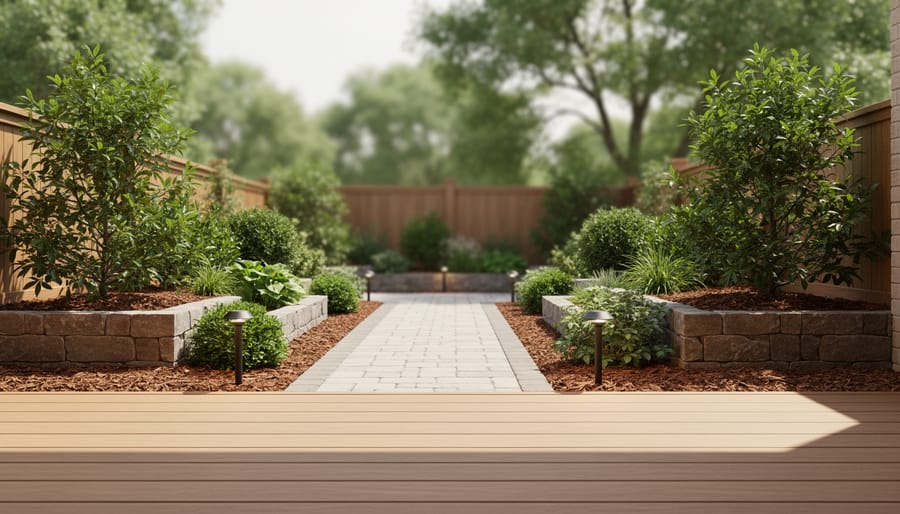
Start by positioning substantial decorative pieces where they’ll anchor key sightlines. A stone statue placed at the end of a pathway, a decorative obelisk rising from a dormant bed, or an architectural trellis marking a garden transition all provide vertical interest when plants die back. These elements work year-round because they don’t depend on foliage or flowers, they’re the bones of your garden design.
Choose materials that improve with age rather than deteriorate. Metal garden art develops attractive patina, natural stone weathers beautifully, and quality ceramics withstand freeze-thaw cycles. Avoid cheap plastics or thin metals that crack or rust through winter. Your decorations will spend months fully exposed to the elements, so select pieces built to handle it.
Position these permanent fixtures first, before planting around them. This ensures decorations remain visible and accessible for cleaning or repositioning. Place a birdbath where you’ll see it from your window in February, not hidden behind future peony growth. Set decorative stakes at consistent intervals through beds to create rhythm that persists when plants vanish.
Consider how winter light hits your garden. Lower sun angles make shadows longer and more dramatic, so tall ornaments cast interesting patterns across snow or mulch. Position reflective elements like gazing balls or polished metal sculptures where weak winter sunlight will catch them, adding sparkle to gray days when your garden needs it most.
7. Practice Sustainable Gardening to Keep Decorations Shining
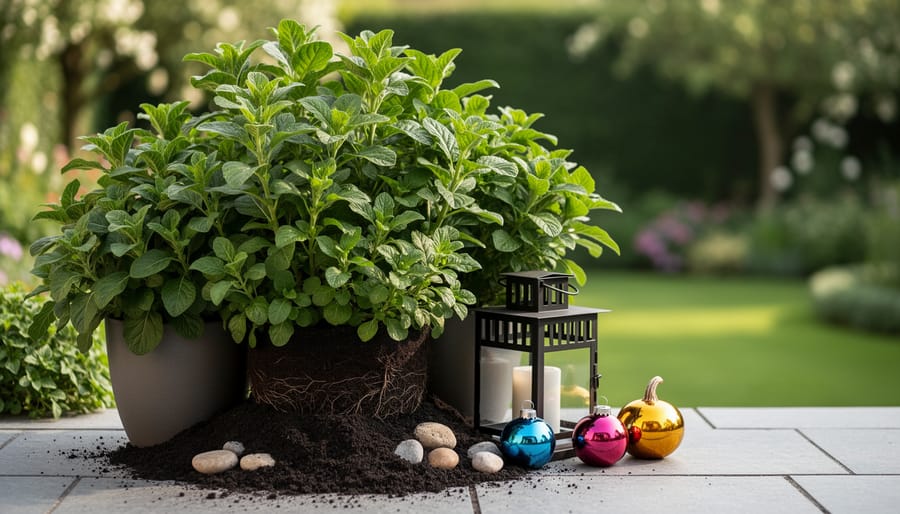
Healthy plants form the foundation that makes garden decorations truly stand out. When you practice sustainable gardening, you create an environment where plants thrive naturally, their robust foliage and vibrant blooms providing the perfect backdrop for your decorative elements. A struggling plant covered in disease spots or wilting from poor care draws the eye away from that beautiful statue or ornamental urn beside it.
Start by selecting plants suited to your specific conditions, what gardening experts call “right plant, right place.” This approach mimics how natural ecosystems function, where plants adapted to local conditions flourish with minimal intervention. Mid-Atlantic native plants, for instance, have evolved alongside local soils, rainfall patterns, and wildlife, making them naturally resilient. When you choose plants for both their ecological value and horticultural qualities, you get specimens that stay healthy season after season, maintaining their visual appeal around your decorative features.
Soil health plays a crucial role in keeping both plants and nearby decorations looking their best. Rich, well-structured soil produces vigorous plants that resist disease and pests, eliminating the brown spots and yellowing that make even the finest garden art look shabby by association. Healthy soil also drains properly, preventing the muddy splashes and mineral deposits that can stain decorative surfaces.
Several sustainable practices work together to maintain this beauty:
- Select plants based on your site’s sun, soil, and moisture conditions rather than fighting against them
- Apply organic mulch around decorations to suppress weeds and maintain consistent soil moisture
- Use integrated pest management techniques to address problems without harsh chemicals that might damage decorative finishes
- Build compost to enrich soil naturally, reducing the need for synthetic fertilizers that can splash onto ornaments
Water wisely rather than excessively. Overwatering creates ideal conditions for fungal diseases that mar plant appearance and can lead to algae growth on nearby decorative materials. Drip irrigation or soaker hoses deliver moisture directly to root zones, keeping foliage dry and decorative surfaces clean.
When you minimize chemical inputs, you protect more than plant health. Harsh pesticides and fertilizers can discolor stone, corrode metal garden art, and leave residue on decorative tile patterns. Rose varietals selected to thrive in your climate with minimal chemical inputs, for example, maintain their beauty naturally while keeping your garden ornaments pristine.
8. Tell a Story with Plants and Garden Art Together
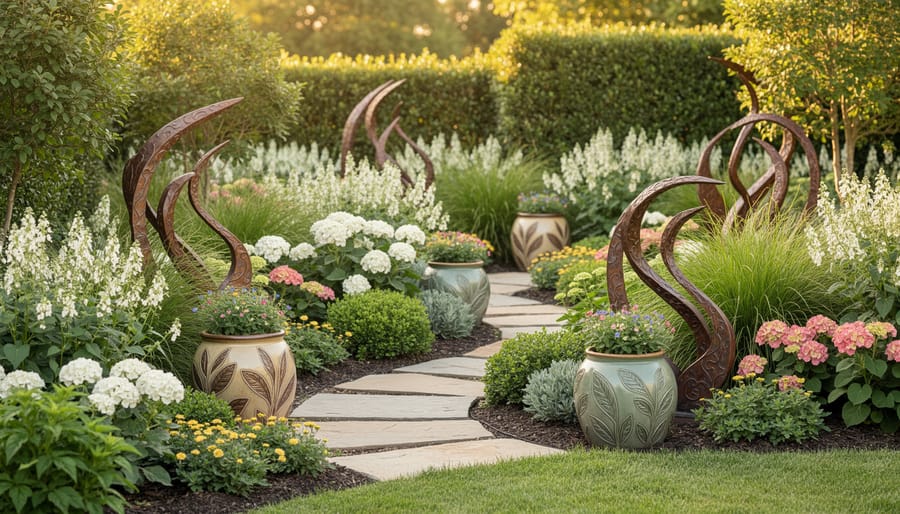
Every garden tells a story, whether you plan it intentionally or let it unfold organically. The most captivating outdoor spaces weave together plants and decorative elements to create a unified narrative that reflects your personality and vision. When you match your plant choices to your garden art theme, you transform a collection of objects into a cohesive experience that draws visitors in and makes them want to linger.
A cottage garden story comes alive with billowing perennials like catmint and salvia spilling around vintage watering cans, rustic birdhouses, and weathered wooden signs. Choose plants with informal, romantic habits, think delphiniums, hollyhocks, and foxgloves, that soften the edges of your decorative pieces. Scatter in some whimsical fairy garden elements among low-growing creeping thyme or sweet alyssum to reinforce the storybook charm.
For a formal garden narrative, pair symmetrical plantings with classical statuary, urns, or geometric garden structures. Boxwood hedges, standard roses, and precisely shaped topiaries echo the refined elegance of formal decorative elements. The story you’re telling here is one of order, balance, and timeless sophistication.
Naturalistic gardens tell stories of local ecology and seasonal change. Select native Mid-Atlantic plants for their form, ecological value, and horticultural qualities, then position natural stone sculptures, driftwood, or handcrafted bird feeders among them. This approach creates an outdoor space where decorations feel like they grew there alongside the plants, providing wildlife habitat while enhancing beauty.
The garden narrative you create can genuinely improve your life and the lives of visitors by offering a retreat that feels intentional, meaningful, and uniquely yours.
Common Questions About Gardening with Decorations
Combining plants and decorations raises practical questions that every gardener faces. Here are answers to the most common concerns about maintaining a beautiful balance between living and decorative elements.
How much space should I leave between plants and garden decorations?
Allow at least 12 to 18 inches between mature plant spread and decorative pieces to prevent overcrowding and maintain visibility. This spacing lets you access decorations for cleaning while giving plants room to grow without obscuring ornamental features.
What’s the best way to stop plants from growing over my garden ornaments?
Regular pruning during the growing season keeps plants from swallowing decorations. Select plants with predictable mature sizes and avoid fast-spreading groundcovers or vigorous vines near statues, birdbaths, or other focal pieces you want to remain visible year-round.
Which materials hold up best for outdoor garden decorations?
Stone, cast metal, glazed ceramic, and quality resin withstand weather cycles better than untreated wood or painted finishes. Choose materials that age gracefully alongside plants rather than deteriorating, especially for permanent installations like fountains or architectural elements.
How do I coordinate plant and decoration maintenance through the seasons?
Schedule cleanup tasks together: when cutting back perennials in late fall, clean and store delicate decorations at the same time. Leave weather-resistant pieces in place during dormant months to provide structure, then refresh both plantings and ornaments when spring growth begins.
These practical considerations become second nature once you establish a maintenance rhythm. The key is thinking ahead about how plants will grow and how decorations will weather, then adjusting your approach each season. A little planning prevents the frustration of prized ornaments disappearing behind overgrown foliage or decorative pieces deteriorating because they weren’t suited to outdoor conditions. Your garden becomes easier to maintain when plants and decorations work together rather than competing for attention.
Your outdoor garden becomes something truly special when you thoughtfully combine healthy plants with decorative elements that reflect your personality. These eight tips show you how to make that happen, whether you’re placing your first statue among flower beds or redesigning an established space. The best gardens don’t separate horticulture from aesthetics. They weave them together so your plants make your decorations look better, and your decorations give your plants context and meaning.
Start small if you’re new to this approach. Pick one decorative piece you love, then choose plants that complement it using the principles we’ve covered. As you gain confidence, you’ll develop an eye for what works in your particular space. Your garden is an outdoor laboratory where you can experiment, learn from what thrives, and adjust what doesn’t quite click.
The real reward comes when you step back and see how your horticultural skill and personal style have created something beautiful together. So grab your gloves, pick a spot, and try these tips in your own garden this season.