Japanese gardening tools are worth the investment if you’re serious about precision work, value tools that last decades, and want cuts so clean they promote faster plant healing. These hand-forged implements cost two to five times more than Western equivalents, but they’re sharper out of the box, maintain their edge longer, and transform tedious tasks like pruning and weeding into surprisingly satisfying work.
The difference comes down to steel quality and centuries-old forging techniques. Japanese tool makers use high-carbon steel that holds a finer edge than the stainless steel common in Western tools. They also forge each blade through repeated heating and hammering, creating a denser molecular structure that resists dulling. When you use a Japanese pruner on a rose stem, you’ll see the difference immediately: a clean slice rather than a crushed cut that invites disease.
But here’s the reality check. Not every gardener needs these premium tools, and the market is flooded with knockoffs that look authentic but perform like cheap imports. You’ll find genuine Japanese tools from about 50 different brands, each with specialties ranging from bonsai scissors to heavy-duty sickles. Knowing which tools actually matter for your garden and how to spot authentic craftsmanship will save you from overspending on tools you’ll rarely use or, worse, buying expensive duds that chip after one season.
This guide walks you through the key features that separate exceptional Japanese tools from overpriced gimmicks, compares the main tool categories so you know what you actually need, and matches recommendations to different gardening styles. Whether you’re tending a small herb garden or managing a backyard orchard, you’ll learn exactly which investments pay off and which traditional tools have modern equivalents that work just as well for half the price.
Why Japanese Gardening Tools Stand Out
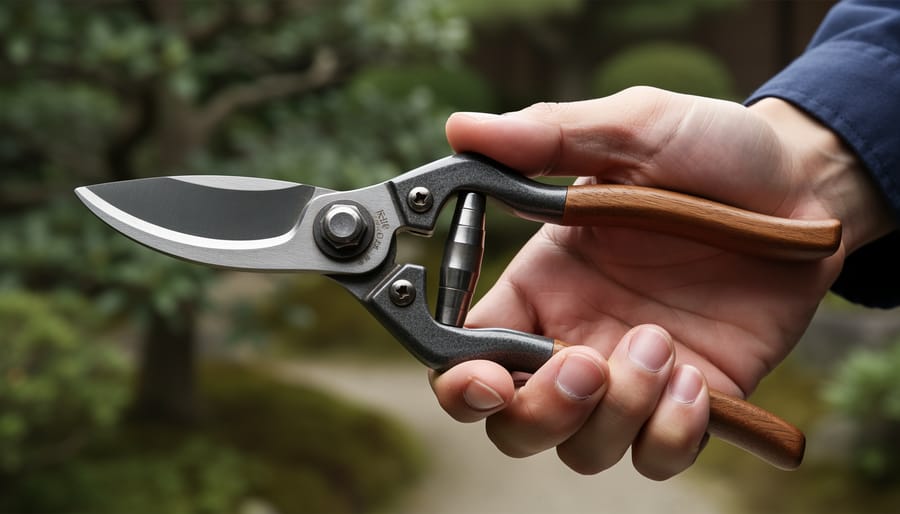
Japanese gardening tools earned their reputation through centuries of refinement, not marketing hype. These implements emerge from a metalworking tradition that values precision and longevity over mass production. Where Western tools often prioritize versatility and affordability, Japanese designs optimize for specific tasks with an intensity that borders on obsessive.
The difference starts at the forge. Japanese toolmakers typically use higher carbon steel than Western manufacturers, resulting in blades that hold edges longer and cut with less effort. Many craftspeople still hand-forge tools using techniques passed down through generations, creating layers of steel that flex without breaking and sharpen to keener edges than factory-stamped alternatives. This isn’t romantic traditionalism, it’s metallurgy that works.
Design philosophy sets Japanese tools apart as well. Rather than creating one pruner for all branches, Japanese makers develop distinct tools for different plant types, cutting angles, and seasonal conditions. This specialization means each tool excels at its intended purpose in ways a general-purpose alternative can’t match. A Japanese floral scissor designed for delicate stems operates differently from a branch cutter, and both outperform a compromise tool trying to do everything adequately.
Durability follows from this combination of quality materials and purposeful design. Japanese gardening tools are unmatched in terms of quality, use, and durability. A well-maintained Japanese sickle or hoe can serve you for decades, developing a patina and feel that improves with use rather than deteriorating. The higher upfront cost spreads across years of reliable service, often proving more economical than replacing cheaper tools every few seasons. You’re buying a tool that becomes familiar in your hand, not something you’ll toss when it dulls or loosens.
Essential Factors to Consider Before You Buy
Authenticity Matters: Finding Genuine Japanese Tools
The flood of “Japanese-style” gardening tools on the market has made authenticity a real concern. Many products claim Japanese heritage but are manufactured elsewhere using shortcuts that compromise the very qualities you’re seeking. Genuine Japanese tools come from makers who follow traditional forging methods and quality standards, those aren’t just marketing claims, they’re the foundation of why these tools perform differently.
Look for clear maker’s marks and the actual manufacturer’s name, not just vague “Japanese design” language. Authentic tools typically carry stamps or engravings that identify the specific forge or craftsperson. When shopping online, check whether the retailer specializes in Japanese tools rather than offering them as a sideline. Hida Tool & Hardware Company, for instance, focuses specifically on authentic Japanese hand tools and maintains direct relationships with makers. Specialized importers like Daitool carry tools from 52 different Japanese tool brands, giving you access to the real breadth of options available.
Be suspicious of unusually low prices, traditional forging and high-carbon steel cost more to produce, and genuine Japanese tools reflect that investment. Also watch for retailers that provide detailed information about the tool’s origin, the specific steel type used, and the maker’s background. Vague descriptions like “Japanese-inspired” or “samurai steel” without specifics often signal imitations. Authentic sources will tell you exactly which prefecture the tool comes from and which forge made it, because that lineage matters to both the makers and serious buyers.
Material and Construction Quality
The blade steel is where Japanese gardening tools truly separate themselves from mass-produced alternatives. Look for high-carbon steel (often labeled as hagane or yasuki steel), which holds a sharper edge far longer than stainless options. Premium Japanese tools typically use steel with a carbon content between 0.6% and 1.2%, allowing craftsmen to forge incredibly thin, precise cutting edges that slice rather than crush plant tissue.
Traditional forging methods matter as much as the steel itself. Hand-forged tools undergo repeated heating and hammering that aligns the steel’s grain structure, creating blades that are both harder at the edge and more flexible at the spine. This laminated construction, a hard steel cutting edge forge-welded to a softer steel body, prevents brittleness while maintaining sharpness. You’ll notice this quality in the blade’s weight distribution and how it feels balanced in your hand rather than blade-heavy.
Edge retention is the practical payoff. A well-made Japanese blade should stay sharp through an entire growing season with only occasional touch-ups, whereas budget tools might need weekly sharpening. Check for a smooth, even bevel along the cutting edge and a finish that shows care in grinding. Avoid tools with rough forge marks near the edge or visibly inconsistent blade thickness, which signal rushed production that compromises performance.
Handle Design and Ergonomics
Handle comfort directly affects both your gardening efficiency and physical well-being during extended sessions. Traditional Japanese tool handles feature smooth, uncoated wood that allows subtle feedback from the blade while minimizing blistering during prolonged use. Modern variations may incorporate rubber grips or contoured shapes, which some gardeners prefer for arthritis relief or wet-weather work.
When evaluating a tool, choose a comfortable handle that fills your palm without forcing your fingers to strain or overextend. Smaller hands benefit from shorter, slimmer profiles like those on floral scissors, while larger hands need sufficient diameter to prevent cramping. If possible, grip the tool as you would during actual use, a handle that feels fine for thirty seconds may become uncomfortable after thirty minutes of weeding or pruning.
Types of Japanese Gardening Tools Compared
Pruning and Trimming Tools
Japanese pruning shears represent the pinnacle of precision cutting tools for gardens. Unlike bulky Western bypass pruners, these shears feature finely tapered blades that glide through stems with minimal tissue damage, which means cleaner cuts that heal faster and reduce disease risk. The blade geometry allows you to work in tight spaces between branches without crushing adjacent growth, a crucial advantage when shaping ornamental shrubs or harvesting delicate vegetables.
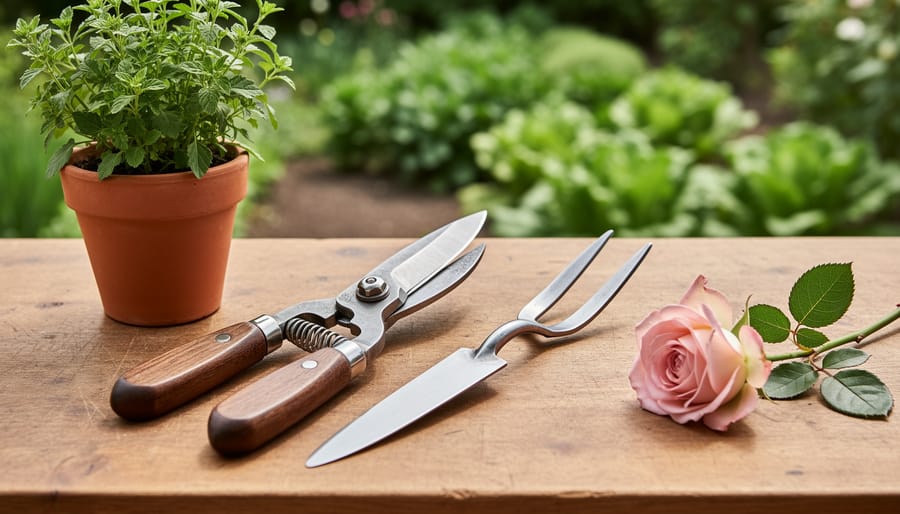
Floral scissors like the Teflon Floral Scissors offer a lighter alternative for softer stems and flowers. The Teflon coating prevents sap buildup and reduces friction, so the blades stay sharp longer between cleanings. These excel at deadheading roses, cutting herbs, and trimming back perennials where you need dozens of quick snips in a single session. Their compact size also makes them comfortable for extended use without hand fatigue.
For specialized tasks, consider Japanese budding knives and grafting tools. These sharp, fixed-blade implements give you surgical control when propagating plants or removing suckers. The thin profile and razor-sharp edge allow precise cuts at specific angles, which matters when grafting success depends on matching cambium layers perfectly. While not essential for most gardeners, serious fruit growers and bonsai enthusiasts find them indispensable.
Sickles and Harvesting Blades
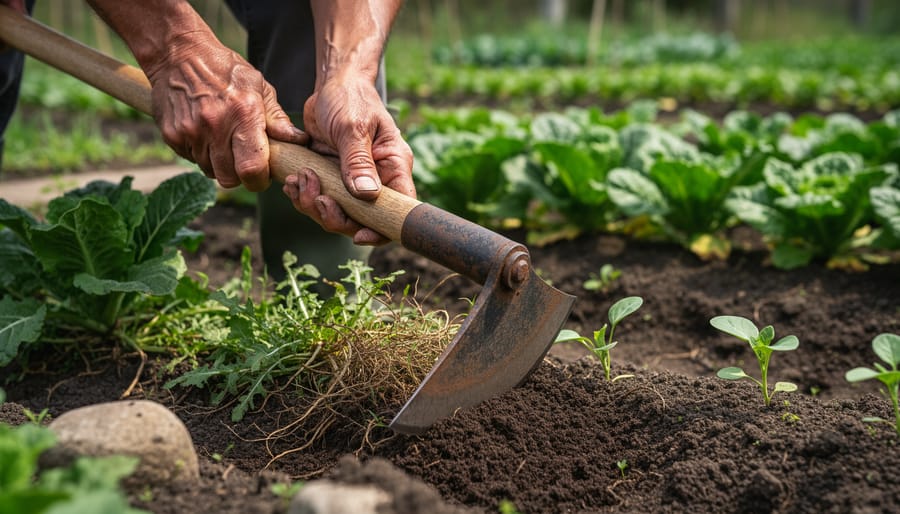
Japanese sickles, or kama, feature a distinctively curved blade that sets them apart from Western-style cutting tools. This curve isn’t just aesthetic, it allows you to swing with a natural wrist motion that cuts efficiently through stems, roots, and thick growth without straining your arm. The blade extends from the handle at an angle, giving you precision control whether you’re clearing dense weeds at ground level or harvesting vegetables.
You’ll find options like the Seikouba Sickle available in different blade thicknesses, each suited to specific tasks. Medium-thickness blades offer versatility for everyday weeding and light clearing work, while thicker options handle woodier stems and stubborn root systems. The thinner versions excel at delicate harvesting where you want clean cuts without damaging nearby plants.
These tools shine when you’re working in tight spaces between plants where a hoe would be too clumsy. The curved blade lets you hook around stems and slice through fibrous growth with a single pull, making quick work of overgrown beds or preparing areas for planting. Many gardeners reach for their kama daily during growing season, it becomes indispensable for maintaining vegetable patches, clearing pathways, and harvesting crops like herbs, greens, and root vegetables where precision matters more than speed.
Digging, Hoeing, and Cultivating Tools
Japanese hoes and cultivating tools reveal a fundamentally different design philosophy from Western counterparts. Rather than brute force, they prioritize precision and efficiency through thoughtful blade angles and lightweight construction that reduce strain during extended soil work.
The most distinctive feature is the pull-stroke design found in traditional Japanese hoes. Where Western hoes push soil away, Japanese versions pull toward you, engaging your stronger arm and back muscles while maintaining better balance. This reversed motion sounds minor but transforms repetitive tasks like creating planting furrows or breaking up compacted beds into surprisingly less tiring work.
Hand trowels and cultivators follow similar principles, with narrower blades and sharper edges that slice through soil rather than forcing it aside. The steel holds an edge that glides through root-bound earth and clay with considerably less effort than standard trowels require. For raised beds or intensive planting areas where you spend significant time on detailed soil preparation, this efficiency compounds quickly.
The handle angles also differ, often shorter and more upright than Western tools. This positioning suits kneeling or squatting work postures common in Japanese gardening traditions. If you garden primarily from these positions or work in tight spaces between plants, the ergonomics feel natural. Those accustomed to standing cultivation with long-handled tools may need adjustment time.
Consider these tools essential if you maintain vegetable gardens with frequent soil turning, create intricate bed layouts, or work extensively with amendments and compost incorporation. Their precision shines in detailed preparation work rather than rough initial groundbreaking.
Specialty Tools Worth Considering
Beyond the core pruning, cutting, and digging tools, Japanese craftsmanship has produced several specialized implements that solve specific garden challenges with elegant efficiency. While not essential for everyone, these tools can transform tedious tasks into satisfying work when they match your gardening style.
Japanese weeding hoes with angled, razor-sharp blades excel at removing persistent weeds without disturbing surrounding soil, ideal if you maintain ornamental beds or vegetable rows where precision matters. The compact design lets you work between plants that would force you onto your knees with conventional tools.
For bonsai enthusiasts or those tending miniature landscapes, Japanese root hooks and wire cutters offer the fine control that standard tools can’t deliver. These let you shape delicate root systems and position training wires without damaging bark or breaking fragile branches.
Bamboo rakes and specialized leaf sweepers serve gardeners maintaining Japanese-style gardens or dealing with autumn cleanup under deciduous trees. Their flexible tines gather debris without scratching stone paths or tearing moss ground covers.
Consider specialty tools only after you’ve established your collection with versatile basics and identified specific frustrations in your routine. A tool that perfectly addresses a recurring challenge justifies its cost; one that sits unused because you overestimated its relevance doesn’t, regardless of its craftsmanship.
Recommendations: Building Your Japanese Tool Collection
For Beginners: Start With These Three Tools
If you’re new to Japanese gardening tools, resist the temptation to buy a complete set right away. Instead, start with three versatile pieces that will immediately show you what makes these tools special without straining your budget.
First, invest in quality pruning shears, they’re the workhorse of any garden. Look for eight-inch models with comfortable handles that feel balanced in your hand. You’ll reach for these constantly, whether you’re deadheading flowers, trimming herbs, or shaping small branches.
Second, add a medium-thickness Japanese sickle to your collection. Its curved blade makes quick work of weeding between plants, harvesting greens, and clearing overgrown areas. The forgiving blade width handles diverse tasks without requiring expert technique.
Third, choose a hand trowel or small cultivating hoe. Japanese versions cut through soil with less effort than Western equivalents, making planting and transplanting genuinely enjoyable rather than a chore.
These three tools cover pruning, weeding, and soil work, the tasks you’ll perform most often regardless of what you grow. They’re forgiving enough for beginners yet capable enough that you won’t outgrow them. Once you’ve experienced the difference in how they feel and perform, you’ll know whether expanding your Japanese tool collection makes sense for your gardening style.
For Vegetable Gardeners
Vegetable gardeners will find Japanese tools particularly valuable for their frequent harvesting and cultivation tasks. A quality Japanese sickle becomes indispensable for clearing overgrown beds between seasons and harvesting leafy greens or cutting back spent plants, its curved blade works efficiently through stems without the sawing motion Western tools require. Pair this with precision floral scissors for delicate harvesting work like snipping herbs, removing damaged leaves, or thinning seedlings where accuracy matters more than power.
For soil preparation and ongoing cultivation, a Japanese hand hoe excels at creating furrows for planting, weeding between rows without disturbing shallow-rooted crops, and incorporating compost into beds. The blade angle and sharp edge slice through soil rather than chopping at it, reducing fatigue during repetitive tasks. If you grow root vegetables, consider adding a specialized digging knife, its narrow, sharp blade helps harvest carrots, radishes, and potatoes with minimal root damage compared to wider trowels that can bruise or split produce.
For Ornamental and Landscape Gardens
Ornamental and landscape gardens demand tools that deliver precision and finesse rather than brute force. Japanese pruning shears excel at detailed shaping work, their razor-sharp edges and compact design let you thin crowded stems, remove spent blooms, and shape decorative shrubs without crushing delicate growth. The narrow blade profile slips into tight spaces between branches where bulkier Western shears can’t reach, making them invaluable for topiary work, bonsai maintenance, and sculpting ornamental grasses.
For hedges and formal borders, Japanese pruning scissors with longer handles provide clean, controlled cuts that heal quickly and maintain crisp lines. Their ergonomic design reduces hand fatigue during extended trimming sessions, a real advantage when shaping boxwood or maintaining perennial borders. Floral scissors handle deadheading and flower arranging with surgical precision, leaving no ragged edges that invite disease.
If you maintain potted specimen plants on patios or balconies, these same precision tools transition beautifully to container gardening tools where space constraints demand accurate cuts in confined areas. A compact hand sickle helps clear moss and weeds from decorative stone mulch without disturbing surrounding plantings, while a narrow-blade hoe cultivates tight spots around perennials without damaging root zones.
Common Mistakes to Avoid When Buying
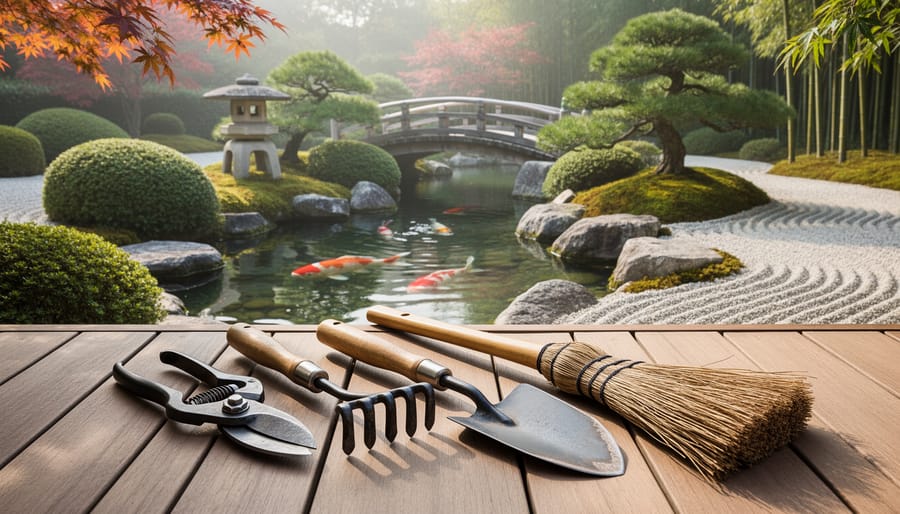
The allure of Japanese gardening tools can lead even experienced gardeners astray. Understanding common purchasing pitfalls helps you invest wisely rather than ending up with expensive regrets gathering dust in your shed.
Prioritizing Price Over Value
The biggest mistake is shopping based solely on the lowest price tag. While authentic Japanese tools command premium prices, suspiciously cheap “Japanese-style” options rarely deliver the quality, edge retention, or durability that make these tools worthwhile. You’ll spend more replacing inferior tools than investing properly from the start. That said, expensive doesn’t automatically mean better, some retailers inflate prices on mediocre products by emphasizing exotic origins.
Buying Tools You Won’t Actually Use
It’s tempting to purchase an entire collection of specialized implements, but honest assessment matters more than completeness. If you maintain a small vegetable garden, that elegant bonsai pruning set won’t see action. Buy tools for tasks you perform regularly, at least weekly during growing season, rather than aspirational projects you might attempt someday. Start with three essential tools that match your actual gardening routine, then expand only after you’ve proven their value in your hands.
Ignoring Maintenance Reality
Japanese tools maintain their edge longer than Western alternatives, but they still require regular care. Carbon steel blades need cleaning and drying after each use, periodic oiling, and occasional sharpening. If you’re not willing to commit to this routine, similar to irrigation for maintenance stainless steel options or Western tools might suit you better despite lower performance. Factor this time investment into your decision.
Skipping the Grip Test
Ordering online offers convenience and selection, but handle comfort varies dramatically between designs. Traditional Japanese handles suit smaller hands well but may feel awkward for larger gardeners accustomed to Western grips. If possible, visit a specialty retailer to hold different styles, or order from shops with reasonable return policies. A tool that causes hand fatigue after twenty minutes becomes useless regardless of blade quality.
Falling for Marketing Nonsense
The Japanese tool market attracts considerable hype and misleading claims. Learn to avoid marketing hype by focusing on verifiable details: steel type, forging method, manufacturer location, and retailer reputation. Vague promises about “ancient secrets” or “samurai-grade steel” signal questionable authenticity.
Neglecting Storage Requirements
Japanese tools deserve better than being tossed in a damp garden bucket. Without proper storage, dry, protected from moisture, ideally hanging or in a tool roll, even premium steel develops rust and handles deteriorate. Plan storage solutions before purchasing, or factor a quality tool box into your budget.
Where to Buy and What to Expect
Finding authentic Japanese gardening tools requires shopping with the right retailers. Your best bet is specialty importers who focus exclusively on Japanese hand tools rather than general garden centers. Hida Tool & Hardware Company is a well-established US-based source that stocks authentic Japanese gardening implements alongside woodworking tools. Internationally, retailers like Daitool specialize in Japanese tools and offer free worldwide shipping, accepting payment through American Express, Apple Pay, Mastercard, Visa, Google Pay, JCB, and several European payment systems including iDEAL, Bancontact, and Wero.
When browsing online listings, pay close attention to product descriptions that specify the manufacturer’s name, the steel type used in the blade, and whether the tool is hand-forged. Legitimate retailers will provide this information clearly. Photos should show the actual tool, not stock images, and you should see Japanese characters or maker’s marks on quality pieces. Be wary of vague descriptions that emphasize “Japanese-style” rather than confirming Japanese manufacture.
Expect longer wait times if your desired tool is out of stock. Popular items like Teflon floral scissors and medium-thickness sickles can sell out and take weeks or months to restock since many are produced in small batches by traditional workshops. Sign up for restock notifications if available.
Shipping from Japan or specialized US importers typically takes one to three weeks for standard delivery. International shipping costs vary based on weight and destination, though some retailers absorb these costs. Factor in potential customs duties for direct imports from Japan, which can add 5-10% to your total depending on your country’s regulations.
Prices for authentic Japanese tools start higher than mass-market alternatives, but focus on value rather than comparing sticker prices. You’re investing in tools that should outlast several generations of cheaper replacements.
Caring for Your Japanese Tools
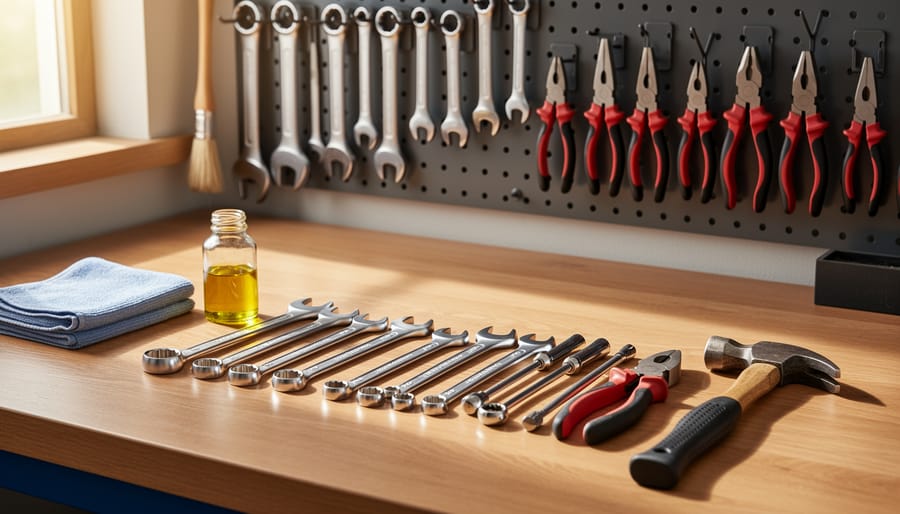
Your Japanese gardening tools represent a significant investment in quality, and proper maintenance determines whether they’ll serve you for decades or deteriorate within a few seasons. The carbon steel blades that make these tools exceptional also make them vulnerable to rust if neglected, so establishing a simple care routine protects both performance and value.
After each gardening session, cleaning tools thoroughly removes sap, soil, and moisture that accelerate corrosion. Wipe blades with a damp cloth, then dry them completely with a clean towel, never put tools away wet. A light coating of camellia oil or mineral oil on the blade creates a protective barrier against moisture between uses. For handles, occasionally wipe wooden grips with linseed oil to prevent cracking and maintain comfort.
- Wipe blades clean and dry immediately after use
- Apply a thin coat of oil to prevent rust
- Store in a dry location away from ground moisture
- Sharpen blades at least twice per season or when cutting performance declines
- Check for loose handles or rivets before spring planting
Sharpening maintains the precise edge that distinguishes Japanese blades. While traditional whetstones offer the best results, many gardeners prefer professional sharpening services once or twice yearly rather than risk damaging the blade angle themselves. Between professional sharpenings, a few strokes with a fine ceramic rod keeps edges keen for daily tasks.
Store your tools hanging or on shelves rather than touching concrete floors, which draw moisture and promote rust. During humid summers or wet winters, check blades weekly and reapply oil as needed. This minimal effort preserves the superior edge retention and cutting precision that justified your investment, turning quality tools into lifetime companions.
Frequently Asked Questions
Are Japanese gardening tools worth it for casual gardeners?
If you garden regularly and value quality over quantity, yes. The superior durability means you’ll buy tools once instead of replacing cheap alternatives every few years, and the precision makes routine tasks more enjoyable.
How long do Japanese gardening tools typically last?
With proper care, high-quality Japanese tools can last decades or even a lifetime. Their exceptional build quality and maintenance-friendly design means they outlast Western equivalents by years, making the initial investment worthwhile for committed gardeners.
Do Japanese tool manufacturers make left-handed versions?
Most traditional Japanese gardening tools work equally well for left- and right-handed users because of their symmetrical or ambidextrous designs. However, specialized cutting tools like certain pruning shears may have right-handed blade orientation, so check product descriptions if this matters for your comfort.
Do these tools require special sharpening techniques?
Japanese blades typically have different bevel angles than Western tools and benefit from water stones rather than files. You can learn basic sharpening yourself or use professional services that understand Japanese edge geometry.
How can I start collecting Japanese tools on a limited budget?
Begin with one essential tool that addresses your most frequent task, like quality pruning shears or a versatile hand sickle. Experience the difference firsthand, then gradually add pieces as budget allows rather than buying a complete set of mediocre alternatives.
Where can I find authentic Japanese gardening tools?
Specialty retailers like Hida Tool & Hardware Company focus on authentic Japanese hand tools, while broader suppliers like Daitool carry products from 52 Japanese tool brands and offer worldwide shipping with multiple payment options including major credit cards and digital wallets.
The questions above reflect what most gardeners wonder before making their first Japanese tool purchase. Notice how the answers balance honesty about costs and maintenance with reassurance about long-term value. You’re not being sold a fantasy; you’re making an informed choice about whether these tools align with your gardening commitment and budget reality. The durability claim isn’t marketing hype. Japanese gardening tools genuinely outlast conventional alternatives when you maintain them properly, which is simpler than it sounds once you establish a quick post-use cleaning routine.
Choosing the right Japanese gardening tools isn’t about buying the most expensive items or collecting every specialty piece available. It’s about understanding your garden’s needs, your own skill level, and which tools will genuinely improve your gardening experience. If you’re serious about your craft and spend regular time working the soil, the investment in quality Japanese tools pays dividends through years of reliable performance and the simple pleasure of using beautifully balanced implements.
Start with the essentials that match your actual gardening tasks. A vegetable gardener benefits from different tools than someone maintaining ornamental shrubs. Buy from reputable sources that specialize in authentic Japanese tools, inspect the construction quality before purchasing when possible, and commit to the minimal maintenance these tools require. The sharpness, precision, and ergonomic design that define Japanese gardening tools transform routine tasks into satisfying work.
There’s genuine joy in reaching for a tool that fits your hand perfectly, cuts cleanly with minimal effort, and performs exactly as intended season after season. These aren’t just implements, they’re partners in creating the garden you envision. Whether you begin with a single well-chosen piece or gradually build a complete collection, you’re investing in tools that respect both the craft of gardening and the centuries of metalworking tradition behind them. Your future self, working in the garden five or ten years from now with the same reliable tools, will thank you for choosing quality over convenience.