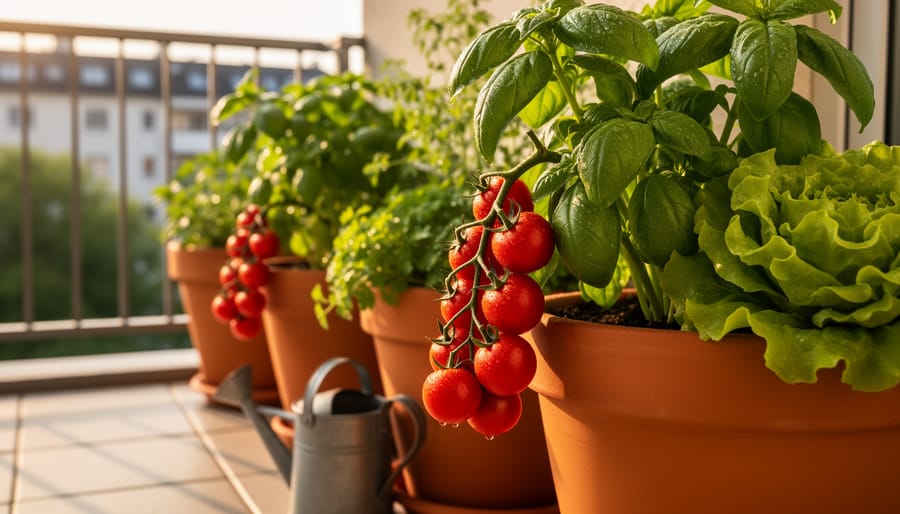
You don’t need a sprawling backyard to grow vibrant tomatoes, crisp lettuce, or colorful blooms. Container gardening transforms any sunny balcony, patio, or doorstep into a productive growing space, and getting started is simpler than you might think.
I still remember my first container garden: three mismatched pots on a cramped apartment balcony. By mid-summer, I was harvesting cherry tomatoes almost daily and snipping fresh basil for pasta dinners. That experience taught me something valuable. The size of your space matters far less than understanding a few core principles.
Container gardening solves the biggest obstacles facing new gardeners in 2026. No yard? No problem. Poor soil? You control every inch of it. Limited time? Containers require less weeding and maintenance than traditional beds. You can start with a single pot this week and expand as your confidence grows.
The learning curve is gentle. You’ll need to understand which containers work best for different plants, how to create the right soil mix, and how to maintain consistent watering. But unlike in-ground gardening, you can adjust everything as you learn. Your tomato plant needs more sun? Move the pot. Herbs getting waterlogged? Switch to a container with better drainage.
This guide walks you through every step, from choosing your first containers to harvesting your first crops. Whether you’re growing food to save money, seeking a creative outlet, or simply want fresh herbs within arm’s reach of your kitchen, container gardening delivers results you can see, touch, and taste within weeks.
Why Container Gardening is Perfect for You (And Everyone Else in 2026)
Container gardening has exploded in popularity this year because it solves real problems for real people. If you’re renting, living in an apartment, or just don’t have a traditional backyard, containers let you grow fresh tomatoes, herbs, and greens without needing a single square foot of ground soil. You can transform a balcony, patio, fire escape, or even a sunny windowsill into a productive garden.
The mobility is a game-changer. Unlike in-ground gardens, containers move with you when you relocate, and you can reposition them to follow the sun or dodge harsh weather. Did your tomatoes get too much shade in their current spot? Just shift the pot three feet over. Planning to move apartments next year? Your entire garden comes along.
For beginners especially, containers simplify pest and disease management. Raised off the ground, your plants face fewer problems with soil-borne pests, slugs, and certain fungal issues that plague traditional gardens. You control the soil quality from day one, which means no wrestling with clay, rocks, or mystery weeds.
Container gardening also scales to your ambition. Start with one pot of basil on your kitchen counter. Add a cherry tomato plant next month. Experiment with vertical gardening ideas to stack multiple containers when you’re ready. There’s no pressure to dig up a lawn or commit to a permanent garden bed you might regret.
The accessibility explains why free community workshops have taken off across the country in 2026. People want to grow food, but they’ve been waiting for an approachable entry point. Containers provide exactly that. You don’t need fancy tools, years of experience, or a green thumb. You need a container, some soil, and the willingness to water regularly. That’s it.
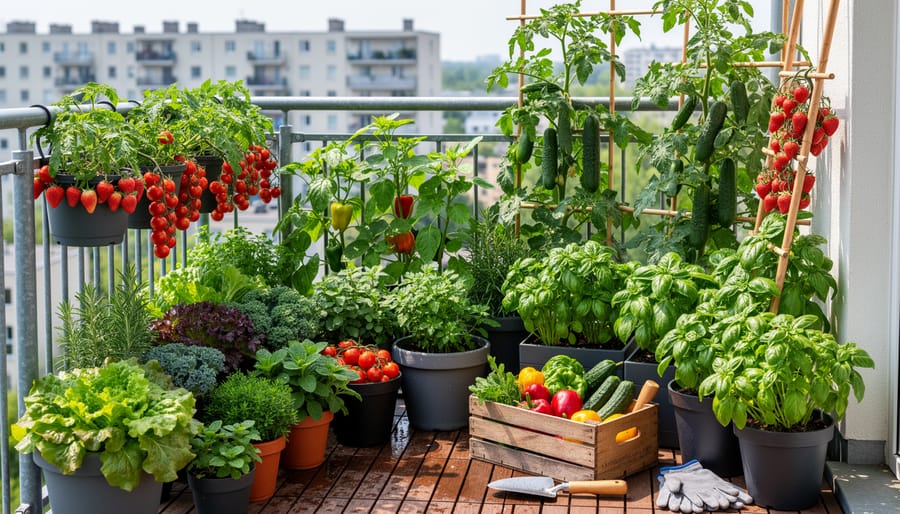
Choosing Your First Containers: What Actually Works
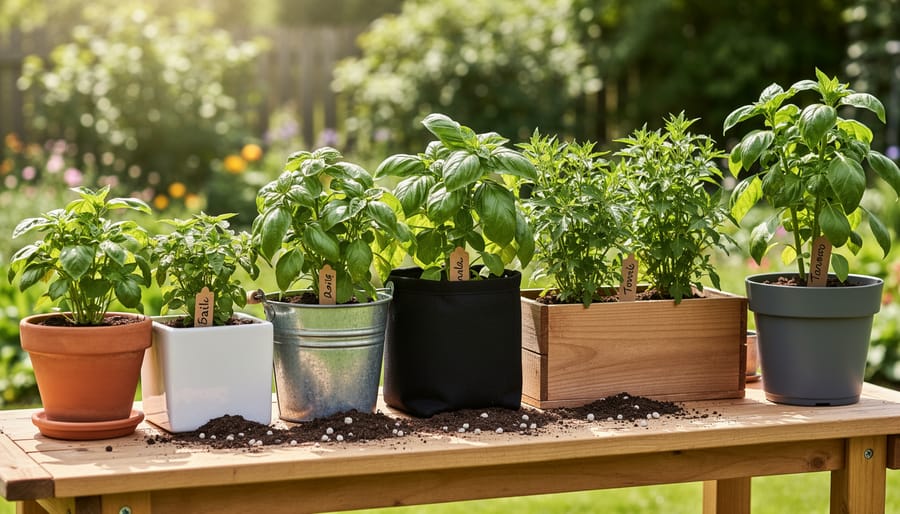
The One Container Feature You Can’t Skip
Drainage might sound boring, but it’s the difference between thriving plants and dead ones. Without proper drainage, water pools at the bottom of your container, suffocating roots and inviting rot. Your beautiful tomato plant? It’ll turn yellow and wilt, no matter how much you baby it.
Here’s the deal: drainage holes are critical because they let excess water escape. Most store-bought pots have them, but if you’re repurposing a bucket or wooden crate, you’ll need to add them yourself. Grab a drill and make several quarter-inch holes in the bottom. Space them a few inches apart.
Found the perfect container but can’t drill holes? You have options. Use it as an outer decorative pot and place a slightly smaller container with drainage inside it. Or create a drainage layer by filling the bottom two inches with gravel or broken pottery pieces before adding soil. It’s not as effective as actual holes, but it helps in a pinch.
Don’t skip this step. Your plants literally depend on it.
The Best Beginner-Friendly Plants for Container Growing
Starting a container garden means choosing plants that forgive beginner mistakes and still reward you with actual harvests. You don’t need exotic varieties or advanced skills, some of the easiest plants to grow are the ones you’ll use most in your kitchen.
Lettuce and salad greens top the beginner-friendly list because they grow fast, tolerate partial shade, and don’t mind being harvested repeatedly. Plant a mix of lettuce varieties in a shallow container (6-8 inches deep), and you’ll be cutting fresh salad leaves within 30 days. They prefer cooler weather, so they’re perfect for spring and fall growing in most climates.
Cherry tomatoes give you that classic “I grew this myself” satisfaction without the complexity of full-sized varieties. Choose a determinate or patio variety bred for containers, give it a 5-gallon pot minimum, and place it where it gets 6-8 hours of direct sun. You’ll need to stake or cage the plant as it grows, but watching those little tomatoes ripen is worth the minimal effort.
Herbs practically thrive on neglect, which makes them ideal starter plants. Basil, parsley, cilantro, and chives all flourish in containers and give you continuous harvests when you snip what you need for cooking. Most herbs prefer full sun but tolerate some shade, and several varieties count as low-water plants once established, perfect if you sometimes forget to water.
Radishes are the speedsters of container gardening, ready to harvest in 25-30 days. They need only 6 inches of soil depth and grow so quickly that kids love watching their progress. Sow seeds directly in the container every two weeks for a continuous supply.
| Plant | Container Depth Needed | Sunlight Requirements | Difficulty Level |
|---|---|---|---|
| Lettuce/Salad Greens | 6-8 inches | Partial shade to full sun | Very Easy |
| Cherry Tomatoes | 12+ inches (5-gallon pot) | 6-8 hours direct sun | Easy |
| Herbs (Basil, Parsley, Chives) | 6-8 inches | 4-6 hours sun | Very Easy |
| Radishes | 6 inches | Full sun preferred | Very Easy |
| Peppers | 10-12 inches | 6-8 hours sun | Easy |
Peppers also adapt beautifully to container life, whether you choose sweet bell varieties or hot jalapeños. They need warm weather and consistent watering but otherwise require little fussing. A 10-12 inch deep pot gives their roots enough room to support a productive plant.
Start with two or three of these proven performers rather than attempting a dozen different plants at once. You’ll build confidence with early successes and learn what grows best in your specific space and light conditions. Once you’ve harvested your first container-grown salad or picked your first ripe tomato, you’ll understand why these plants earn their beginner-friendly reputation.
Setting Up Your Container Garden: Step-by-Step
Why Regular Garden Soil Will Ruin Your Containers
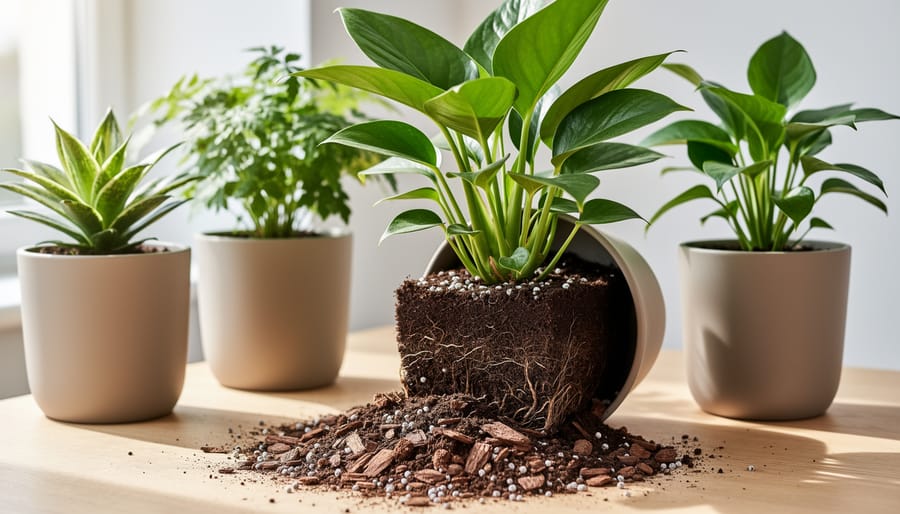
I get it. You’re standing in your yard right now, eyeing that rich, dark soil in your garden bed and thinking, “Why should I buy potting mix when I have perfectly good dirt right here?” Trust me, I had the same thought when I started. But here’s the thing: garden soil in containers becomes a compacted, waterlogged mess that’ll suffocate your plant roots within weeks.
Garden soil is heavy and dense. In the ground, that’s fine because earthworms, microorganisms, and natural drainage systems keep it loose. But pack it into a container, and it compacts like concrete after a few waterings. Your plant roots need air pockets to breathe and grow, and garden soil just can’t provide that in a confined space. Water pools on top instead of draining through, creating perfect conditions for root rot.
That’s why you need to use the right soil from the start. A quality commercial potting mix contains ingredients like peat moss, perlite, and vermiculite that stay fluffy and drain properly while still holding enough moisture for your plants. It’s specifically engineered for container life. Yes, it costs a bit more upfront, but it’s the difference between thriving tomatoes and sad, yellowing plants that never had a chance.
Daily Care That Takes Just Minutes
Container gardens practically take care of themselves once you get into a simple routine. We’re talking five to ten minutes a day max, often less.
**Watering: The Only Daily Task That Matters**
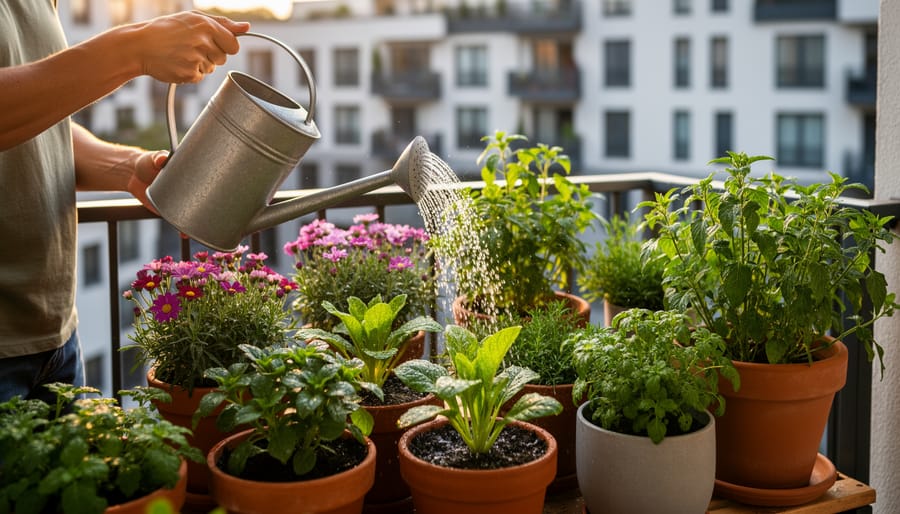
Check your containers every morning by sticking your finger an inch into the soil. If it feels dry, water until you see it dripping from the drainage holes. That’s it. Container plants dry out faster than garden beds because they have limited soil volume, so most will need water daily in summer, less often in cooler months. Group containers with similar water needs together to make this even quicker.
If you’re worried about keeping up with watering, simple irrigation for containers can handle the job while you’re away. But honestly, most beginners find the quick morning watering ritual surprisingly relaxing.
**Fertilizing: Once a Week, Barely Any Effort**
Because watering washes nutrients through the drainage holes, container plants need regular feeding. Mix a balanced liquid fertilizer at half strength and add it during your weekly watering. I keep a labeled jug of pre-mixed fertilizer solution ready to go, so it takes zero extra time. Start two weeks after planting, then continue through the growing season.
**Quick Troubleshooting Anyone Can Do**
Yellowing lower leaves usually mean you need to fertilize more. Wilting despite wet soil suggests overwatering or poor drainage. Leggy, stretched plants aren’t getting enough sun, so move them to a brighter spot. Most problems announce themselves clearly, and the fixes are straightforward.
The real secret? Container gardening rewards consistency over intensity. A few minutes each morning beats sporadic marathon sessions every weekend. You’ll spend more time enjoying your tomatoes than fussing over them.
Common Beginner Mistakes (And How to Avoid Them)
Starting container gardening is a learning process, and everyone makes mistakes along the way. The good news? Most slip-ups are easy to fix once you know what to watch for.
Overwatering kills more container plants than anything else. It’s tempting to water daily “just to be safe,” but soggy soil drowns roots and invites disease. Instead, stick your finger two inches into the soil, if it feels damp, wait. Most containers need watering only when the top inch or two feels dry. In hot weather that might mean daily watering, but in cooler conditions, every few days works fine.
Cramming too many plants into one pot seems efficient, but it backfires. Roots compete for nutrients and water, leaves block sunlight from each other, and nothing thrives. Follow spacing guidelines on seed packets or plant tags. A 12-inch pot comfortably holds one tomato plant or three to four lettuce plants, not both.
Misjudging sunlight requirements trips up countless beginners. We see a sunny spot and assume it’s enough, but “full sun” means six-plus hours of direct light. Track how sunlight moves across your space throughout the day before deciding where containers go. Shade-loving lettuce will bolt in blazing afternoon sun, while sun-hungry tomatoes won’t fruit in partial shade.
Skipping fertilizer is another common oversight. Container soil has limited nutrients, and frequent watering flushes them out faster than garden beds. Feed your plants every two to three weeks with a balanced liquid fertilizer once they’re established.
Finally, ignoring early pest signs lets problems spiral. Check leaves regularly and prevent aphids and other pests from establishing by catching them early. A quick daily glance takes seconds and saves headaches later.
Free Resources and Community Support for 2026
You’re not on your own once you plant that first container. The container gardening community has exploded in 2026, with cities and towns across North America hosting free workshops designed specifically for beginners. These hands-on sessions provide the perfect jumpstart, you learn by doing, ask questions in real time, and meet neighbors who share your growing enthusiasm.
One verified example: Shelburne is offering a free container gardening workshop on June 17, 2026, at the Mel Lloyd Centre, 167 Centre St (use Entrance F). According to the verified local workshop listing all materials are provided and the session is tailored for beginners and anyone curious about starting their first container garden.
| Date | Location | Cost | Audience |
|---|---|---|---|
| June 17, 2026 | Mel Lloyd Centre, 167 Centre St, Entrance F | Free | Beginners and anyone interested |
Check your local library, community center, or municipal website for similar events near you. Many garden clubs also welcome newcomers and offer informal mentorship. Social media groups focused on container gardening are another goldmine, search for location-specific groups where members share photos, troubleshoot problems together, and swap seeds or cuttings. You’ll find that container gardeners love helping others succeed, probably because we all remember our own wobbly first attempts and want you to skip the same mistakes.
You’ve got everything you need to start growing fresh food in containers right now. No fancy equipment, no gardening degree, just you, some soil, a container, and a plant that wants to grow. Honestly, that’s the beauty of container gardening, it meets you exactly where you are, whether that’s a tiny balcony or a sunny kitchen windowsill.
Your first tomato from a pot you chose yourself? That moment when you snip fresh basil for dinner instead of buying wilted supermarket herbs? Those small wins add up to something genuinely rewarding. And if you mess up along the way, welcome to gardening. We all kill a plant or two before we figure things out.
The container gardening community in 2026 is thriving, with free workshops popping up everywhere. If you’re near Shelburne, the June 17th workshop at Mel Lloyd Centre is a perfect way to connect with other beginners and get your hands dirty.
Start small. Pick one plant. Give it a try. Then come back and tell us how it went, the successes, the failures, the surprise of watching something you planted actually grow. Your container garden is waiting.