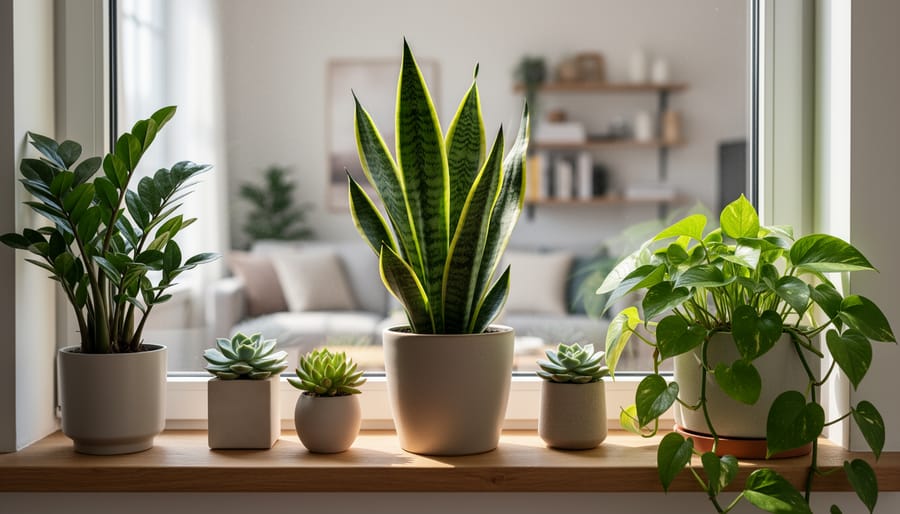
Low-water houseplants offer a simple solution for anyone who wants the beauty and air-purifying benefits of indoor greenery without the anxiety of constant watering schedules. Snake plants, ZZ plants, pothos, and succulents are among the most forgiving choices for busy or forgetful plant parents, requiring water only every two to three weeks once established.
These drought-tolerant plants have evolved remarkable adaptations for surviving periods of neglect. They store water in thick leaves or specialized root systems, making them nearly impossible to kill through underwatering. The real secret? Most people actually overwater these plants, which causes far more damage than letting them dry out between drinks.
I learned this lesson the hard way with my first snake plant, drowning it with well-meaning attention before discovering that neglect was exactly what it needed. That revelation opened up a whole new world of low-maintenance plants that thrive in apartments, offices, and homes where weekly watering simply isn’t realistic.
Whether you’re a beginner building confidence or an experienced gardener looking for hassle-free additions to your collection, drought-tolerant houseplants deliver results without demanding your constant attention. The 12 plants in this guide range from classic favorites like spider plants to trendy options such as Monstera deliciosa, each selected for proven resilience and wide availability through retailers like Amazon, where options start around $23 for established plants ready to ship directly to your door.
What Makes a Houseplant Low-Water
Low-water houseplants aren’t magic, they’re just brilliantly adapted. These survivors evolved in harsh environments where water arrives sporadically, so they developed clever tricks to hang onto every drop. Think thick, fleshy leaves that store moisture like tiny reservoirs, waxy coatings that prevent water from evaporating, and specialized stems that act as water tanks. Desert natives like succulents and plants from arid regions naturally minimize transpiration, the process where water escapes through leaves. When you’re shopping for low-water plants look for these physical clues: chunky or rubbery leaves, silvery or waxy surfaces, thick stems or trunks, and compact growth habits.
These adaptations mean you can safely skip waterings without guilt, making them perfect companions for busy schedules or forgetful moments.
How We Chose These Low-Water Champions
We didn’t just pick pretty plants and call it a day. Each plant on this list earned its spot by surviving at least three weeks between waterings without throwing a fit. We prioritized species you can actually buy right now through Amazon and local nurseries, with verified availability and current pricing ranging from $23 to $53 for established plants. Beginner-friendliness mattered too, no finicky divas that sulk if you breathe wrong. We chose plants with proven track records in real homes, backed by years of gardener testimony. Finally, we made sure to include diverse looks, from trailing vines to architectural statements, so there’s something gorgeous for every room and style preference.
1. Snake Plant (Sansevieria), The Indestructible Classic
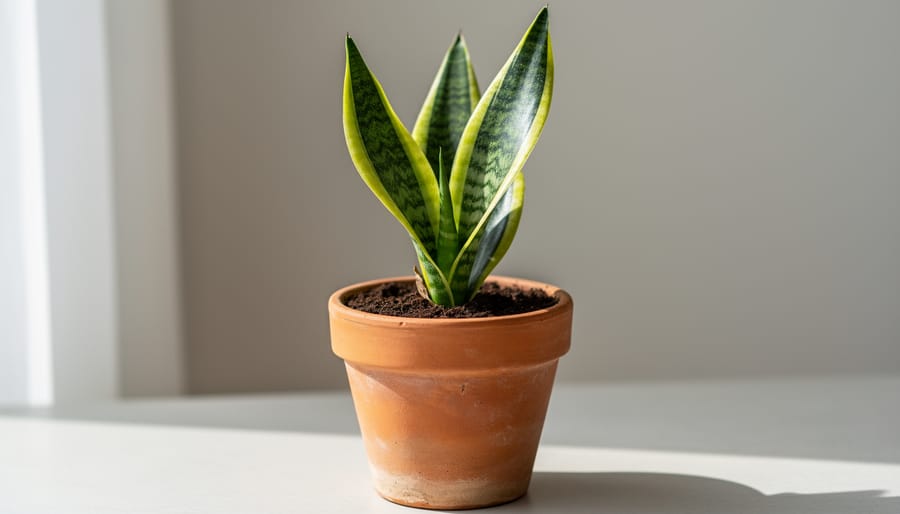
The snake plant stands as the poster child for indestructible houseplants, and for good reason. Its sword-like leaves rise vertically in tight clusters, creating a bold architectural statement that works equally well in modern minimalist spaces or cozy traditional rooms. The thick, waxy foliage isn’t just visually striking, it’s a water storage system that allows these plants to laugh off neglect that would kill most houseplants.
Snake plants need little water happily going four weeks or longer between drinks. They’re nearly foolproof for beginners or anyone who travels frequently. Place yours in anything from bright indirect light to a dim corner, though brighter spots encourage faster growth. Water only when the soil dries completely, stick your finger two inches down to check. Overwatering is the only real threat to these hardy survivors.
For current pricing, the Greendigs Snake Plant runs $38 on Amazon, arriving as a fully established specimen ready to brighten your space. Choose a pot with drainage holes, give it a sunny or shady spot (it truly doesn’t care), and prepare to enjoy years of low-maintenance greenery that thrives on benign neglect.
2. ZZ Plant (Zamioculcas zamiifolia), Glossy and Gorgeous
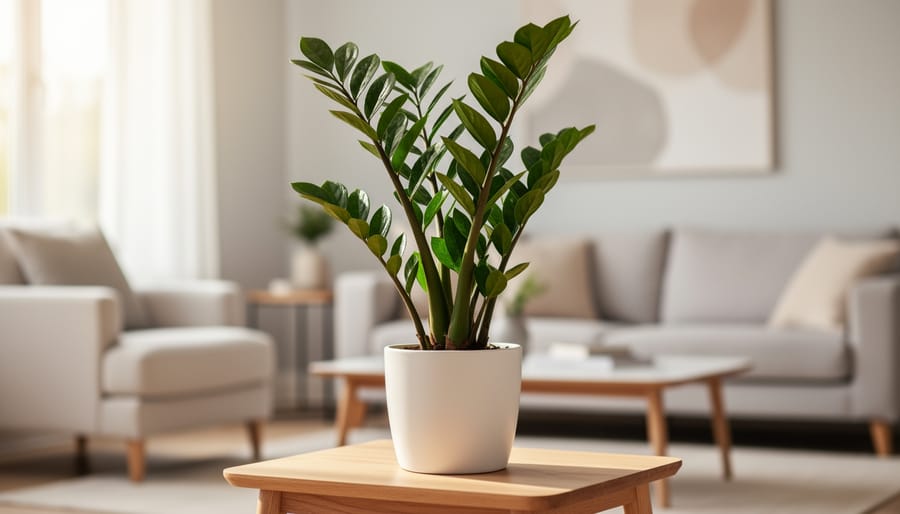
The ZZ plant earns its place on every low-water list with those thick, waxy leaves that shine like they’ve been polished. Each stem grows directly from underground rhizomes that act as natural water tanks, storing moisture for weeks at a time. You can easily go four to six weeks between waterings once this plant settles into your home, making it perfect for travelers or anyone who forgets to check their plants regularly.
What makes the ZZ truly special is its tolerance for low light conditions. While most houseplants sulk in dim corners or windowless offices, the ZZ plant actually thrives there. It grows slowly in these spots, which means even less maintenance for you. The glossy foliage adds a touch of elegance to spaces where other plants would struggle, and that dark green color stays vibrant even without bright windows nearby.
ZZ plants are currently available at Amazon alongside other popular houseplants, making them easy to find when you’re ready to add one to your collection. They ship well and adapt quickly to new environments, rarely showing signs of transplant shock. Just keep in mind that all parts of the plant contain calcium oxalate crystals, so place it where curious pets or small children won’t nibble the leaves.
3. Succulents, Tiny Treasures with Big Personalities
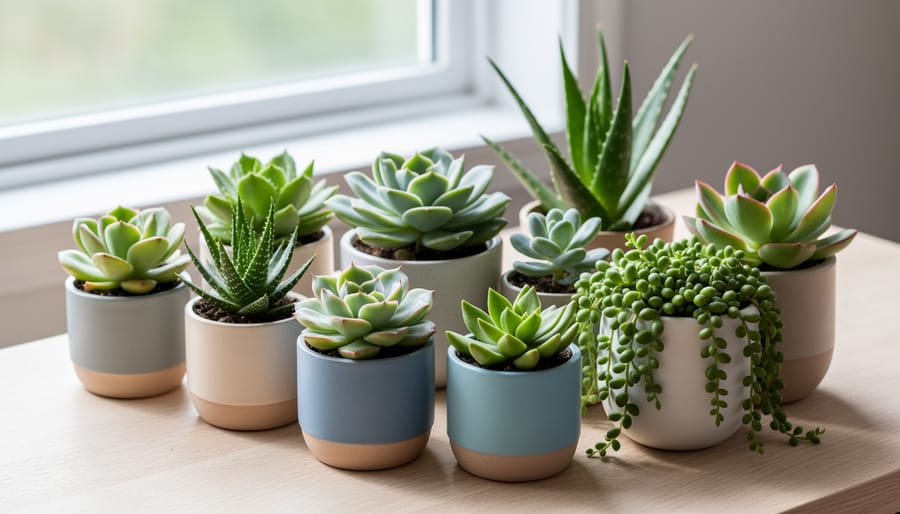
Succulents come in an astonishing variety of shapes, colors, and textures, from the plump rosettes of echeveria to the quirky pebble-like appearance of lithops. What they all share is a genius adaptation: thick, fleshy leaves or stems that act as built-in water reservoirs. This means most succulents need watering only every 2-3 weeks, and some can stretch even longer during cooler months.
When choosing succulents for your indoor garden, consider starting with a mixed arrangement. Amazon carries Costa Farms Live Plants in a 6-pack for $39, which gives you variety in a single purchase and lets you experiment with different types. Look for arrangements that group plants with similar light needs together, as mixing sun-lovers with shade-tolerant varieties creates care complications.
The catch with succulents is their bright light requirement. They thrive in sunny windowsills with at least 4-6 hours of direct or very bright indirect light. Without enough light, they’ll stretch and lose their compact, attractive form. South-facing windows work brilliantly, or supplement with a grow light if your space lacks natural brightness.
Proper drainage matters more than the watering schedule itself. Succulents rot quickly in soggy soil, so always use pots with drainage holes and a gritty, fast-draining soil mix designed for cacti and succulents.
4. Monstera Deliciosa, Tropical Drama, Easy Care
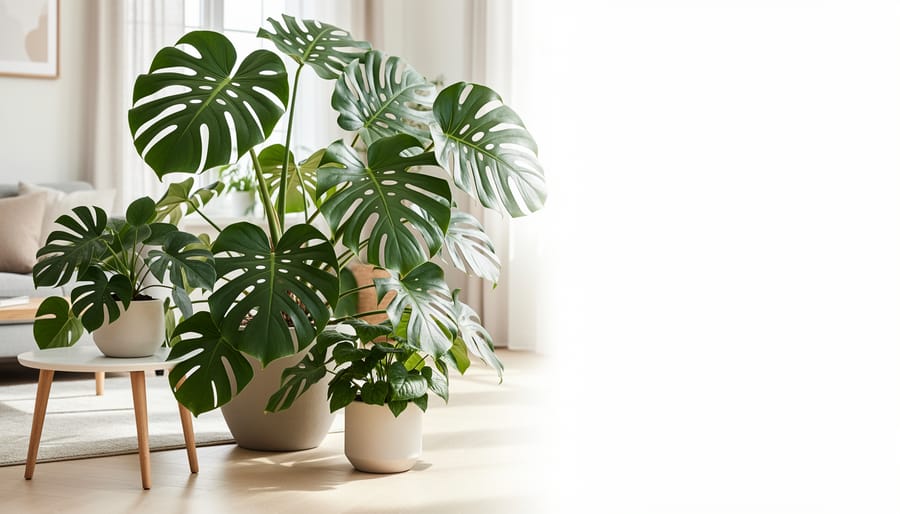
The monstera deliciosa has become the darling of interior designers and plant lovers alike, and for good reason. Those dramatic split leaves, technically called fenestrations, create an instant tropical statement that transforms any room into a lush retreat. What surprises many new owners is how forgiving this jungle native actually is once it settles into your home.
Despite its tropical origins, an established monstera can handle two weeks or more between waterings. The plant’s thick stems and substantial root system store moisture efficiently, making it far more tolerant of neglect than its Instagram-famous reputation suggests. You’ll know it needs water when the top two inches of soil feel dry and the leaves start to look slightly droopy rather than their usual perky, upright stance.
Position your monstera where it receives bright indirect light, near an east-facing window or a few feet back from a south-facing one works beautifully. Direct sun will scorch those gorgeous leaves, but too little light means smaller leaves without the characteristic splits that make this plant so architectural.
The American Plant Exchange Live Monstera Deliciosa Plant starts at $30 on Amazon for a well-established specimen that’s ready to make an impact. For this price point, you’re getting a plant that’ll reward minimal effort with maximum visual drama and become the conversation piece in any room.
5. Pothos (Epipremnum aureum), The Vining Survivor
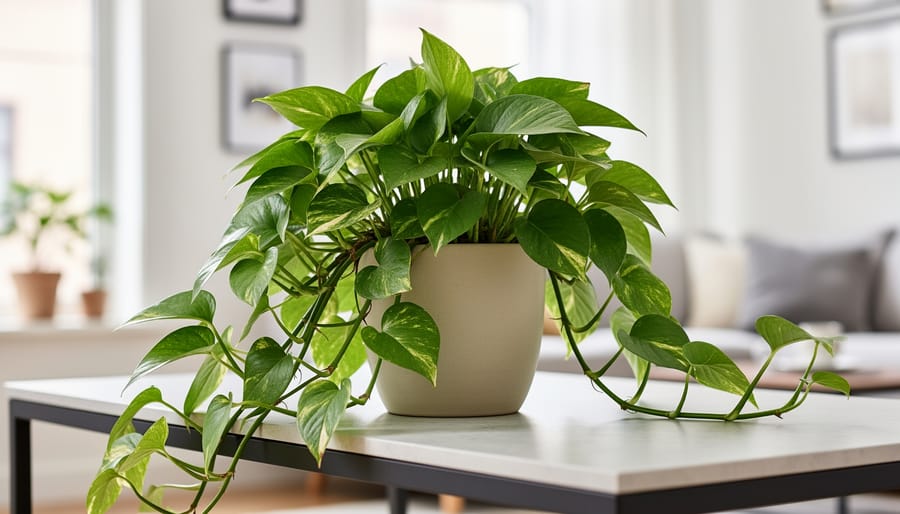
If you’re looking for a plant that forgives your watering mistakes and keeps on thriving, pothos deserves a spot on your shelf. This vining beauty features glossy, heart-shaped leaves that cascade gracefully from hanging baskets or climb up supports, bringing lush greenery to any room without demanding constant attention.
Pothos earns its reputation as nearly indestructible through its remarkable recovery ability. Let the soil dry out completely for weeks, and those leaves might droop and look pitiful, but give it a good drink and watch it perk back up within hours. This resilience makes it perfect for beginners who are still learning to read their plants’ signals or busy folks who travel frequently.
The trailing habit means you can display pothos in creative ways: drape it across a bookshelf, let it spill from a high cabinet, or train it up a moss pole for a vertical accent. It tolerates low to bright indirect light, though growth slows in dimmer spots.
Here’s a bonus: pothos propagates ridiculously easily. Snip a stem below a leaf node, pop it in water, and roots will sprout within weeks. You’ll have new plants to fill your home or share with friends, all from that single starter plant. It’s the gift that keeps on giving, requiring almost nothing in return except occasional watering when you remember.
6. Spider Plant (Chlorophytum comosum), Resilient and Rewarding
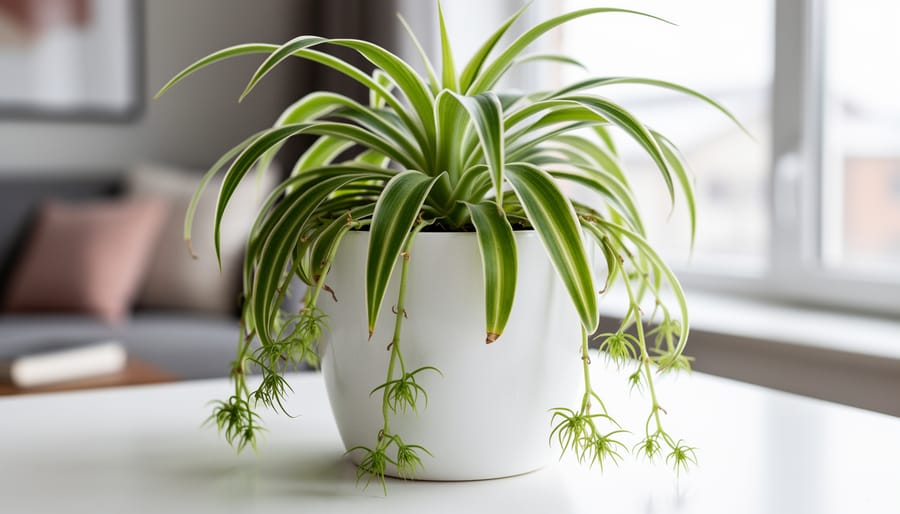
Spider plants have been charming gardeners for generations with their graceful arching leaves striped in cream and green. If you forget to water for two or three weeks, this resilient beauty just shrugs it off and keeps looking lovely. That kind of forgiveness makes it perfect for anyone building confidence with houseplants.
Beyond their good looks, spider plants are air-purifying champions, quietly cleaning the air in your home while asking for very little in return. They tolerate a range of light conditions, from bright indirect to moderate, so you can tuck them almost anywhere.
Here’s where spider plants get really fun: they produce cascading stems with miniature baby plants, called plantlets or “spiderettes,” that dangle like ornaments. You can snip these babies off and root them in water or soil to create new plants for yourself or share with friends. It’s incredibly rewarding to watch your collection multiply without spending a penny.
Give your spider plant a good soak when the soil dries out, then forget about it until it tells you otherwise. These plants practically raise themselves, and they’ll reward your benign neglect with lush growth and an endless supply of baby plants.
7. Aloe Vera, Beauty and Function Combined
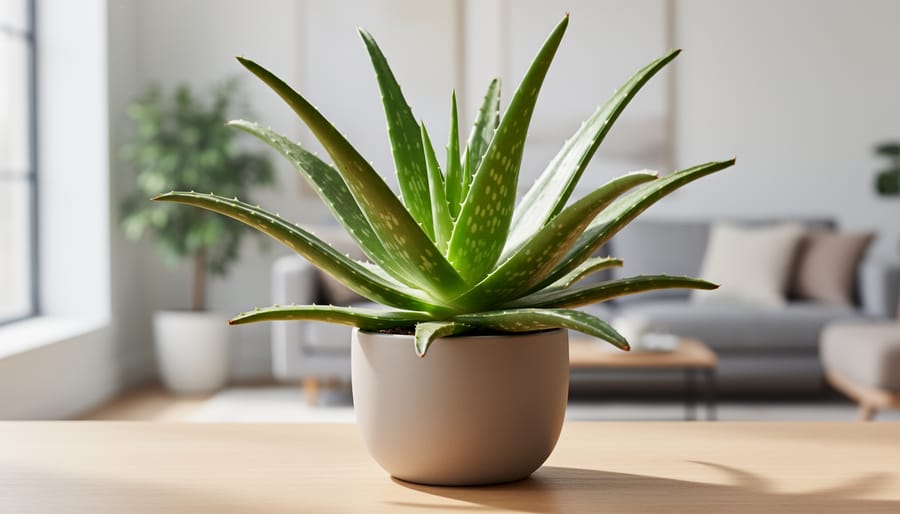
Aloe vera brings dual-purpose magic to your windowsill. This sculptural succulent features thick, fleshy leaves arranged in a stunning rosette pattern, with each leaf packed full of the clear gel that’s famous for soothing burns and skin irritations. Those chunky leaves aren’t just medicinal treasure chests, they’re water storage tanks that allow aloe to cruise through weeks of drought without complaint.
Place your aloe in a sunny spot where it’ll soak up bright light for several hours each day. A south or west-facing window works perfectly. The plant actually thrives on neglect, preferring its soil to dry out completely between waterings. During winter, you might water only once a month or less. Overwatering causes more problems than underwatering ever will, so when in doubt, wait another week.
The practical benefits extend beyond low maintenance. When you accidentally burn yourself cooking or spend too much time in the sun, simply snap off a mature leaf and squeeze out the cooling gel. Keep the plant in your kitchen for easy access. As your aloe grows, it’ll produce baby offsets called “pups” around its base, which you can separate and pot up to expand your collection or share with friends who need their own first-aid plant.
8. Jade Plant (Crassula ovata), The Lucky Succulent Tree
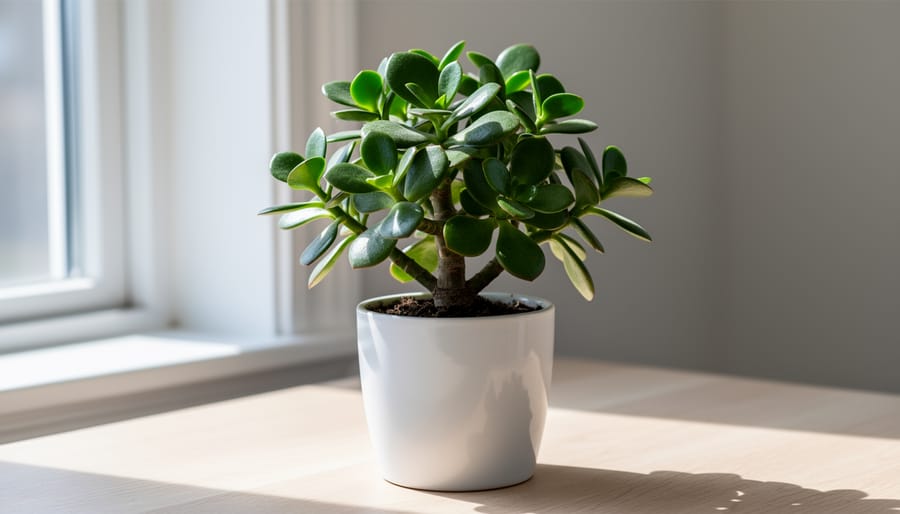
The jade plant earns its reputation as a living good luck charm with thick, glossy leaves shaped like tiny coins and a growth habit that mimics a miniature tree. This succulent stores water in those plump leaves and sturdy stems, making it one of the most drought-tolerant houseplants you can grow. You can easily go three to four weeks between waterings once your jade plant is established.
In Asian cultures, the jade plant symbolizes prosperity and positive energy, which explains why you’ll often see them displayed near business entrances or given as housewarming gifts. Beyond the symbolism, what makes jade plants truly special for busy gardeners is their incredibly slow growth rate. That sculptural little tree on your shelf might only grow a few inches per year, meaning you won’t spend time pruning, repotting, or constantly adjusting its care routine.
Place your jade plant in a bright spot where it gets several hours of sunlight daily. Unlike some dark corner plants jade needs good light to maintain its compact shape and prevent stretching. Water only when the soil is completely dry, and give it even less water during winter months when growth slows. The biggest threat to jade plants is overwatering, so err on the side of dryness and this resilient succulent will reward you with years of low-maintenance beauty.
9. Cast Iron Plant (Aspidistra elatior), Named for Good Reason
The cast iron plant earned its memorable name through decades of proving it can survive conditions that would kill nearly any other houseplant. This Victorian-era favorite thrives on neglect, tolerating sporadic watering, temperature swings, dust, and poor air circulation without complaint. Its dark green, lance-shaped leaves grow slowly but steadily even in corners that barely see daylight, making it your best option for that dim hallway, windowless bathroom, or shadowy entryway where nothing else will grow.
Water your cast iron plant every three to four weeks during growing season, and even less in winter. The thick rhizomes beneath the soil store moisture efficiently, so this plant actually performs better when you forget about it than when you fuss over it. Overwatering causes more problems than underwatering ever will.
Perfect for chronic plant killers or anyone who travels frequently, the cast iron plant asks almost nothing in return for its reliable greenery. It tolerates low humidity, ignores drafts, and won’t protest if you skip fertilizing for months. While growth happens at a glacial pace, that slow development means less repotting, less pruning, and less overall maintenance. If you can keep this plant alive, you’re ready to tackle anything else in the houseplant world.
10. Ponytail Palm (Beaucarnea recurvata), Whimsical and Water-Wise
The ponytail palm isn’t actually a palm at all, but it deserves a spot in your low-water collection for its quirky charm and remarkable drought tolerance. This whimsical plant features a swollen, bulbous trunk base that stores water like a built-in reservoir, allowing it to go weeks without a drink. From this sculptural trunk sprouts a fountain of long, curly leaves that cascade downward like a green waterfall, giving the plant its playful nickname.
What makes the ponytail palm especially appealing for busy gardeners is its slow growth habit. You won’t need to constantly repot or prune this easygoing companion. It thrives in bright light, making a sunny window its ideal home where those cascading leaves can really shine. Some gardeners even move theirs outdoors during warm months for an extra boost of sunshine.
The trunk’s water storage capacity means you can safely water this plant every three to four weeks during the growing season, and even less frequently in winter. In fact, the biggest threat to ponytail palms is overwatering, which can rot that precious water-storing base. Let the soil dry out completely between waterings, and this unique specimen will reward your benign neglect with years of architectural interest and touchable texture that guests can’t resist running their fingers through.
11. Dieffenbachia, Bold Leaves, Minimal Fuss
Dieffenbachia earns its spot on this list with some of the most dramatic foliage you’ll find in a low-maintenance plant. Those broad, paddle-shaped leaves come splashed with creamy white or chartreuse variegation that creates living artwork in any room. The thick stems store moisture, giving you breathing room between waterings.
Water your dieffenbachia when the top two inches of soil feel dry, typically every 7-10 days depending on your home’s humidity and light levels. The plant will tolerate an extra few days if life gets busy, though those gorgeous leaves will look their best with consistent moisture. This flexibility makes it perfect for gardeners who travel occasionally or have unpredictable schedules.
Bright indirect light brings out the most vibrant leaf patterns, but dieffenbachia adapts to medium light without complaint. Keep it away from cold drafts and maintain moderate humidity if possible. Understanding the connection between soil and watering helps you dial in the perfect schedule for your conditions.
Costa Farms Dieffenbachia runs about $23 at Amazon for a well-established plant that arrives ready to make a statement. One care note: the sap can irritate skin and is toxic if ingested, so place it away from curious pets and children.
12. Fiddle Leaf Fig (Ficus lyrata), The Design Icon
The fiddle leaf fig has become Instagram’s favorite houseplant, gracing design magazines and trendy living rooms everywhere. But here’s the secret that might surprise you: despite its reputation for being temperamental, this sculptural beauty actually thrives on benign neglect when it comes to watering.
Those dramatic, violin-shaped leaves can handle dry soil far better than soggy conditions. In fact, the biggest mistake new fiddle leaf fig owners make is watering too frequently. This plant prefers a deep soak every week to ten days during growing season, allowing the top two inches of soil to dry completely between waterings. During winter, you can stretch that to two weeks or more.
Give your fiddle leaf fig bright, indirect light near an east or west-facing window, and it’ll reward you with steady upward growth. Rotate the pot a quarter turn every few weeks so all sides get equal light exposure, preventing lopsided development.
The Costa Farms Live Indoor Ficus Lyrata, Fiddle Leaf Fig Tree runs about $53 at Amazon for a well-established plant that arrives ready to make a statement in your space. Look for specimens with deep green leaves free from brown spots, which often indicate past overwatering issues. With proper placement and restrained watering, your fiddle leaf fig will develop that tree-like presence that makes it worth every penny.
Quick Care Tips for Low-Water Success
Low-water plants are forgiving, but a few smart habits ensure they thrive rather than merely survive. The single biggest difference you can make is mastering the deep-and-infrequent watering approach. When you do water, soak the soil thoroughly until water drains from the bottom, then let it dry out completely before the next watering. This encourages deep root growth and mimics the natural wet-dry cycles these plants evolved to handle. Frequent shallow watering, by contrast, keeps roots near the surface and increases the risk of rot.
Before you reach for the watering can, check the soil. Stick your finger two inches down into the potting mix. If it feels dry at that depth, it’s time to water. For plants in larger pots, a wooden chopstick or moisture meter works even better for checking deeper soil layers.
Here are essential practices that prevent the most common low-water plant failures:
- Ensure every pot has drainage holes; standing water kills more drought-tolerant plants than underwatering ever will.
- Water less frequently in winter when growth slows and evaporation rates drop, sometimes cutting back to once a month.
- Use well-draining potting mix designed for succulents or cacti rather than moisture-retentive mixes meant for tropicals.
- Empty saucers and cache pots fifteen minutes after watering so roots don’t sit in standing water.
- Adjust watering based on your home’s humidity and temperature, not a fixed schedule.
- Skip fertilizer during dry periods; feeding stimulates growth that requires more water than the plant is receiving.
The most common mistake is overcompensating after a forgotten watering by drenching the plant repeatedly. Low-water plants recover beautifully from drought but rarely bounce back from waterlogged roots. Trust their resilience, stick to the deep-and-dry rhythm, and you’ll build a collection that flourishes on benign neglect.
Where to Find Low-Water Houseplants in 2026
Finding low-water houseplants has never been easier thanks to the wide variety of sources available in 2026. Amazon remains a powerhouse for plant shopping, offering everything from fully-grown fiddle leaf figs ($53) to air-purifying snake plants ($38), ZZ plants, spider plants, and succulent collections. Costa Farms 6-pack live plant sets run around $39, making it simple to start or expand your collection with multiple varieties at once.
Local nurseries and garden centers let you inspect plants before buying, checking for healthy foliage and robust root systems. You’ll often find knowledgeable staff who can answer care questions specific to your home conditions. Plant specialty shops and boutique growers typically carry unique varieties and larger specimens, though at premium prices.
When shopping online, pay attention to plant size descriptions (usually given in pot diameter or height), read reviews about packaging quality, and check shipping policies for weather-related delays. Look for sellers who guarantee live arrival and offer replacements if plants arrive damaged. If you’re exploring more drought-tolerant options for outdoor gardens, many of these same retailers carry both indoor and landscape varieties.
What to Watch For
While these twelve plants are incredibly forgiving, they’re not immortal. Even drought-tolerant houseplants need occasional watering, and the biggest killer isn’t neglect, it’s overcompensation. If you’ve let your plant go dry for a month, resist the urge to drown it in guilt-watering. Stick to your normal watering amount and rhythm moving forward.
Watch for these warning signs that something’s off: crispy brown leaf tips (too dry or low humidity), mushy stems at the soil line (overwatering and possible root rot), or leaves dropping rapidly (either extreme drought stress or waterlogged roots). The good news? Most of these plants bounce back remarkably well once you adjust their care. If you’re hungry for variety beyond these twelve champions, check out more low-water picks that’ll thrive on your relaxed watering schedule.
Common Questions About Low-Water Houseplants
How often should I actually water low-water houseplants?
Most low-water plants thrive when watered every 2-4 weeks, depending on your home’s temperature and humidity. Check the soil first, stick your finger two inches deep, and only water if it feels completely dry.
Can these plants survive completely without water?
No plant can survive indefinitely without water, but many low-water houseplants can go 4-6 weeks between waterings without permanent damage. They’ll show stress signs like wrinkled leaves before reaching a critical point, giving you time to rescue them.
What if I overwater by accident?
Stop watering immediately and let the soil dry out completely before the next watering. If the plant sits in soggy soil for days, consider repotting into fresh, dry soil to prevent root rot, the biggest killer of drought-tolerant plants.
Do low-water plants still need fertilizer?
Yes, but sparingly. Feed them diluted liquid fertilizer once every 2-3 months during spring and summer, then skip feeding in fall and winter when growth naturally slows.
Can I grow them in any room?
Most low-water plants are flexible about placement, but they still have light preferences. Snake plants and ZZ plants tolerate dim corners, while succulents and aloe need bright windowsills to maintain their compact shape and vibrant color.
While individual plant needs vary, understanding these basics helps you create a watering routine that works. If you’re managing multiple plants across different rooms, consider using simple irrigation for consistency though most indoor gardeners find that checking soil moisture weekly and watering only when needed keeps their low-water collection thriving without complicated systems.
You don’t need a green thumb to enjoy the beauty and calm that houseplants bring to your home. Starting with just one or two of these low-water champions means you can dip your toes into indoor gardening without the pressure of constant maintenance. If you forget to water for a couple of weeks, these resilient plants will forgive you and keep growing. That’s the kind of relationship every beginner needs with their first houseplants.
As you gain confidence watching your snake plant or ZZ plant thrive despite your busy schedule, you’ll naturally feel ready to add another variety, then another. Each success builds your skills and intuition about what plants need, transforming you from someone who “can’t keep anything alive” into a proud plant parent with a growing collection.
So pick a plant that speaks to you, whether it’s the architectural drama of a monstera or the charming simplicity of a pothos. Give it a good spot, water it when the soil dries out, and then just enjoy the greenery. Your indoor garden doesn’t have to be stressful. With these forgiving beauties, it can be exactly what you need: a source of joy, not another chore on your list.