Urban beekeeping is the practice of maintaining honeybee colonies in cities, suburbs, and residential neighborhoods to support local pollination, harvest fresh honey, and contribute to bee conservation. Once considered a rural-only activity, beekeeping has become increasingly popular among home gardeners who want to boost their harvests and connect more deeply with their growing spaces.
The benefits extend far beyond a few jars of honey on your kitchen shelf. If you’re growing vegetables, fruits, or flowers, adding a hive to your property can increase pollination rates by up to 75% within a 300-foot radius, transforming struggling squash vines and sparse berry bushes into productive powerhouses. You’ll notice fuller tomatoes, better bean sets, and fruit trees that actually deliver on their promise.
But the appeal goes deeper than garden productivity. Urban beekeeping offers a unique rhythm to your outdoor routine. Tending a hive teaches you to read weather patterns, understand seasonal cycles, and develop a sharper awareness of what’s blooming in your neighborhood. Many backyard beekeepers describe the work as meditative, a welcome counterbalance to screen time and indoor obligations.
This guide walks through exactly how urban beekeeping works in a residential setting, the different hive setups suited to small spaces, and the specific ways bees will change both your garden yields and your relationship with your landscape. Whether you’re working with a compact backyard, a rooftop, or a generous suburban lot, you’ll find practical advice on getting started, understanding the commitment involved, and maximizing the benefits for your plants and your household.
What Urban Beekeeping Really Means for Your Garden
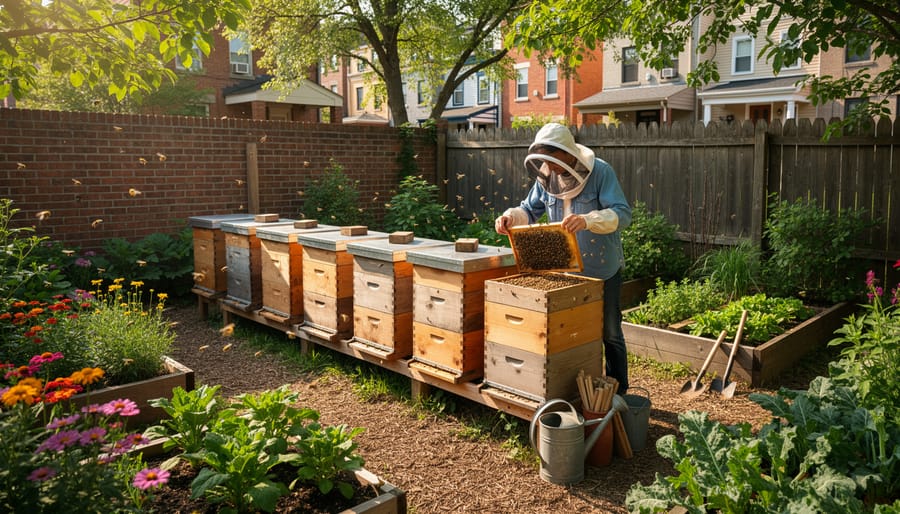
Urban beekeeping is simply the practice of keeping honeybee colonies in residential areas, on rooftops, balconies, backyards, or community gardens, rather than on rural farmland. You’re working with the same species of honeybees commercial beekeepers manage, but on a smaller, more personal scale that fits your home garden perfectly.
The key difference from commercial operations? You’re typically caring for one to three hives instead of hundreds, and your primary goal is supporting your garden’s health and maybe harvesting a bit of honey for your family rather than producing honey by the ton. It’s more hobby than business, more relationship than transaction.
- Hive
- The physical wooden box structure where your bees live, typically stacked in layers that you can open and inspect.
- Colony
- The complete family of bees living in your hive, including one queen, thousands of female workers, and seasonal male drones.
- Foraging Radius
- The area bees travel to gather nectar and pollen, usually about two to three miles from the hive in every direction.
- Apiary
- The designated spot where you keep your hives, whether that’s a corner of your backyard or a shared rooftop space.
Let’s clear up some common worries. You absolutely don’t need acres of space. A single hive occupies roughly four square feet, about the same footprint as a large planter box. Bees are surprisingly gentle when you’re working calmly around their home, especially compared to the aggressive wasps and hornets that crash your summer picnics. And the daily time commitment? Practically zero. You’ll inspect your hive every week or two during active season, spending maybe 20 minutes per visit.
In practice, urban beekeeping looks like this: you set up a hive in a quiet corner of your yard, your bees go about their business visiting flowers within a few miles, and you occasionally check in to make sure the colony is healthy and thriving. Your neighbors likely won’t even notice the bees are there.
How Urban Beekeeping Works in a Home Garden Setting
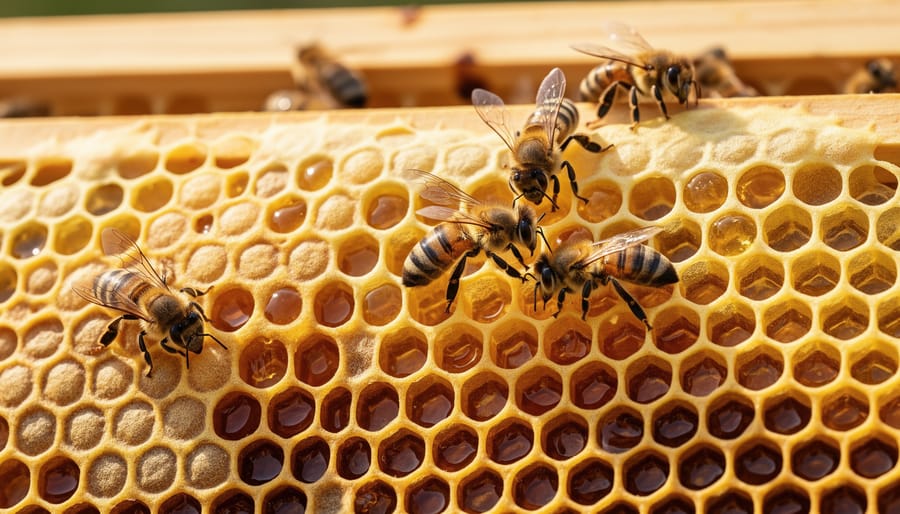
At its core, urban beekeeping mirrors what happens in nature, just in a more managed space. Your bees will spend their days flying out from the hive to visit flowers within a two to three mile radius, collecting nectar and pollen. When a forager bee lands on a blossom, pollen grains stick to her fuzzy body and transfer to the next flower she visits, that’s pollination happening in real time. Back at the hive, worker bees transform that nectar into honey through evaporation and enzymatic processes, storing it in hexagonal wax cells they build themselves.
The hive operates on a seasonal rhythm. Spring brings explosive growth as the queen lays up to 2,000 eggs daily and foragers work overtime gathering pollen from early bloomers. Summer is peak production time, when your bees are building comb, making honey, and visiting every flower in your neighborhood. Come fall, the colony slows down, focuses on winter prep, and the beekeeper’s job shifts to ensuring they have enough stored honey to survive. Winter means the hive goes quiet, bees cluster together for warmth, barely moving, waiting for the first warm days of spring.
Your role as the beekeeper is surprisingly straightforward. Every seven to ten days during active months, you’ll conduct a quick inspection: pop the hive open, check that the queen is laying eggs, make sure the colony has enough room to expand, and watch for signs of disease or pests. The whole process takes fifteen to twenty minutes once you get the hang of it. I remember my first inspection, hands shaking, convinced I’d be swarmed, but the bees barely noticed me. They were too busy working.
Your yearly responsibilities include:
- Spring inspections to confirm the queen is healthy and the colony is growing
- Adding honey supers or boxes when bees need more storage space
- Harvesting honey in late summer, leaving plenty for the bees
- Treating for common pests like varroa mites in fall
- Winterizing the hive with insulation and entrance reducers
- Monitoring food stores and feeding sugar syrup if reserves run low
The beauty of this setup is that bees do nearly all the work themselves. You’re not raising livestock that needs daily feeding or constant attention. You’re partnering with an incredibly efficient natural system that happens to benefit your entire garden in the process.
Types of Urban Beekeeping Setups for Different Spaces
Your hive choice depends on the space you have, how much lifting you’re comfortable with, and whether you want to maximize honey or prioritize simplicity. Each style works in an urban setting, but they suit different situations.
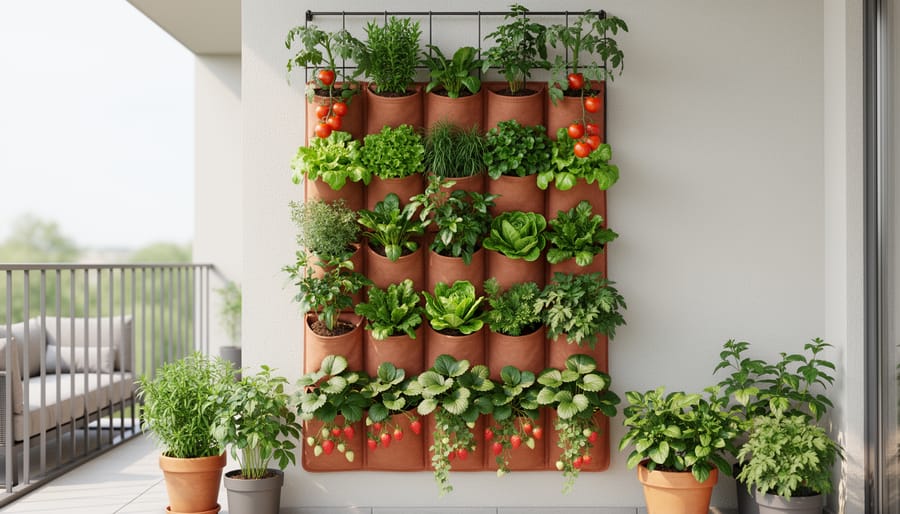
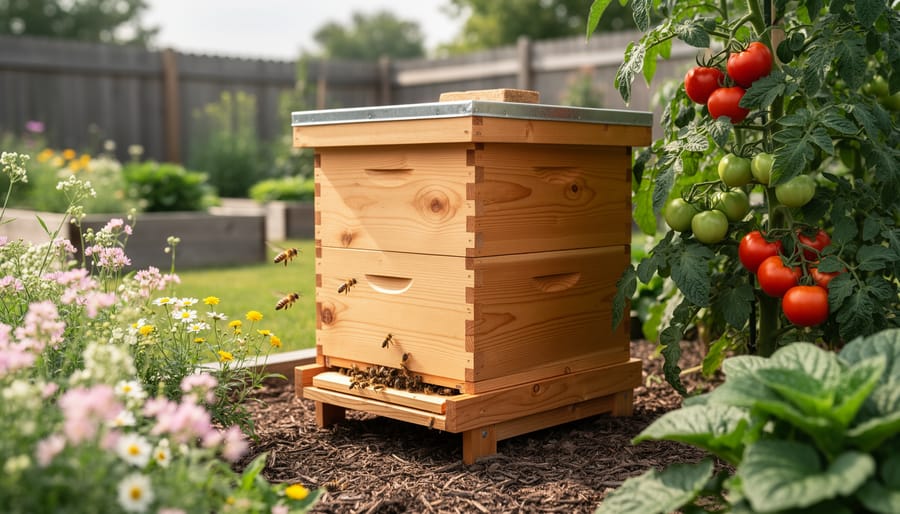
Langstroth hives are the standard rectangular boxes you’ve probably seen stacked in photos. They’re modular, you add boxes as the colony grows, and every piece of equipment is widely available. This setup works well if you have a small backyard or a sturdy rooftop with good access. The downside? Boxes full of honey are heavy, sometimes 40 to 60 pounds, so you’ll need to lift and carry during harvests. If your garden is already using space efficiently with vertical vegetable growing Langstroth hives fit neatly in a corner without taking over ground-level planting beds.
Top-bar hives are horizontal and lower to the ground, shaped like a long trough. Bees build comb hanging from wooden bars instead of in removable frames. You harvest by cutting comb directly, which means less equipment and no heavy lifting, ideal for balconies, narrow side yards, or if you have back issues. The trade-off is lower honey yields and you can’t reuse the comb as easily. Top-bar hives suit gardeners who want bees primarily for pollination and aren’t focused on gallons of honey.
Warre hives look like smaller Langstroth boxes but operate differently, you add boxes from the bottom as bees expand upward, mimicking how they build in nature. They require less frequent inspections, appealing if you travel or prefer a hands-off approach. However, finding local mentors familiar with Warre management can be harder, and parts aren’t as standardized.
For a shared community garden, Langstroth’s familiarity helps if multiple people will inspect the hive. Balconies usually need top-bar or a single small Langstroth. Budget-wise, all three cost roughly the same to start, $200 to $400 assembled, but Langstroth has cheaper expansion and replacement parts long-term.
The Garden Benefits: How Bees Transform Your Growing Space
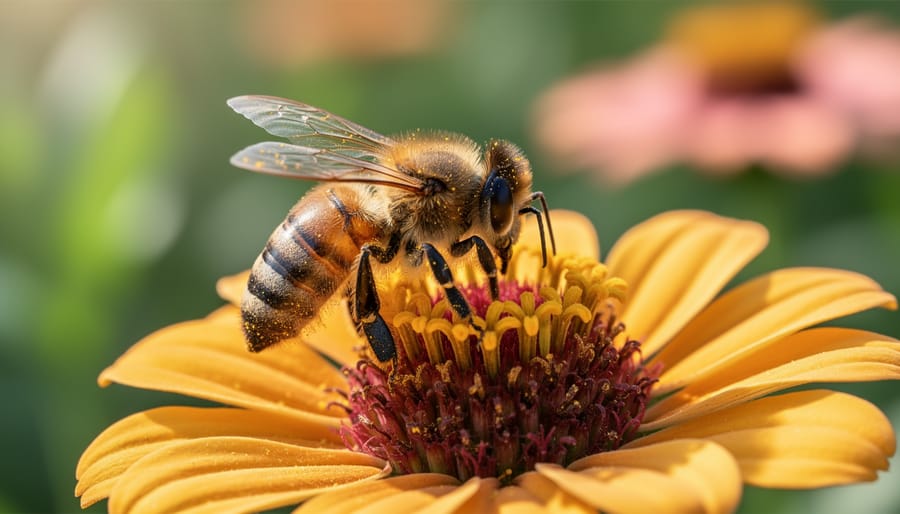
The difference bees make in a home garden is dramatic, measurable, and often visible within the first growing season. My own vegetable beds went from producing a handful of stunted cucumbers and disappointingly few tomatoes to overflowing harvests the summer after I installed my first hive. That transformation wasn’t luck or better weather, it was pollination working the way nature intended.
Vegetables that rely on pollination, tomatoes, squash, cucumbers, peppers, eggplants, melons, produce noticeably larger, more uniform fruit when bees visit regularly. Tomatoes with incomplete pollination develop odd shapes or hollow sections, but well-pollinated plants give you those perfect, heavy fruits that actually taste like summer. Zucchini and squash often abort their tiny fruits if pollination is spotty, but with bees working your garden, you’ll get consistent fruit set and far fewer wasted blossoms. I’ve watched a single bee visit a dozen squash flowers in five minutes, effectively doing work that would otherwise require hand-pollinating with a paintbrush.
Fruit production jumps even more dramatically. Strawberries become fuller and sweeter, blueberries set heavier clusters, and apple or pear trees in small yards produce abundantly when bees can reach every blossom. A neighbor with a backyard cherry tree saw almost no fruit for three years until I started keeping bees two yards over, the following spring, she harvested buckets of cherries.
Beyond yield, bees improve overall garden health and biodiversity. They visit flowers you’ve planted for beauty, cosmos, lavender, sunflowers, and in doing so, attract other beneficial insects like ladybugs and parasitic wasps that control aphids and caterpillars. A garden with active pollinators becomes a balanced, self-regulating ecosystem rather than a static planting bed. Even low-water pollinator plants like salvia and yarrow thrive when bees work them regularly, setting seed and spreading naturally through your beds.
If you’re practicing edible landscaping mixing fruiting shrubs and vegetables among ornamentals, bees turn that integrated planting into a high-performing food garden. The connection runs deeper than pollination, too, thriving plants support soil life, and that relationship is something to understand when you consider how soil shapes gardens at every level.
You’ll notice the difference within weeks of installing your hive. More blooms get visited, more fruit forms, and your garden simply feels more alive.
Beyond the Garden: Personal and Community Rewards
Urban beekeeping delivers rewards that stretch far beyond better tomatoes and brighter blooms. One of the most tangible perks is harvesting your own honey, there’s something magical about spooning golden sweetness you watched your bees create. A single backyard hive can produce 30 to 60 pounds of honey in a good year, plus beeswax for candles, salves, and lip balm. You’ll never look at a jar of store-bought honey the same way.
The learning curve itself becomes a gift. Kids are endlessly fascinated by bees, and tending a hive together turns biology lessons into hands-on wonder. Neighbors often stop by with questions, sparking conversations about pollinators, local ecosystems, and how we all contribute to biodiversity. You become the go-to person on your block for pollinator advice, and that quiet pride is real.
Many beekeepers describe the work as meditative. Opening a hive demands calm, deliberate movements and full presence, you can’t check your phone with 40,000 bees humming around you. That forced slowness is a rare antidote to daily stress. The rhythm of inspections, the hum of the colony, the smell of warm wax and propolis, it grounds you in a way few hobbies can.
You’re also joining a generous, welcoming community. Local beekeeping associations offer mentorship, problem-solving help, and the kind of camaraderie that comes from shared triumphs and occasional disasters. And every time you spot a bee on a flower, you’ll feel a quiet satisfaction knowing you’re part of the solution to pollinator decline. Urban beekeeping isn’t just a hobby, it’s a relationship with your garden, your neighborhood, and the natural world.
Getting Started: What You Need to Know Before Your First Hive
Ready to take the plunge? Here’s what you need to line up before you start your urban beekeeping adventure.
First, check your local regulations. Most cities allow backyard hives, but rules vary, some require permits, minimum setbacks from property lines, or neighbor notifications. A quick call to your city planning office or a search for “[your city] beekeeping ordinance” will clear this up in minutes. Don’t skip this step; knowing the rules protects you and keeps neighbors happy.
Next, scout your hive location. Bees need morning sun, afternoon shade, and protection from strong winds. Face the hive entrance southeast if possible, and position it where you can work comfortably behind or beside the hive, never directly in the flight path. Elevate hives on cinder blocks or a stand to deter pests and make inspections easier on your back. If space is tight, a corner of your patio or a flat rooftop works beautifully.
You’ll need some basic gear to get going:
- A hive setup (Langstroth, top-bar, or Warre) with frames and foundation
- Protective clothing: veil, gloves, and a light-colored long-sleeve shirt
- A smoker and hive tool for inspections
- Bees themselves, purchase a package, nuc, or captured swarm from a local supplier
- A beginner beekeeping book or online course to guide your first season
Finding bees is easier than you’d think. Local beekeeping associations often maintain lists of reputable suppliers, and spring is prime time for package and nuc orders. Joining a bee club connects you with mentors who’ve been exactly where you are now, they’ll answer questions, share tips, and sometimes even help with your first hive inspection.
Start with one hive. Learn the rhythm, build confidence, and let your garden show you the results. You can always add more colonies next year once you’ve got a season under your belt.
Common Questions About Urban Beekeeping Benefits
Will my neighbors complain? In most cases, no, urban bees fly up and over fences, heading straight for flowers rather than people. Position hives away from property lines, keep calm bee genetics, and give neighbors a jar of honey each season to build goodwill. Many urban beekeepers find that once neighbors understand the benefits, they become enthusiastic supporters.
How much time does beekeeping actually take?
Plan on 15-30 minutes per week during the active season for hive inspections, plus a few hours each year for honey harvest and winterizing. It’s less demanding than mowing a lawn.
Will I really see more vegetables and fruit?
Yes, most gardeners notice noticeably better yields on crops like tomatoes, squash, cucumbers, and berries within the first season. The difference is especially dramatic if you previously had poor pollination.
What if I’m allergic to bee stings?
If you have a known severe allergy, urban beekeeping isn’t worth the risk. For mild reactions, wearing protective gear reduces sting chances significantly, but discuss it with your doctor first.
Can bees really survive in a city environment?
Urban bees often thrive because cities offer diverse flowering plants year-round, warmer microclimates, and fewer agricultural pesticides than rural areas. Many urban hives outperform rural ones.
How often will I get stung?
With proper technique and a bee suit, most beekeepers get stung only a handful of times per year, if at all. Calm movements and avoiding inspections during stormy weather keep bees relaxed.
Do I need a huge garden to keep bees?
No, bees forage up to three miles from the hive, so they’ll find flowers throughout your neighborhood. A small backyard, rooftop, or even a large balcony can work perfectly fine.
What about the cost? Initial setup runs between 300 and 500 dollars for a hive, bees, protective gear, and basic tools. After that, annual costs drop to around 50 to 100 dollars for sugar syrup, treatments if needed, and occasional equipment replacement. Compare that to what you’d spend on store-bought honey and the increased value of your garden harvest, and most beekeepers break even within two to three years. The real return, though, comes in the form of healthier plants, more abundant crops, and the quiet satisfaction of working alongside thousands of tiny partners every time you step into your garden.
Urban beekeeping offers home gardeners a genuinely rewarding path to healthier plants, bigger harvests, and a deeper connection to the natural world around them. You don’t need a farm or years of experience to get started. A single hive in your backyard or on a rooftop can transform your garden’s productivity while giving you fresh honey, meaningful learning moments, and the satisfaction of supporting pollinator populations when they need it most.
The benefits are real and immediate. Your tomatoes will set more fruit, your zucchini will stop needing hand pollination, and your flower beds will buzz with life. Beyond the garden itself, you’ll discover a calming, meditative hobby that brings you outside and teaches patience, observation, and resilience.
Start small. Talk to neighbors, attend a local beekeeping workshop, or simply add more pollinator-friendly flowers to your garden beds. Plant native species that feed bees throughout the season, consider building simple bee houses for solitary species, or explore vertical garden designs that maximize blooms in tight spaces. Every step you take toward welcoming bees into your urban garden makes a difference. Your garden will thank you, and so will the bees.