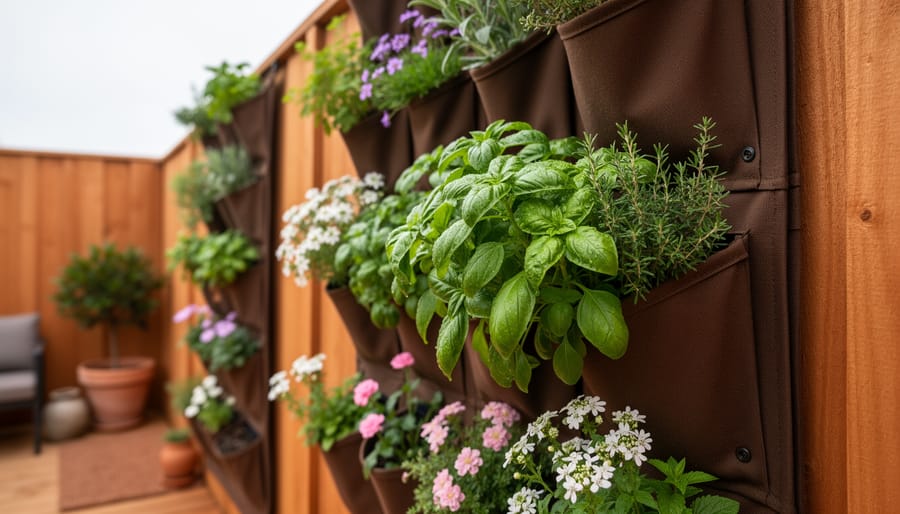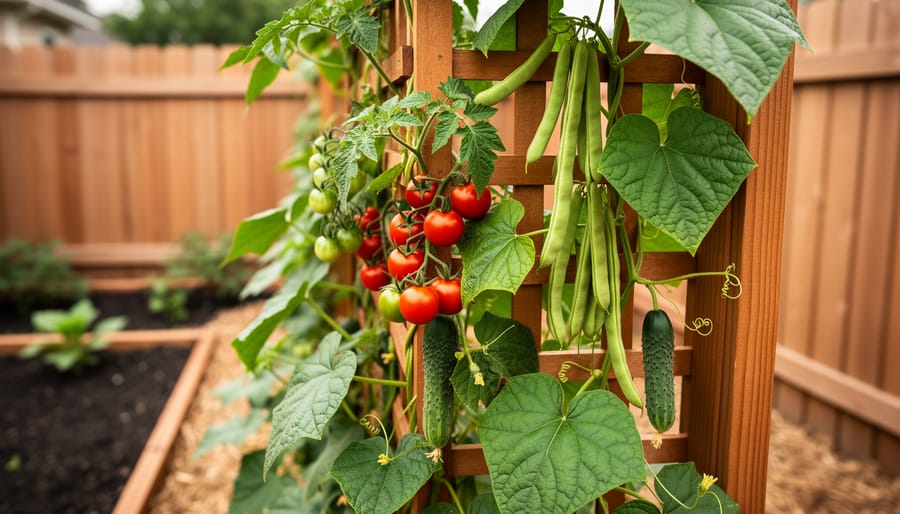
Growing up instead of out, climbing vegetables can produce two to three times more food per square foot than traditional garden beds, making them the perfect solution when you’re working with limited space. Whether you’re gardening on a balcony, in a small backyard, or simply want to maximize your existing beds, training edibles to climb opens up a whole new dimension for fresh produce. A proper vertical garden setup requires nothing more than sturdy supports and the right plant choices.
The beauty of vertical growing goes beyond space savings. Climbing plants often produce healthier crops because better air circulation reduces fungal diseases, and elevated fruits stay cleaner and easier to harvest. You won’t be bending over constantly, and pests like slugs have a harder time reaching your ripening tomatoes or beans. Plus, a wall of productive greenery creates privacy, shade, and genuine visual interest in any garden.
This climbing crops guide covers twelve proven edibles that thrive when given vertical support, from quick-growing annuals perfect for beginners to perennial favorites that return year after year. Each selection includes specific support requirements and realistic harvest expectations, so you can plan your vertical garden with confidence for 2026 and beyond.
Why Choose Climbing Vegetables and Fruits?
Vertical gardening with climbing plants isn’t just clever, it’s transformative for both small urban plots and larger garden spaces. When you grow upward instead of outward, you’re working with three-dimensional space rather than flat ground, which fundamentally changes what’s possible in your garden.
The benefits of choosing climbing vegetables and fruits stack up quickly:
- Maximize limited space by using vertical surfaces instead of valuable ground area
- Improve air circulation around plants, keeping foliage drier and healthier
- Reduce soil-borne diseases and pest problems by lifting produce off the ground
- Make harvesting easier at eye level instead of bending and searching through sprawling vines
- Increase overall yields by optimizing sun exposure and plant density
- Create an attractive, living garden feature that doubles as a green privacy screen
Here’s a real-world example: a traditional garden bed measuring 4 feet by 8 feet gives you 32 square feet of growing space. Add a 6-foot trellis along the back, and you’ve just added 48 square feet of vertical growing area, that’s more than doubling your productive space in the same footprint. A single vertical cucumber plant can yield 20-30 pounds of fruit while occupying less than one square foot of ground space, whereas bush varieties spread across several feet for similar production. Exploring DIY vertical ideas can spark creative ways to make the most of walls, fences, and unused vertical surfaces throughout your garden.
How We Selected These Climbing Plants
We didn’t just throw together a random list of vining plants. Each climbing fruit and vegetable earned its spot here based on five practical factors that matter in real gardens.
First up: ease of growing. We prioritized plants that don’t demand constant fussing or advanced techniques. Whether you’re planting your first trellis or managing a productive backyard, these selections deliver results without making you fight for them. Some, like pole beans, thrive with minimal intervention. Others, like grapes, ask for patience but reward you with years of harvests once established.
Productivity came next. Space is valuable, especially when you’re growing vertically, so we focused on plants that give you serious yields for the square footage they occupy. These aren’t token climbers, they’re workhorses that justify the trellis space.
We also considered climate versatility. The list includes options for cool-season gardeners (peas), heat lovers (bitter melon, passion fruit), and everything in between. Most adapt well to various zones, though we flag specific climate needs where they matter.
Support requirements played a role too. You’ll find plants suited to simple stakes, lightweight netting, and heavy-duty arbors. We made sure the list covers different infrastructure options so you’re not locked into one system.
Finally, overall garden value sealed the deal. That includes pest resistance, disease tolerance, dual purposes (like grape shade), and how well these plants fit into a mixed garden. These twelve climbing fruits and vegetables work for gardeners in 2026 because they’ve proven themselves season after season across different settings and skill levels.
1. Pole Beans, The Beginner’s Vertical Dream
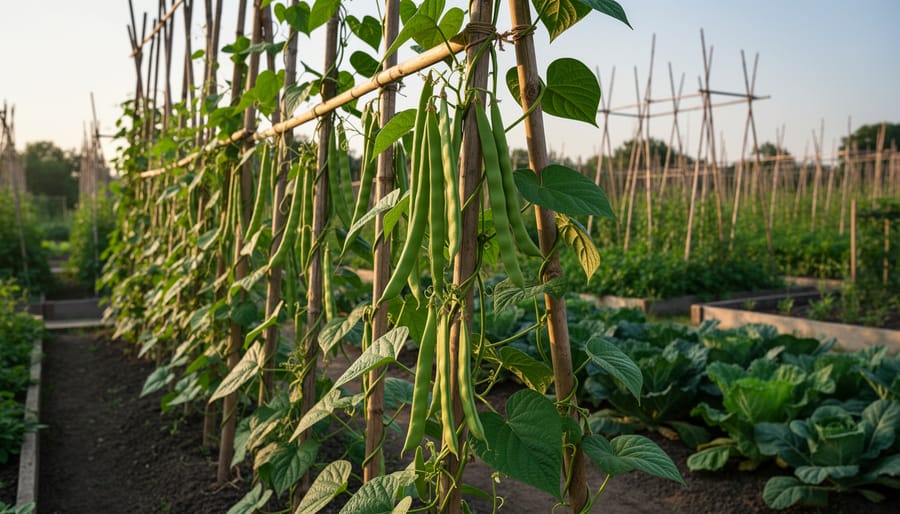
Pole beans deliver everything a beginning vertical gardener could want: fast growth, minimal fuss, and buckets of fresh produce from midsummer through fall. Unlike their bush counterparts that sprawl across garden beds, pole beans spiral upward on any sturdy support, producing two to three times more beans in the same footprint.
These climbing champions come in three main types. Snap beans (also called string beans or green beans) offer crisp, tender pods perfect for fresh eating or cooking. Runner beans feature vibrant red, white, or pink flowers that attract pollinators while producing slightly larger pods with a heartier texture. Dry beans like pole limas climb just as enthusiastically and reward patient gardeners with protein-rich harvests for winter storage.
Plant pole beans after your last frost date when soil has warmed to at least 60°F. Space seeds 4-6 inches apart at the base of 6-8 foot poles, sturdy bamboo stakes, or a mesh trellis. They’ll twine counterclockwise up the support without training. The real magic happens after the first harvest, keep picking mature pods every few days and the vines keep flowering and setting new beans for months.
For continuous supply, plant a new row every two weeks through midsummer. This succession planting ensures fresh beans on your table well into autumn.
2. Cucumbers, Crisp, Clean, and Climbing
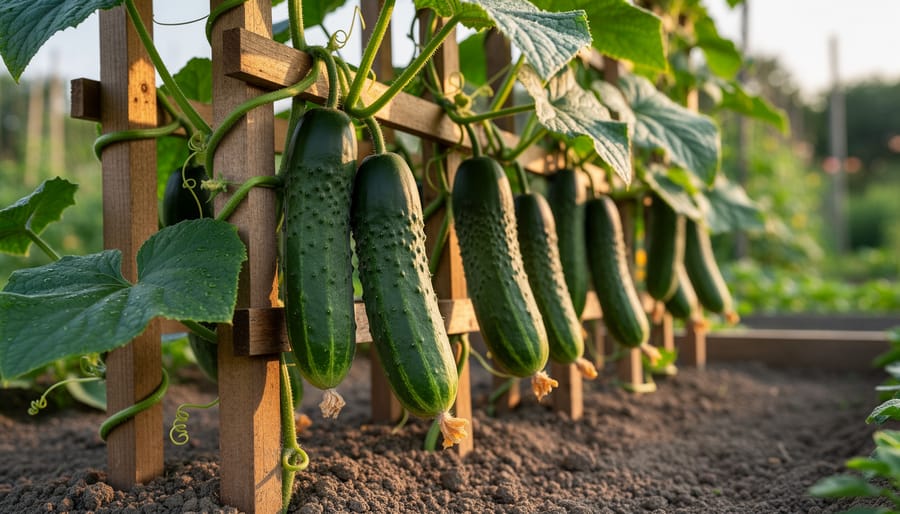
Vining cucumbers transform into space-saving powerhouses when grown vertically, and they actually produce better fruit this way. When cucumbers sprawl on the ground, they often develop yellow bellies, attract slugs, and fall victim to fungal diseases from constant soil contact. Growing them upward solves all three problems while giving you straight, uniformly colored cucumbers that are far easier to spot and harvest.
The vertical advantage goes beyond aesthetics. Climbing cucumbers enjoy superior air circulation around their leaves, which dramatically reduces powdery mildew and other fungal issues that plague ground-grown plants. You’ll also fit three or four cucumber plants in the space one sprawling plant would normally occupy, multiplying your harvest from the same garden footprint.
For support, a sturdy trellis works beautifully, either a simple cattle panel arched between two posts or a flat trellis of wooden slats or wire mesh. Tomato cages can support smaller varieties, while flexible netting strung between stakes offers an economical solution for longer rows. Whatever you choose, make sure it’s at least six feet tall and anchored firmly, because a productive cucumber vine gets heavy.
Look for varieties labeled “vining” rather than “bush” types. ‘Marketmore 76’, ‘Straight Eight’, and ‘Diva’ are reliable climbing cucumbers for slicing, while ‘National Pickling’ and ‘Boston Pickling’ climb enthusiastically for pickle lovers. Train the main stem onto your support when plants are young, and they’ll climb naturally from there.
3. Peas, Cool-Season Vertical Favorites
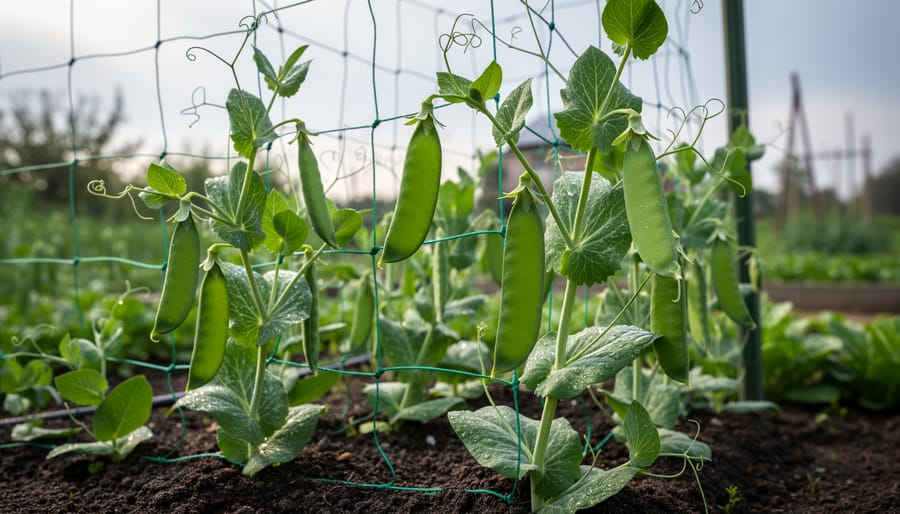
Peas rank among the most rewarding climbing vegetables for cool-season gardens, thriving in spring’s chill and fall’s crisp air when other plants struggle. Both snap peas (with edible pods and sweet peas inside) and snow peas (flat, tender pods eaten whole) naturally climb using delicate tendrils that wrap around any support they touch.
What makes peas exceptional is their minimal care requirements and bonus benefit to your soil. These legumes host nitrogen-fixing bacteria in their roots, actually enriching your garden bed for the next crop planted there. A simple trellis of bamboo poles with string woven between them, inexpensive garden netting, or even chicken wire provides all the support peas need. They’re lightweight climbers that won’t stress basic structures.
For spring planting, sow seeds directly outdoors four to six weeks before your last frost date. The cool soil won’t slow them down. For fall harvests, count backward from your first expected frost, planting about ten weeks prior. Here’s the trick for continuous harvests: make succession plantings every two weeks during the cool window. This staggers your harvest and keeps fresh peas coming to your kitchen for months rather than getting one overwhelming flush. Pick frequently once pods appear, daily harvesting encourages more production and prevents plants from shutting down.
4. Tomatoes (Indeterminate Varieties), The Vertical Powerhouse
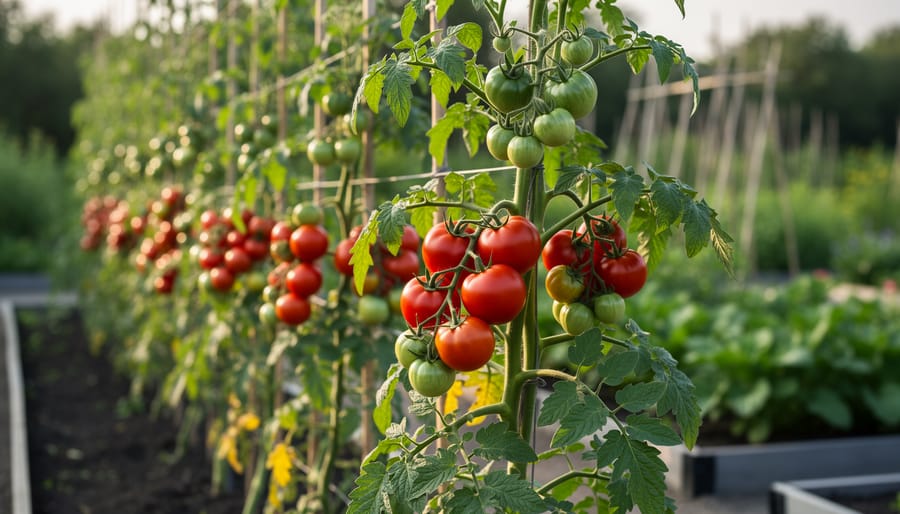
Indeterminate tomatoes keep growing taller and producing fruit continuously until frost kills them, making them true climbing champions for vertical gardens. Unlike determinate varieties that grow to a set height (usually 3-4 feet) and ripen their fruit all at once, indeterminate types can reach 6-10 feet or more when properly supported, delivering fresh tomatoes for months instead of weeks.
The key difference lies in how they grow. Determinate tomatoes form flower clusters at the ends of their branches and then stop, perfect for canning but limiting fresh harvest windows. Indeterminate plants keep sending out new flowering branches from their main stem indefinitely, which means you’re picking ripe tomatoes while green ones are still forming higher up the vine.
Supporting these vigorous climbers requires planning. Single stakes (at least 6-8 feet tall) work for one or two plants, but most gardeners prefer sturdy cages made from concrete reinforcing wire or Florida weave systems using stakes and twine. String trellises attached to overhead supports let you spiral the main stem upward as it grows.
Pruning makes a huge difference in yield quality. Remove suckers (the shoots that emerge between the main stem and branches) below the first flower cluster, and consider removing lower leaves as fruit develops to improve air circulation. This directs energy into fruit production rather than excessive foliage.
Popular climbing varieties include ‘Sungold’ (sweet orange cherry tomatoes), ‘Brandywine’ (huge heirloom slicers), ‘San Marzano’ (meaty paste type), and ‘Cherokee Purple’ (complex, rich flavor). With proper support and pruning, one indeterminate plant can produce 20-30 pounds of tomatoes throughout the growing season.
5. Grapes, The Long-Term Vertical Investment
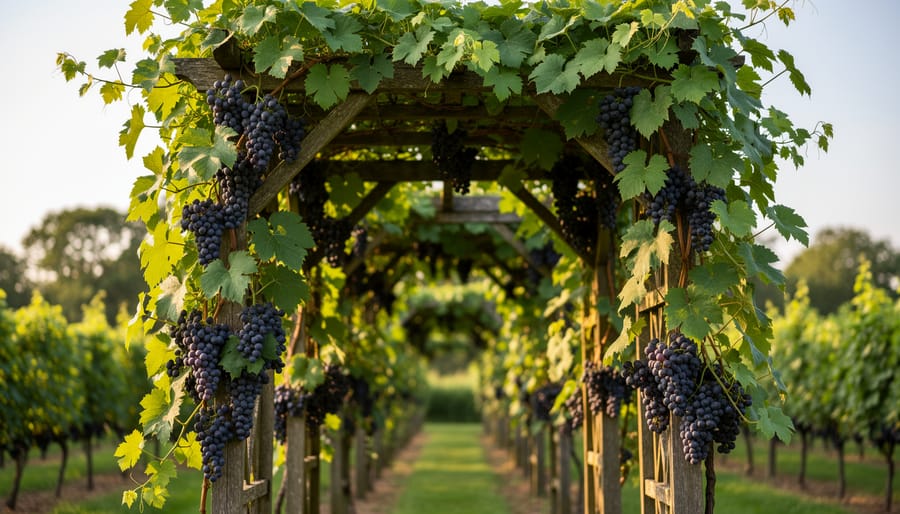
Grapes represent one of the most rewarding long-term climbing fruit investments you can make in your garden. Unlike annual vegetables, these vigorous perennial vines deliver harvests for decades once established, transforming ordinary structures into productive, beautiful garden features.
Three main types suit home gardens. Table grapes offer sweet, crisp eating straight from the vine and include favorites like ‘Concord’, ‘Thompson Seedless’, and ‘Flame Seedless’. Juice grapes pack intense flavor perfect for homemade juice or jelly. Wine grapes, while requiring more patience for processing, bring vineyard romance to your backyard with varieties suited to various climates.
Grapes demand sturdy, permanent support from the start. Traditional arbors create stunning focal points while providing shaded seating areas beneath ripening clusters. Strong two-wire trellis systems work excellently for fence lines or dedicated rows. Your structure must handle substantial weight, as mature vines produce heavy crops and dense foliage year after year.
Patience pays off with grapes. Expect your first small harvest in year two or three, with full production arriving around year four. Plant bareroot stock in early spring, train young canes carefully to your support, and prune annually in late winter. The wait rewards you with bushels of fruit and a living canopy that transforms your garden into a productive retreat for generations.
6. Squash and Zucchini, Surprising Vertical Growers
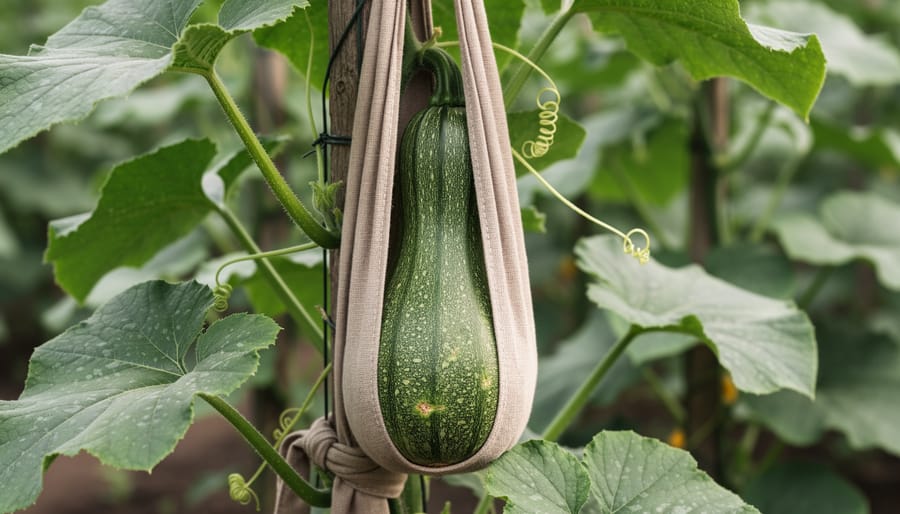
Most gardeners think of squash and zucchini as sprawling ground huggers, but these productive plants adapt surprisingly well to vertical growing with the right setup. Training them upward saves precious garden real estate and delivers healthier fruit with fewer pest problems.
Both summer squash (zucchini, yellow squash, pattypan) and smaller winter squash varieties will happily climb a sturdy trellis or fence. The key is choosing compact or bush varieties initially, then providing strong support that can handle the weight. A cattle panel, heavy-duty trellis, or even a chain-link fence works beautifully. Space plants about two feet apart at the base and gently guide the vines upward as they grow, securing them with soft ties if needed.
Vertical growing keeps squash off damp soil where they’re prone to rot and slug damage. Air circulation improves dramatically, reducing powdery mildew and other fungal diseases that plague ground-level plants. Harvesting becomes easier too, since you can spot ready fruit without digging through dense foliage.
The best climbing varieties include ‘Tromboncino’ (a vigorous Italian heirloom that can climb 6-8 feet), smaller-fruited winter types like ‘Delicata’ or ‘Honeyboat’, and compact summer squash such as ‘Raven’ zucchini. Avoid giant pumpkins and massive winter squash like ‘Hubbard’, which produce fruit too heavy for most home trellis systems.
7. Passion Fruit, Tropical Climbing Delight
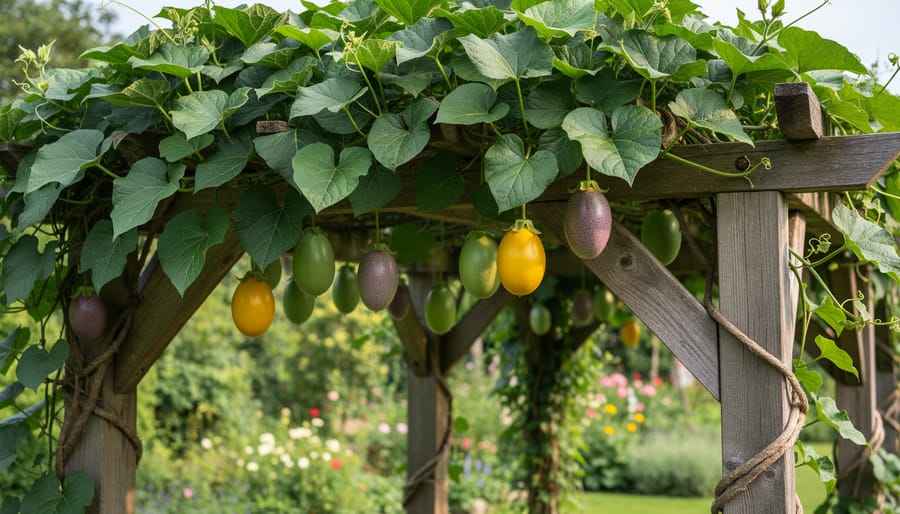
Passion fruit vines bring an exotic touch to vertical gardens, though they demand warmth and patience. These vigorous tropical climbers can grow 15-20 feet in a single season, producing stunning purple and white flowers before developing their signature wrinkled fruit filled with tangy, aromatic pulp.
In USDA zones 9-11, passion fruit thrives outdoors year-round on sturdy arbors, heavy-duty wire fencing, or pergolas. The vines need strong support because mature plants get heavy and woody. They’ll reward you with fruit 12-18 months after planting, then produce for years.
Frost will kill passion fruit vines to the ground. If you garden in cooler zones, container growing offers a practical solution. Plant in a large pot (at least 15 gallons) and bring it into a greenhouse or bright sunroom when temperatures threaten to drop below 32°F. Even with winter protection, fruit production may be lighter than in tropical climates.
The vines prefer full sun and consistent moisture but tolerate brief dry spells once established. Train young growth onto your support structure early, because the tendrils grab whatever’s nearby. One healthy vine can produce 50-100 fruits per year in ideal conditions, making the extra care worthwhile for passionate gardeners willing to meet their tropical needs.
8. Kiwi, The Hardy Climbing Fruit
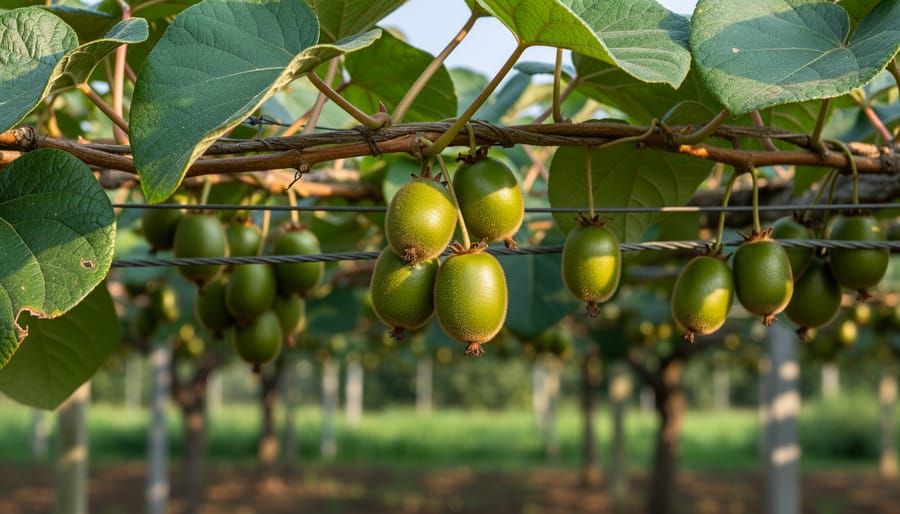
Hardy kiwi (Actinidia arguta) delivers an abundance of smooth, grape-sized fruit without the fuzzy skin of supermarket kiwis. These vigorous vines thrive in zones 4-8, tolerating cold winters that would kill their tropical cousins. You’ll taste the same sweet-tart flavor but can pop the whole fruit in your mouth, no peeling required.
Plan for both male and female plants. One male pollinator supports up to eight female vines, but you need both for fruit production. Most nurseries clearly label the sex, and some sellers offer self-fertile varieties if space is tight.
Build a robust trellis before planting. Hardy kiwi vines grow 15-20 feet and bear heavy fruit clusters, so use thick posts and strong wire. A pergola or fence works well. These plants live decades and produce 50-100 pounds of fruit per vine once mature, typically by year three or four.
Water consistently during establishment and fruiting season; check out our irrigation tips for managing thirsty perennial vines. Prune in late winter to control growth and encourage fruiting spurs. Hardy kiwi demands patience and space, but the payoff is a prolific climbing fruit that keeps producing year after year with minimal fuss.
9. Melons, Sweet Vertical Success
Growing melons vertically might sound ambitious, but it’s entirely doable with the right varieties and support system. Cantaloupes, honeydews, and small watermelons can all climb successfully, freeing up precious ground space while producing sweet, juicy fruit.
The key is choosing compact varieties bred for smaller fruit size. Look for cantaloupes labeled as “personal” or “individual” types, which typically weigh 2-3 pounds rather than the standard 5-6 pounds. For watermelons, stick with “icebox” or “sugar baby” varieties that max out around 8-10 pounds. These smaller melons are much easier to support and won’t snap your trellis.
Speaking of support, melons need sturdy structures. Use heavy-gauge cattle panels, welded wire fencing, or thick wooden lattice anchored firmly in the ground. As fruit develops, create slings from old t-shirts, pantyhose, or mesh bags to cradle each melon and distribute its weight across the trellis.
The vertical advantage goes beyond space savings. Melons grown off the ground enjoy better air circulation around their leaves and stems, dramatically reducing powdery mildew and other fungal diseases that thrive in humid conditions. The fruit stays cleaner too, with no ground contact to invite rot or pest damage.
10. Bitter Melon, The Nutritious Climber
Bitter melon (also called bitter gourd) is a vigorous climbing vegetable that thrives in hot weather and has been a staple in Asian cuisines for centuries. This unusual-looking fruit with its distinctive warty, bumpy skin grows on fast-spreading vines that can easily reach 8-12 feet in a single season. Beyond its culinary uses, bitter melon is prized for its impressive health benefits, particularly for blood sugar regulation and digestive support.
As a climber, bitter melon is remarkably easy to grow. It loves heat and humidity, making it perfect for summer gardens in warm climates. The vines produce attractive lobed leaves and small yellow flowers before setting fruit. Provide a sturdy trellis or fence for support, ensure the soil for climbing plants drains well, and give it full sun for best results.
If you’re new to bitter melon, start with young, green fruits as they’re less bitter. Slice thin, salt to draw out bitterness, rinse, then stir-fry with garlic and other vegetables. The acquired taste is worth developing for the nutritional rewards this productive climber delivers.
11. Chayote, The Prolific Perennial Climber
Chayote (Sechium edule) stands out as one of the most productive climbing vegetables you can grow, often producing 50-80 fruits per plant in a single season once established. This vigorous perennial thrives in frost-free climates where it returns year after year, developing massive root systems and vines that can easily cover 30-40 feet of fencing or arbor.
Getting started couldn’t be simpler. Purchase a sprouted chayote from a grocery store in late winter, plant the entire fruit at a 45-degree angle with the narrow end slightly exposed, and watch it explode with growth. Within months, you’ll have a dense canopy of attractive, maple-like leaves and cascading tendrils that cling to any support.
The mild, crisp fruit tastes like a cross between cucumber and apple, perfect for stir-fries, soups, pickles, or eating raw in salads. The young shoots and tuberous roots are edible too, giving you multiple harvests from one plant.
In cooler climates, treat chayote as an annual and plant after all frost danger passes. Container growing works well with a 15-gallon pot, though you’ll get fewer fruits than in-ground plants. Provide full sun, consistent moisture, and sturdy support, and prepare for an avalanche of green, wrinkled squash from late summer through fall.
12. Blackberries and Raspberries, The Bramble Climbers
Blackberries and raspberries aren’t true climbers, but trailing varieties transform into manageable vertical plants with proper support. These brambles produce canes that you can train along wires or against trellises, keeping fruit off the ground and harvest within comfortable reach.
Erect varieties grow stiffly upward and need minimal support beyond a single wire to prevent toppling. Trailing types send out long, flexible canes that flop everywhere without guidance. These are your vertical gardening candidates. Black raspberries and many blackberry cultivars fall into this category, producing canes that can stretch 10 to 15 feet if left unchecked.
A simple two-wire trellis works perfectly: stretch wires at three feet and five feet high between sturdy posts. As new canes grow in spring and summer, tie them loosely to these wires, spreading them horizontally or in a fan pattern. This system exposes berries to sunlight, improves air circulation, and makes picking effortless.
Pruning sounds complicated but follows one rule: fruiting canes die after harvest. Cut these dead canes to the ground in late summer, leaving the current season’s green growth to produce next year’s crop. This annual cycle keeps plants productive and manageable.
Once established, a 10-foot row can yield 20 to 30 pounds of berries each summer for a decade or longer.
Support Structures for Climbing Plants
The right support structure makes all the difference between thriving vertical plants and a tangled mess (or worse, collapsed vines with damaged fruit). Install your supports at planting time, driving stakes or setting posts later risks disturbing roots and snapping tender growth.
Here are the most reliable support options for home gardens:
- Bamboo poles or wooden stakes: Lean 6-8 foot poles in a teepee formation for beans and peas, or drive single stakes for indeterminate tomatoes
- Cattle panels: Heavy-duty 16-foot wire panels create sturdy arches for cucumbers, squash, and melons, one panel lasts decades
- String trellis: Run twine between posts in a grid pattern for lightweight climbers like peas and smaller tomatoes
- Wire fencing: T-posts with welded wire or field fence work perfectly for heavier crops like grapes and passion fruit
- Wooden A-frames: Build a simple peaked trellis for cucumbers on one side and beans on the other, great for paths
- Metal arbors: Pre-made arches provide permanent support for kiwi, grapes, or annual vines like passion fruit
- Plastic netting: Affordable and reusable mesh attached to stakes handles peas, light beans, and trailing flowers
Match your structure to the plant’s weight and vigor. Peas thrive on flimsy twine, but mature melon vines need welded wire that won’t sag. Grapes and kiwi demand rock-solid posts, think fence-strength construction. For squash and melons, plan to fashion individual fruit slings from old t-shirts or mesh produce bags to take weight off the stems. A-frames and arches maximize space since you can plant both sides, while simple stakes work best for single-row plantings. Whatever you choose, build it taller than you think necessary, most climbing plants grow more vigorously than beginners expect.
Common Questions About Growing Climbing Produce
How much sun do climbing vegetables need?
Most climbing vegetables and fruits need at least 6-8 hours of direct sunlight daily for best production. Leafy climbers like peas can tolerate partial shade, while tomatoes, melons, and grapes demand full sun to ripen properly.
Do vertical gardens need more water than traditional beds?
Plants growing on trellises often dry out faster since their leaves get more air circulation and sun exposure. Check soil moisture daily during hot weather and consider drip irrigation or soaker hoses at the base to maintain consistent moisture.
How do I train young plants to start climbing?
Gently guide the main stem or tendrils toward your support when plants are 6-12 inches tall. Loosely tie the stem with soft string or plant ties if needed, then let the plant’s natural climbing mechanism take over.
What’s the best way to support heavy fruit on vertical plants?
Use fabric slings, old pantyhose, or produce nets tied to the trellis to cradle individual melons, squash, or large cucumbers. This prevents the fruit’s weight from breaking vines or pulling plants down as they mature.
When should I install support structures?
Set up trellises, stakes, or arbors at planting time or shortly after. Installing supports early prevents root damage and allows you to train plants from the start rather than wrestling with established vines.
Harvesting from tall structures becomes easier with practice. Keep a small stepladder handy for reaching upper portions of your trellis, and harvest regularly to prevent overloaded vines. A long-handled fruit picker works well for grapes or berries on high arbors. Morning is the best time to harvest most climbing vegetables since they’re crisp and hydrated from overnight moisture.
Growing upward transforms your garden from a space limitation into an opportunity. The twelve climbing plants we’ve covered offer something for every gardener, whether you’re working with a tiny balcony or a sprawling backyard. Vertical growing isn’t just about fitting more plants into less space. It’s about healthier crops with better air circulation, easier harvests that don’t require bending and kneeling, and yields that often double or triple what you’d get from the same plants sprawling on the ground.
Start simple this season. Plant a trellis of pole beans or a few cucumber vines, watch them climb, and experience how satisfying vertical gardening can be. Once you see your first harvest hanging at eye level, you’ll want to add peas, tomatoes, maybe even grapes or kiwi for the years ahead.
Every garden has room to grow up, and the rewards are worth it.