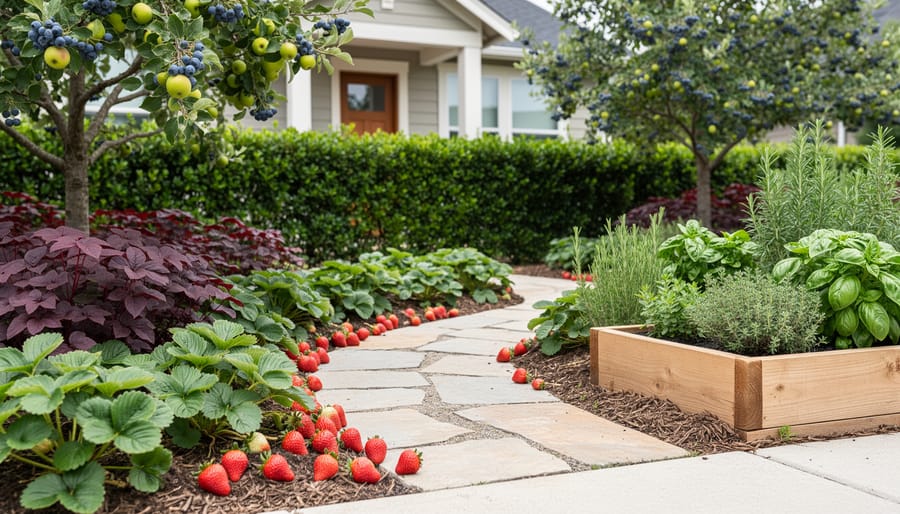
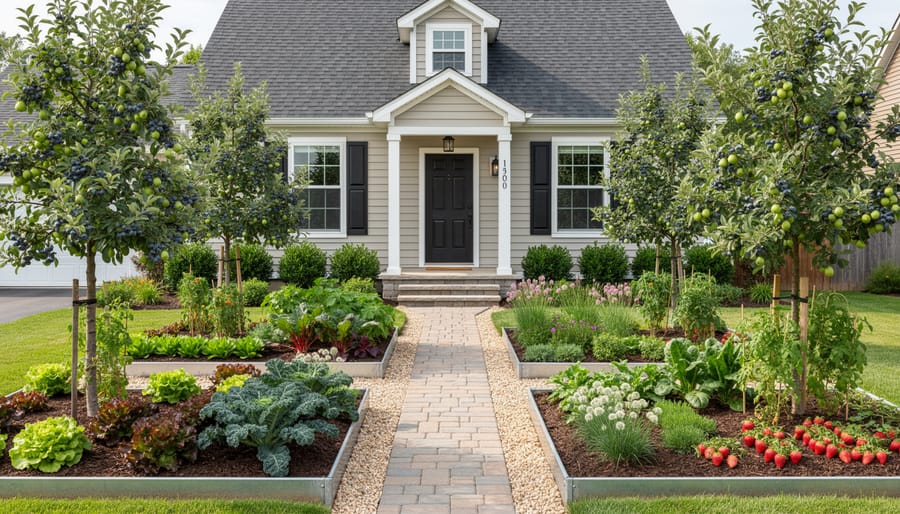
Edible landscaping is the practice of designing outdoor spaces that are both visually appealing and productive, using food-producing plants like fruits, vegetables, and herbs in place of or alongside traditional ornamentals. Instead of separating your vegetable patch from your flower beds, you’re creating a unified landscape where a blueberry hedge replaces a boxwood border, strawberries spill over pathways instead of petunias, and a dwarf apple tree anchors your front yard.
This approach has surged in popularity because it solves a real problem: most of us don’t have endless acreage for traditional garden plots, and many homeowners associations frown upon visible vegetable rows. By integrating edibles into your existing landscape design, you’re working smarter with the space you have.
The concept isn’t new, though. Cottage gardens have blended herbs, vegetables, and flowers for centuries. What’s different now is the intentional focus on design principles that make these plantings look deliberate and polished rather than haphazard.
Throughout this guide, you’ll learn exactly how edible landscaping works, what types of plants and structures you can incorporate, and how to apply these principles to your own yard. Whether you’re replacing a tired lawn or starting fresh with your landscape, exploring edible landscaping ideas will show you just how versatile and rewarding this approach can be.
What Is Edible Landscaping?
Edible landscaping is the intentional practice of incorporating food-producing plants, fruits, vegetables, herbs, and edible flowers, into your yard’s overall design in ways that are both beautiful and functional. Unlike a traditional vegetable garden tucked away in the backyard, edible landscaping places productive plants front and center, treating them as ornamental features that enhance your property’s aesthetics while supplying fresh harvests. A blueberry hedge replaces a boxwood border. A dwarf apple tree becomes a focal point where a crabapple once stood. Strawberries cascade over a retaining wall instead of ivy.
This approach blurs the line between form and function. You’re not sacrificing beauty for productivity or vice versa, you’re designing landscapes where every plant pulls double duty. Your front yard can deliver curb appeal and dinner at the same time.
Several terms describe this practice, each with subtle differences:
- Edible Landscaping
- The broad practice of integrating food-producing plants into ornamental landscape design, treating them as aesthetic elements that happen to be harvestable.
- Foodscaping
- A more casual term emphasizing the food production aspect, often used interchangeably with edible landscaping but sometimes implying a stronger focus on yield over ornamental value.
- Ornamental Edibles
- Plants selected specifically because they’re attractive enough to serve as landscape specimens while also producing edible harvests, like rainbow chard or purple kale.
- Productive Landscaping
- Landscape design that prioritizes utility and output alongside beauty, encompassing not just edibles but also pollinator support, water management, and ecosystem services.
Modern Edible Landscape Design principles draw heavily from permaculture and sustainable gardening movements, emphasizing native and adapted plants, water-wise practices, and layered plantings that mimic natural ecosystems. The edible ornamental landscaping guide from university extension programs confirms that these designs work across climate zones when you match plants to your conditions. This isn’t about ripping out everything and starting over, it’s about making strategic swaps that gradually transform your landscape into something that feeds you while it beautifies your space.
How Edible Landscaping Works
The Core Principles
Edible landscaping builds on the same foundational landscaping principles that guide any well-designed garden, but with a twist: every plant pulls double duty. The first principle is combining aesthetics with function. Choose plants that look good and taste good. A blueberry bush offers spring flowers, summer fruit, and fiery fall foliage. Kale varieties like ‘Redbor’ rival ornamental cabbage in texture and color. Think beyond the harvest and consider what each plant contributes year-round.
Plant layering creates depth and maximizes space. Tall fruit trees form the canopy, berry shrubs fill the middle layer, and herbs or strawberries carpet the ground. This vertical stacking mimics natural ecosystems and lets you grow more food in less space without sacrificing visual appeal.
Succession planting keeps your landscape productive and interesting across seasons. Plan for continuous harvest by staggering varieties that mature at different times. Early lettuce gives way to summer beans, then fall greens move in. You avoid bare spots and maintain visual interest.
Seasonal interest matters just as much in edible landscapes as ornamental ones. Select plants that offer something in every season: spring blooms on fruit trees, lush summer foliage, autumn berry color, and even winter structure from evergreen herbs like rosemary. This approach ensures your yard stays attractive while feeding you throughout the year.
Planning Your Space
Start by walking your property with fresh eyes, not as a gardener who already knows every corner, but as someone mapping possibilities. Grab a notebook and spend a full day (if you can) observing where sunlight pools at different hours. Most edibles need at least six hours of direct sun, so identifying your brightest spots is step one. Note morning sun versus afternoon sun, too; leafy greens tolerate partial shade better than tomatoes or berries, giving you flexibility with less-than-perfect zones.
Next, get honest about your soil. You don’t need a lab test immediately, but digging a few test holes reveals texture, drainage, and whether you’re dealing with clay, sand, or loamy gold. Poor soil preparation sinks edible landscapes before they start, so plan amendments now rather than troubleshooting later. Many site selection considerations overlap between traditional vegetable gardens and edible landscaping, drainage, pH, and nutrient levels matter equally whether you’re growing lettuce in rows or tucking herbs along a walkway.
As you map, consider these planning essentials:
- Sun zones throughout the day and across seasons
- Soil texture, drainage, and pH levels
- Proximity to water sources for easy irrigation
- Existing plants you want to keep or remove
- Traffic patterns, views from windows, and access points
Sketch a rough layout showing where edibles can replace ornamentals or fill gaps. Mark high-visibility areas for showy plants like blueberry bushes or rainbow chard, and tuck lower-maintenance perennials like asparagus into side yards. You’re not designing a rigid grid; you’re identifying micro-climates and opportunities where food plants can thrive while enhancing your landscape’s overall look.
Types and Components of Edible Landscaping
Edible Plant Categories
Edible landscapes draw from six main plant categories, each offering unique aesthetic and productive qualities that work together to create layers of beauty and abundance.
Fruit trees form the backbone of many edible landscapes, providing height, seasonal interest, and substantial harvests. Dwarf and semi-dwarf varieties fit beautifully into residential settings, offering spring blossoms, summer shade, and fall fruit without overwhelming your space. Apple, pear, cherry, and plum trees deliver striking visual appeal alongside reliable yields.
Berry shrubs bridge the gap between ornamental shrubs and productive plantings. Blueberries offer stunning fall color and springtime blooms before producing berries. Currants and gooseberries provide attractive foliage and architectural form. Elderberries grow tall enough to function as privacy screens while producing clusters of dark berries perfect for syrups and preserves.
Perennial vegetables come back year after year with minimal effort. Asparagus develops into feathery fronds that resemble ornamental grasses. Rhubarb produces bold, tropical-looking leaves (though only the stalks are edible). Artichokes create dramatic architectural statements with their silvery foliage and striking purple blooms.
Herbs work as versatile fillers throughout your landscape. Rosemary grows into substantial shrubs with needle-like foliage. Sage offers silvery leaves and purple flower spikes. Thyme creeps between pavers, releasing fragrance underfoot.
Edible flowers add pops of color while serving double duty in the kitchen. Nasturtiums cascade over walls with peppery blooms. Calendula provides cheerful orange flowers. Violas produce delicate blossoms perfect for garnishing salads.
Ground covers replace traditional turf with productive alternatives. Strawberries spread to fill bare spots with white flowers and red fruit. Creeping thyme forms dense, fragrant mats that tolerate light foot traffic.
Design Layers and Zones
Edible landscapes borrow a concept from natural forests: they build upwards in distinct layers and spread outwards in purposeful zones. The vertical layers include the canopy (typically dwarf fruit trees like apple or pear), the understory (berry bushes such as blueberries or currants that thrive in partial shade beneath taller plants), and the ground level (sprawling herbs like thyme, edible ground covers like alpine strawberries, or leafy greens tucked between taller plants). This stacking maximizes your growing space and creates visual depth, turning a flat yard into a lush, productive ecosystem where every level contributes food.
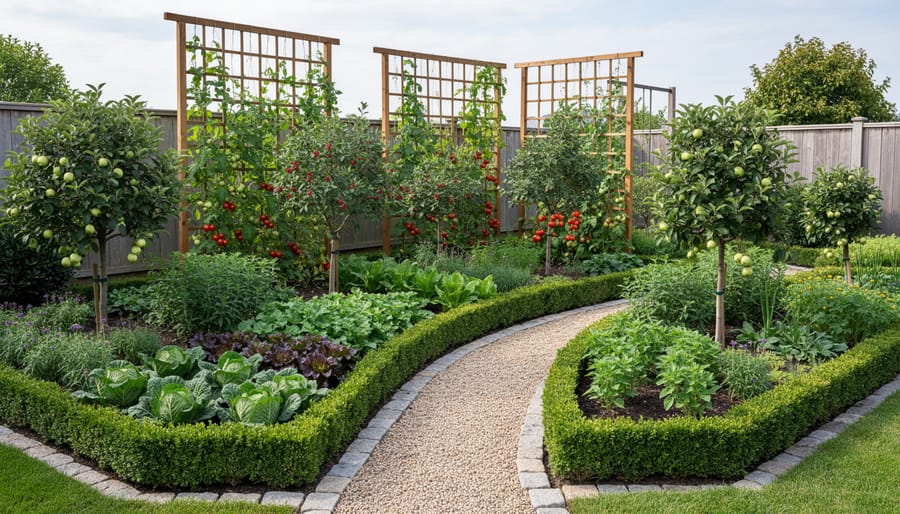
Functional zones organize your plantings by purpose rather than just height. Perimeter plantings might feature thornless blackberries or espaliered pears along a fence line, providing privacy while producing fruit. Focal points draw the eye, a statement fruit tree underplanted with colorful chard or a raised bed centerpiece overflowing with vertical vegetable wonders like pole beans on decorative trellises. Pathways lined with low-growing herbs like oregano or chamomile release fragrance when brushed and soften hardscape edges. Thinking in layers and zones helps you place plants where they’ll thrive functionally and look intentional, creating a landscape that feels designed rather than haphazard.
Structural Elements
Structural elements are the backbone of an edible landscape, turning a collection of plants into a cohesive, productive design. These features guide growth, maximize space, and create visual interest beyond the plants themselves.
Common structural components include:
- Raised beds that define planting areas, improve drainage, and make harvesting easier on your back
- Trellises that train vining crops vertically, saving ground space while creating living walls of beans, peas, or cucumbers
- Arbors and pergolas that support grape vines or hardy kiwis while providing shade and architectural focal points
- Containers that bring flexibility to patios and porches, letting you grow herbs, dwarf fruit trees, or salad greens anywhere
- Decorative borders and edging that separate edible beds from pathways while adding polished definition to the design
These elements do double duty. A cedar-framed raised bed becomes a garden feature on its own, while a well-placed trellis covered in scarlet runner beans offers privacy screening and dinner. When you choose materials that complement your home’s style, stone borders for cottage gardens, sleek metal for modern yards, structural features tie the edible and ornamental together seamlessly.
Common Uses for Edible Landscaping
Front Yard Foodscapes
Your front yard doesn’t have to be all ornamental shrubs and grass. With thoughtful plant selection, you can grow food while maintaining the tidy, welcoming look most neighborhoods expect.
Start with foundation plantings. Swap boxwood hedges for compact blueberry bushes, which offer spring flowers, summer fruit, and brilliant fall color. Replace boring evergreen shrubs with rosemary or lavender, both stay green year-round and provide harvests. Dwarf fruit trees like columnar apples or espalier pears make elegant focal points near entryways without overwhelming the space.
For lawn alternatives, consider creeping thyme or chamomile in low-traffic areas. These stay under six inches, smell wonderful when walked on, and need far less mowing. If you must keep some grass, reduce it to pathways and borders, then fill beds with attractive edibles like curly kale, rainbow chard, or bronze fennel. These plants have striking textures and colors that rival any ornamental.
The key is mixing heights, colors, and textures just like you would with traditional landscaping. Neighbors will admire your garden before they realize it’s also feeding you.
Small Space and Urban Applications
City dwellers face unique challenges, but edible landscaping adapts beautifully to compact spaces when you think vertically and creatively.
Start with container gardening as your foundation. Pots, grow bags, and window boxes transform balconies and patios into productive mini-gardens. Dwarf fruit trees thrive in 15-gallon containers, I’ve seen Meyer lemons and figs flourish on fifth-floor balconies. Pair them with cascading strawberries in hanging baskets to maximize every vertical inch.
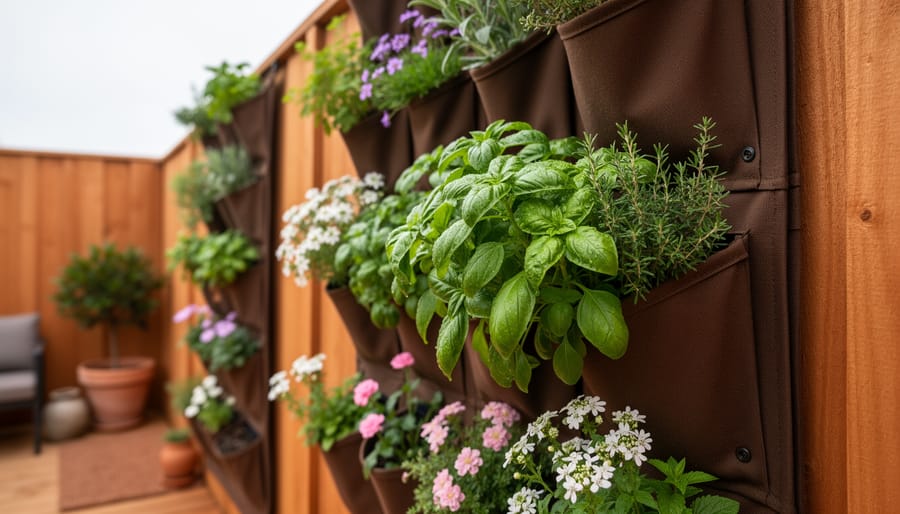
Vertical structures multiply your growing area dramatically. Install wall-mounted planters for herbs and salad greens, or lean a trellis against a railing for pole beans and compact cucumbers. Even a simple wooden ladder becomes a plant stand that turns one square foot of floor space into six feet of growing surface.
For narrow townhouse yards, create edible borders along fence lines with blueberry bushes or raspberries instead of ornamental shrubs. These fruiting perennials need just 18 inches of width but deliver harvests for years.
The key is choosing compact varieties specifically bred for containers: ‘Patio Princess’ tomatoes, ‘Little Gem’ lettuce, or ‘Thumbelina’ carrots. These plants produce full-sized flavor in half the space traditional varieties demand.
Problem-Solving with Edibles
Edible landscaping isn’t just about growing food, it’s a smart way to tackle tricky spots in your yard while adding function. Many landscape challenges that homeowners face can be solved with thoughtful edible plantings that look great and produce a harvest.
- Steep slopes prone to erosion: Plant strawberries, creeping thyme, or low-growing herbs that root deeply and stabilize soil while producing food
- Bare fence lines needing privacy: Train espaliered fruit trees (apples, pears) or berry canes along fences for vertical screening that yields fruit
- Shady north-facing walls: Use shade-tolerant edibles like currants, gooseberries, or woodland herbs to fill dim corners that struggle with ornamentals
- Hot, dry areas with poor soil: Establish Mediterranean herbs like rosemary, oregano, and lavender that thrive in tough conditions
A friend of mine transformed her steep backyard bank, previously a nightmare to mow and prone to washing out, into terraced strawberry beds that now produce quarts of fruit each June. The dense foliage holds the soil in place, and she hasn’t touched a lawnmower on that slope in three years. When you match the right edible to a problem area, you create a solution that keeps giving back season after season.
Benefits of Edible Landscaping
Edible landscaping delivers rewards that go far beyond a prettier yard. When you replace purely ornamental plants with productive ones, you’re investing in a system that feeds your family, supports local ecosystems, and often requires less work than traditional landscaping once established.
The most immediate benefit is having fresh, nutrient-dense food just steps from your door. There’s no comparison between a tomato picked ripe from your front yard and one that traveled hundreds of miles to a grocery store. You control what goes on your plants, which means you can grow truly organic produce tailored to your taste. Many edible landscapers report that their families eat more vegetables and try new foods simply because harvesting from the yard becomes part of daily life.
Your wallet benefits too. A single mature fruit tree can produce hundreds of dollars worth of fruit each season. Perennial herbs like rosemary and thyme replace themselves year after year, eliminating the need to buy expensive fresh herbs at the store. Berry bushes, once established, produce abundant harvests with minimal input. The initial investment pays dividends for years.
Beyond the personal advantages, edible landscapes contribute meaningfully to environmental health:
– Fresh food access eliminates transportation emissions and plastic packaging waste
– Reduced grocery costs through homegrown produce that outperforms store-bought quality
– Pollinator support from fruit blossoms, herb flowers, and diverse plantings that feed bees and beneficial insects
– Water efficiency when drought-tolerant edibles like Mediterranean herbs replace thirsty lawn grass
– Increased property appeal as buyers recognize productive landscapes as valuable amenities
Edible landscaping also builds community. Neighbors stop to ask questions, kids learn where food comes from, and sharing harvests creates connections. You become part of a growing movement of gardeners who see their yards as more than decoration, they’re productive ecosystems that nourish bodies, soil, and local wildlife while looking beautiful doing it.
Getting Started with Your Edible Landscape
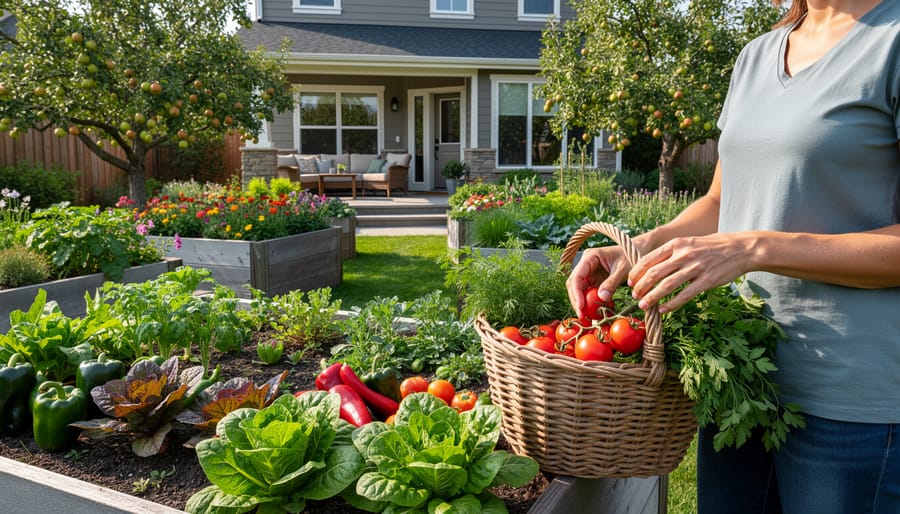
The beauty of edible landscaping is that you don’t need to transform your entire yard overnight. Start with one small area, maybe replace a tired shrub by your front door with a dwarf blueberry bush, or line a walkway with thyme instead of standard groundcover. These modest swaps let you learn what thrives in your specific conditions without overwhelming yourself.
Choose plants that practically grow themselves while you build confidence. Herbs like rosemary, oregano, and chives tolerate neglect, look attractive year-round, and produce abundantly. Strawberries make excellent edging plants and spread reliably. Kale varieties with deep purple or frilly leaves rival ornamental cabbage for visual impact. Dwarf fruit trees offer structure and shade while requiring minimal space.
I planted my first edible landscape element on a whim, a single Juliet cherry tomato plant tucked into a large decorative container by my patio door. It produced sweet clusters all summer, looked gorgeous spilling over the pot’s edge, and convinced me that mixing beauty with harvest wasn’t complicated. That one success led to more containers, then a raspberry hedge along the fence, and eventually a complete front yard redesign.
Pay attention to what actually grows well rather than forcing challenging plants into unsuitable spots. Notice which areas get six hours of sun, where water pools, and where foot traffic demands tough plants. Match your choices to these realities, not to an idealized plan. You’ll harvest more, worry less, and enjoy watching your edible landscape evolve naturally as you gain experience and add layers over seasons.
Frequently Asked Questions
Does edible landscaping require more maintenance than a traditional yard? Not necessarily. Once established, many edible perennials like berry bushes, fruit trees, and herbs need less upkeep than lawns or fussy ornamentals. Annual vegetables do require replanting each season, but you can start with low-maintenance perennials and add annuals as your confidence grows. The key is choosing plants suited to your climate and soil, which reduces watering, fertilizing, and pest problems. If you’re weighing automated watering options early on, consider whether an irrigation system worth it for your specific setup and plant choices.
Will an edible landscape look messy or unkempt?
Only if you let it. Well-designed edible landscapes rival ornamental gardens in beauty, using tidy herbs as borders, colorful chard as focal plants, and espaliered fruit trees for architectural structure. Regular harvesting actually keeps plants looking neat and encourages more production.
What if my HOA or neighborhood has restrictions?
Many HOAs allow edibles in backyards, and front-yard rules are evolving as food gardening becomes mainstream. Start by reviewing your covenants, then consider blending edibles that resemble ornamentals, like artichokes, blueberries, or Swiss chard, into existing beds where they won’t draw attention.
Is edible landscaping expensive to start?
Initial costs vary, but you can start small with a few herb plants or berry bushes for less than the price of replacing mulch and annuals each year. Fruit trees and structural upgrades cost more upfront but pay dividends for years, and you’ll save money on groceries once plants mature.
Do I have to replant everything every year?
No. Perennial edibles like asparagus, rhubarb, fruit trees, berry bushes, and many herbs come back year after year. You can build a landscape that’s 80% perennial and only replant a few annual crops like tomatoes or greens in dedicated spots.
Can I really mix edibles with traditional ornamental plants?
Absolutely. Mixing creates visual interest and practical benefits, flowering herbs attract pollinators for both food and ornamental plants, and layering edibles among ornamentals confuses pests. Just match plants with similar water and sun needs.
One common worry is whether edible landscaping attracts pests or wildlife more than regular gardens. The honest answer is that any garden with food attracts some wildlife, but smart design minimizes problems. Fencing protects berries from birds, companion planting deters insects, and choosing less-attractive crops for visible areas keeps deer at bay. The rewards of walking outside to snip fresh basil or pick a handful of strawberries far outweigh the occasional challenge, and most issues have simple solutions once you know your yard’s specific conditions.
Edible landscaping isn’t just a trend, it’s a shift in how we think about our outdoor spaces. Instead of choosing between beauty and bounty, you get both. The strawberries cascading over your front steps, the apple tree shading your patio, the rosemary hedge lining your walkway, these aren’t compromises. They’re upgrades.
What makes this approach so powerful is how accessible it really is. You don’t need a farm or even a dedicated vegetable plot. Start with one blueberry bush where you’d plant a standard shrub. Swap your annual flowers for lettuce and violas. Replace that tired lawn strip with creeping thyme. Each small change moves you closer to a yard that feeds you while it impresses your neighbors.
The reward? Walking outside to harvest dinner ingredients you grew yourself, in a space that looks intentionally designed rather than purely practical. That’s what Gardenoholic is all about, helping you cultivate gardens that deliver fresh, high-quality produce without sacrificing style.
Your edible landscape is waiting. Pick one spot, choose one plant, and start growing something beautiful you can actually eat.